Blog

  • The Expense of Terrible Substance Advertising

    The Expense of Terrible Substance Advertising

    Each organization is promoting with content, however only one out of every odd organization is doing content advertising. The contrast between the 2 is much of the time only straight-up terrible substance. What’s more, there’s a ton of it. Be that as it may, what is the expense of this awful satisfaction?

    As indicated by eConsultancy, awful happy costs B2B organizations $50 billion. What’s more, that is simply B2B organizations. Customer brands make up around 40% of the economy so add them in with the general mish-mash and we’re taking a gander at a $90 Billion issue. That is a ton of Benjamins.

    Here, we’ll jump somewhat more profound into the expense of awful happiness, cover the motivations behind why such a lot of terrible substance exists, and how we can make content that really comes to, connects with, and changes new clients over completely to our business.

    Fast Action items:

    • Awful happiness costs organizations billions of dollars consistently
    • The great substance is sound, significant, and arranged for a connected experience
    • Awful happy disintegrates your believability and pipeline by making boundaries to trust and commitment
    • Making a client-centered content system gives the arrangement expected more, greater substance and better return for money invested

    What is Good Content?

    High-quality content accomplishes the goal of answering a customer question with authority and credibility. For example, I’ve written more than 1,000 articles here on this blog. And while quantity certainly doesn’t mean that what I write is any good, practice does help.

    Good content not only serves customers, it serves the business as well. Quality content-marketing reaches, engages, and converts new customers based on trust built through a quality content marketing strategy.

    We define quality content marketing as:

    1. Customer-focused
    2. Consistent
    3. Comprehensive
    4. Cost-effective

    Here are some additional components of good content before we dive into the bad.

    Good Content Is Credible

    When I trained hundreds of writers at SAP to publish on our blog, I told every one of them that the first thing they ever write may not be very good, but the hundredth will be awesome. Some of the things I trained them on was to build credibility over time by being a curious students of their topic, sharing what they learned, and what they thought about what they learned on their topic of interest.

    Good Content Shows Interest or Passion

    One of my favorite content marketing quotes is from Mark Twain who said “write about what you know.” Ok so maybe good content doesn’t need to come from a deep-seated passion for your topic. I struggled to have a passion for Cloud Computing. But I found a way to make it interesting.

    Good content should convey a natural curiosity to answer the question and requires at least some level of interest on the writer’s part.

    Good Content Delivers On Search Intent

    There’s been a lot of talks lately about writing for humans vs writing for people. And while we use SEO to research topics, we write for people to answer their search intent. So we imagine we’re standing with someone in real life, and when that person asks a question, we try and make sure our content answers that question as well as possible.

    I don’t believe even the best AI can do that yet!

    Good Content Is Only As Long As It Needs To Be

    We get a lot of questions about content length and quality.

    How long should a blog post be? Only as long as it needs to be to answer the question!

    Our research concluded that under 1,000 words and Google is less likely to show your answer. Longer content is more likely to rank but when time and budget is limited, it makes the most sense to publish more often than to publish longer content.

    Good Content Is Formatted For Viewer Engagement

    Do you like to read 12-sentence paragraphs where the sentences are 3 lines long, written like a PhD student? Probably not. We use a checklist to write what we think is a perfect blog post format to try and use white space as much as possible. To use summary points in headlines, bullets, and short sentences.

    Some other format considerations:

    • 3-5 key takeaways
    • Visuals that add to the content
    • Videos
    • Links to internal and external sources
    • Active vs passive voice

    We use the following checklist for every single piece of content we deliver for our clients. Feel free to download for your own use or send me a quick message and I’ll send you a google sheet you can use.

    Bad content checklist

    What is Bad Content?

    Most content stinks because it focuses on promoting your business or your point of view. There’s a name for people that make everything all about themselves. (Message me if you don’t know it!)

    Bad content is overly promotional, self-serving, poorly written, duplicative, un-original, or hard to read.

    And yet the majority of people rate their own content as better than average. This is called illusory superiority, a form of cognitive bias that makes most of us think we are better than average when that is mathematically impossible.
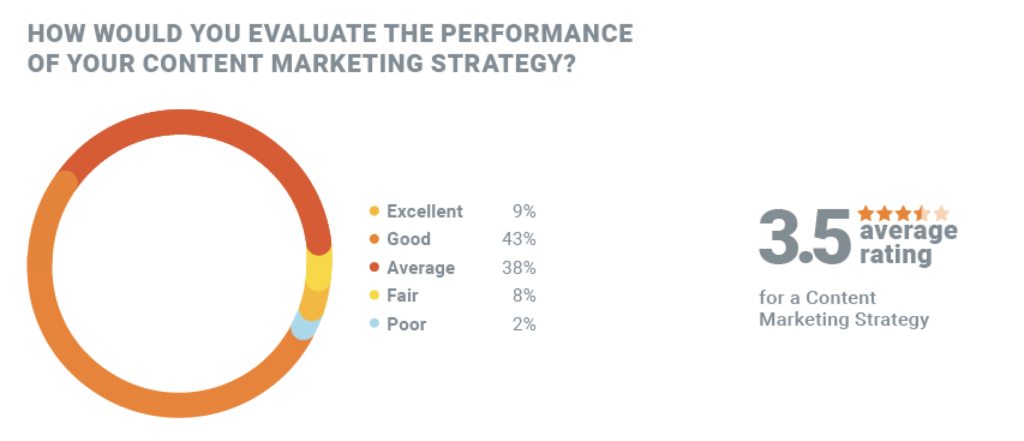
    SEMRush content marketing research
    Source: Feldman Creative

    I have said that the biggest mistake most content marketing makes is trying to sell in your content marketing. But actually, the biggest mistake is creating something that never gets used at all.

    What is The Cost of Bad Content?

    According to Forrester, 60-70% of content goes completely unused!

    That’s the worst kind of content because it never even gets the chance to be judged as bad. You would be better off throwing your budget in the trash and going out to lunch for the whole day every day. OK, so take your marketing or communications budget, multiply by 60%, and that is the cost of bad content.

    I’m totally serious. When I was at SAP, I asked our marketing team to show me how many demand-generation campaigns delivered at least 1 lead. The answer: is 44%. That’s right nearly 60% of our demand generation campaign budget was for campaigns that didn’t produce a single lead. How does that happen? (Answer below).

    The success I achieved there was not because I was above average in any way. I just suggested we stop doing the stuff that produced no value. And start doing the stuff that helped our customers and drove ROI. 7x ROI was the result. The average marketing campaign at SAP at the time delivered negative ROI. (I’m excluding events. SAP events were awesome ROI generators – at least at the time.)

    So if 60% of the content we create never gets used, and nearly 60% of lead gen programs don’t produce a single lead, the just use my simple math above to calculate the cost of bad content.

    And if you think you are better than average (haha – see what I did there), you’re not! I’ve done this analysis at about a dozen companies and guess what the answer was to the question: how much content did we produce that created any value at all? The answer was an average of 40%. 60% produced zero value of any kind.

    More than half of what you do is likely wasted, bad content!

    Why Do We Create Bad Content That Never Gets Used?

    I believe the main problem stems from the common marketing mistake of focusing on activities instead of results (my blood is starting to boil).

    We create stuff because someone told us to. And that stuff is overly promotional and self-serving because that is the natural instinct of most people.

    Behind every piece of bad content is an executive who asked for it!

    We need to resist our natural instinct to promote our business and just try and answer a customer’s honest question.

    How To Create Less Bad Content

    Here are some additional tips to making sure you create more, good content. That is, tips to create a higher quantity of quality content. See? This isn’t even an easy thing to say, let alone an easy thing to do!

    1. Train your team on what content marketing really is.
    2. Document your content marketing strategy to gain alignment around the objectives and support from senior executives.
    3. Emulate some of the best examples of quality content marketing from companies like Nutanix, Televerde, DivvyHQ, and more.
    4. Consider mapping content to the buyer journey based on keyword/search signals.
    5. Invite your readers to engage more deeply through subscriptions and offers and turn your blog into a lead generation machine.
    6. Measure your content all the way to revenue.
    7. Spell stuff really well, make all the good words and take the time it takes to write a quality piece of content.

    Busting Some Myths

    Finally, a couple of myths I have heard so many times I want to puke: content needs to be original and it needs to present a unique point of view. I call BS on these points because:

    • A. There are no completely new thoughts. Not really. We’re all just synthesizing the data around us and some of us are more skilled than others at presenting our thoughts about this data in creative and effective ways.
    • B. No one cares about your unique point of view. Answering a customer question only requires you to uniquely care about your customers. Not about yourself.

    Besides, even considering whether your thought is unique or new is selfish by nature. Consider instead whether your content is helping someone!

  • Increase your Website traffic at the present time

    Increase your Website traffic at the present time

    Ask any marketer what they want for their website and they’ll likely tell you more traffic and more leads. Because you need more traffic in order to gain leads, we’re going to focus here on how you can use content marketing to boost your web traffic.

    I know what you’re thinking: “everyone is creating more content. How do I compete? How do you actually grow your web traffic in this competitive world?

    There are lots of strategies out there for bringing in visitors, including completely content marketing growth hacks we swear by. We suggest you test out as many of them as possible. Some strategies and channels work better than others depending on the audience, brand niche, area of expertise, or competition in your space. It’s up to you to know your brand and what aligns best with your content strategy.

    And we’ve done it without spending on paid traffic or full-time social media staff.

    So here, I’m gonna share with you some of the ways we use to boost our traffic, as well as every single client website. These are proven strategies to increase web traffic. Let’s take a look!

    21 Ways to Increase Your Website Traffic

    Research Topics for Blog Articles

    We use topic modeling to understand what keywords our audience is using and what topics are related to the topics we care most about. This forces us to think about our audience first. We then create a content calendar filled with a whole year’s worth of content ideas.

    The trick here is to make sure you don’t think too much about whether the topic fits your product profile. If it’s important to your buyer, it’s a great way to boost traffic from people that are interested in the same things your buyers are.

    Publish what they want so you can introduce them to your brand. Topic modeling allows you to identify buyer interest areas that your natural desire to want to promote your products will not allow you to conceive. Start publishing on these topics and you will attract more audience to your website.

    topic modeling example

    Focus on The Right Keywords for your Blog

    We use a combination of high-volume, high purchase intent, long tail, and competitive gap keywords to focus our content creation activities. When you create content that balances all stages of the buyer journey, you are more likely to capture buyers at any stage of the buyer journey.

    You are also more likely to touch more buyers within an account and with multiple “touches” during their buyer journey.

    Bottom line is that the brand that serves effective content at every stage of the buyer journey will win more new buyers.

    picking keywords example

    Create Killer Blog Headlines

    Did you know that 8 out of 10 visitors to your website read your headline only? That means only 20% of your web visitors are actually getting to the content you worked so hard to craft for them! Great headlines are the key to fighting back against this statistic.

    This applies to every one of your content promotion strategies: social media ads, SEO rankings, sharing content in email newsletters — you name it. Regardless of the channel you’re using, irresistible headlines that grab attention and leave your audience wanting more are essential for getting them to read your actual content.

    We use brainstorming to suggest 50-100 or more headlines to our clients and then ask the to rank them quickly based on gut feel. We find this raises the cream of the best headlines to the top.

    Publish Blog Posts 2-4 Times Per Week

    In our blog frequency research, we found that 2-4 blog posts per week are the best way to increase traffic and leads.

    blog post frequency chart

    In fact, we have found that 2-4 times per week is the special moment when the highest rate of growth occurs. How much? If you want to boost your website traffic by 2-4x, then publish 2-3 times per week.

    We also found that there is really no diminishing return. The more you publish, the more traffic and leads you will get! So if you haven’t started blogging, you really need to start today. There are about a million reasons why we think you should be publishing a blog on your website, so we’ll pick a few of the most important.

    Today, 93% of online experiences start with search engines. Your blog is the main source of SEO content. Without one, you’re missing the biggest opportunity out there to increase web traffic. Your blog establishes your brand personality and expertise in your industry. It’s more affordable than any paid advertising tactic and much more effective.

    Finally, your blog content is where many of your web visitors will find the most value. If you’re covering topics they care about, they’re more likely to stick around on your page. You then have opportunities to convert them to leads with tactics like lead magnets and strong CTAs.

    If you aren’t creating customer-focused content (like a publisher) on your website, then we can not be friends. #SorryNotSorry

    Repurpose or Update Old Blog Content

    Repurposing your older blog content is one of the most efficient ways to give your website traffic a boost. Start by looking for articles that used to perform well but whose traffic has come down. Then update them with newer information, and stats, and add some opinions (this article was originally published in 2015!)

    Look for content that used to rank but has become out of date. Look at any articles with years in them and update those as well. My team has spent the last 3 months doing this to any articles with the years 2020, 2021, and 2022 in them. We have found a 20% uplift when we update these older posts!

    Bar graph showing boost in organic search traffic HubSpot received before and after updating old posts.

    Nurture Your Email List

    Having an email list is one of the best ways to drive return traffic to your website. This is because you’re nurturing a group of people (your subscriber list) who are already interested in your brand. With the right approach, email marketing can be one of your top sources of web traffic.

    Here are some simple best practices to get started:

    We recommend building your subscriber list as soon as possible. Make it easy for web visitors to subscribe to your email list with a prominent button, link, or form. Use an email marketing tool like Campaign Monitor, Mailchimp, or Constant Contact to help you track performance metrics from your email marketing efforts.

    Most of all, remember that your email newsletters should aim to be mini-curated versions of your content for that week or month. While promotional messages can certainly be included in your emails, they shouldn’t be the sole or primary focus. Always think about what your subscribers will find valuable (your content) vs. what they will likely dismiss as spam (solely promotional content).

    Promote Your Blog Posts

    Writing your blogs is only half the job. You also need to promote them to maximize the potential for brand visibility and drive web traffic.

    So how do you do it? Some tried and true blog promotion tactics include:

    • Sharing your posts on social media – This is an easy one. Get your blog posts on social media to give them more visibility and potential to be shared.
    • Make your content shareable – Creating shareable content is one of the most effective ways to get your blog promoted by visitors who enjoyed it.
    • Include blog posts in your email newsletter – Be sure your subscribers are seeing your best content by sharing it in emails.
    • Repurpose old content – Take your most popular blog content and repurpose it into an ebook, video, infographic, or other engaging forms of content.

    Check out this post for 8 ways to boost website traffic with social media.

    Use Social Media Re-Marketing

    We know that social media is a great marketing tool for both B2C and B2B brands. But social media alone isn’t enough to boost website traffic. You need to combine it with the power of your article research to take your website a step further.

    Start by installing a tracking pixel on your website from one of the social media platforms your audience uses most in order to set up re-marketing audiences. You can do it for both Facebook and Twitter to keep engaging with your web visitors on those platforms after they’ve left your site.

    Why is this important? Here’s a startling statistic: 95% of people who visit your website will not return again. While this number can vary across brands and industries, a quick look at your new vs. returning web visitors will tell you that the majority are not returners.

    Re-marketing through social media is an important way for you to continue driving interest and return web traffic that may ultimately convert into leads and sales.

    Try Blog Syndication

    Syndicating your posts on other sites is another great way to drive traffic to your blog or site. Search for top sites your target audience may visit frequently and reach out to the editors to see if they would be willing to feature your content.

    Just be careful. Some sites will take an unrestricted license (and even sell) your content. I’ve been burned using this approach but I’ve also benefited greatly. Think carefully about the audience (and the ethics) of the site owners where you want to syndicate. For most authors, syndicating your content can provide access to a new audience and help you build authority.

    Guest Contribution

    Many sites today accept blog contributions, and it helps drive more traffic to your site and build your credibility as well as brand awareness. Look for sites that have a strong readership or the target audience you are trying to reach.

    You can also invite industry thought leaders and influencers to guest blog or interview them for blogs. The name recognition will not only increase traffic to your site but boost your credibility as well. You can even build an entire army of volunteer contributors to your own site by asking for guest contributors.

    SEO Optimization

    Optimizing your site for search engines is the best way to boost your organic traffic. Don’t forget that statistic — 93% of web experiences are starting with search! Be sure you’re using SEO best practices for all of your content and paying attention to Google ranking factors as they evolve over time.

    Some of the most important places to focus:

    • High-value content – It’s not just about hitting keywords anymore. Google AI is smarter than that, and they’re analyzing your content to make sure it’s actually high-quality and relevant to the topic and audience.
    • Keywords – But keywords are still important. Use a tool like SEMRush to get a huge list of keywords you can cluster and organize into topics you know your audience wants.
    • Headlines – We talked about this, but it’s worth mentioning again. Without an awesome headline, you likely won’t even get noticed. Focus on writing headlines that readers can’t resist!
    • Include Visual Content – Content marketing is all about visual content these days. Including images and videos in your content makes it more engaging, increases “share-ability” and helps it rank higher on SERPs.
    • Pay Attention to Technical Stuff – Meta descriptions, image alt-text, tags — it all plays an important role in helping your content rank. Don’t forget the little things!

    Interactive Content

    We’ve all been there — we go on the internet with a specific goal in mind only to realize 10 minutes later we’re taking a quiz about what kind of cat we’d be based on our zodiac sign.

    The thing is, people will take fun quizzes, surveys, and the like on just about anything. It’s part of the internet experience in 2021. So why not use them to make your content more fun and interactive? To boot, interactive content can also create more value for your customer because it can help them learn something about themselves.

    What we mean is that we don’t recommend you use a cat quiz (unless you’re on Buzzfeed). Think instead about what you want your audience to discover as it relates to your content, and create something interactive to help them do it. So, if you’re writing an article about blogging best practices, maybe you include a quick test your readers can take to score their blog as it exists today. This helps them understand how your content is going to help them improve.

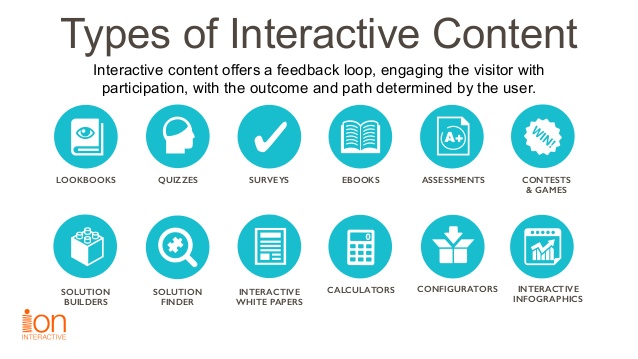
    There are many types of interactive content. Here are some that perform well:

    balancing-your-interactive-content-priorities-3-638

    Webinars/Webcasts

    Share your expertise with your target audience by offering free webinars or webcasts. Find topics that your target audience is most interested in, then take the time to create an engaging and informative presentation. This is a great way to share your industry expertise and drive traffic to your website by putting a timestamp on the event (i.e. join us LIVE at X date and time).

    But don’t make it boring! We all hear the word webinar and (let’s admit it) stifle a yawn. Don’t forget about your killer headline, great description, and interesting topic.

    New to webinars? Check out this step-by-step guide.

    Podcasts

    If you’re not ready to do live presentations just yet, podcasting is a good way to practice your presentation skills and still share your insights with your target audience. The key to driving traffic to your site is to make sure you are consistent and are promoting your podcasts on social media. Over time your audience will grow and you’ll build a repeat audience.

    A quick tip: boost your podcast audience by inviting guests who are influencers or experts in your industry or who have a large following themselves. This will help you generate interest, gain more listeners and increase web traffic.

    Partnerships

    Brand partnerships are a pretty well-known growth hacking strategy and can be an excellent way to increase web traffic and build your audience. You can start by thinking about brands in adjacent markets who, when coupled with your brand, bring added value to your customers.

    Partnerships have compounding growth effects by exposing your brand to new audiences and building your brand reputation at the same time. When done well, they create a virtuous cycle of growth for your brand with both partners and customers.

    Community Building

    People like to weigh in and share their ideas on topics they are passionate about. To increase traffic, build community by engaging directly with your audience. You can do this in a few easy ways.

    Always leave the comments open on your blog and social media posts. Respond to comments and questions quickly and thoughtfully. Encourage the conversation between customers, too! On social media especially, you can ask specific questions to generate a high number of responses and create discourse around topics.

    The more you engage directly with readers who are commenting on your content, the more it will happen. Don’t forget, too, that posts with lots of comments and engagements also show up more on people’s feeds. Building community gets your direct audience more engaged but it also helps generate new interest, too!

    Comment on Other Brands’ Content

    Contribute your insights and comments regularly on other blogs and sites that are relevant to your business. Doing so helps get your name out there, which can drive more traffic to your site in the long term. Just like with guest blogging, you want to make sure your comments are relevant and insightful to build your credibility and establish relationships with other readers.

    Adding genuine thoughts and insights to the conversation on other brands’ content also increases the likelihood that they’ll do the same for you. It also creates potential opportunities for formal brand partnerships as you build relationships with other brands you respect and get value from.

    Timely Content

    Creating content around timely news and events shows your brand is knowledgeable and on the pulse of what’s happening in your industry. Don’t shy away from writing blog articles and social media posts about trending topics. Providing unique opinions shows your brand personality and keeps your content relevant and fresh.

    Join Social Media Groups

    We know that building community, commenting on other brand’s content, and seeking brand partnerships are all ways to increase web traffic. One vehicle for accomplishing these goals is through social media groups. Looking for groups relevant to your business and industry and staying active in their groups helps you make new connections and establish yourself and your brand with other industry professionals.

    Facebook and LinkedIn are the primary social media platforms for group membership and activity, so look there first if you’re taking on this strategy. Once you’re there, don’t be afraid to share your content in an insightful way (steer away from straight promotion which can come off as tone-deaf and self-serving). Industry groups are mainly made up of peers looking to share insights and learn from each other, not scroll through ad content.

    Mobile Optimization

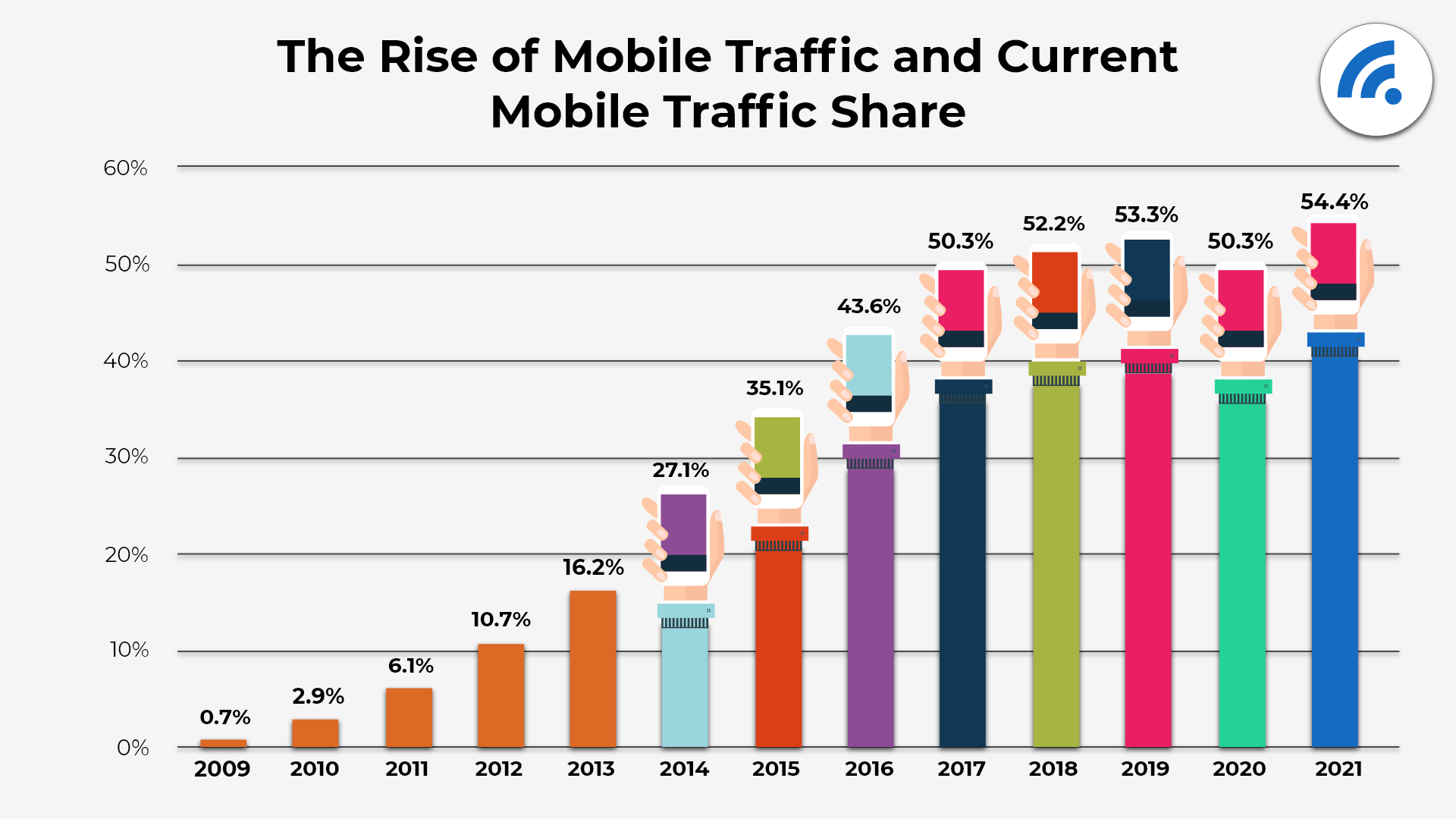
    Today more than half of all web traffic is generated via mobile devices, and Google’s share of search engine queries is at 96%. Google has also implemented mobile-first indexing, meaning that mobile versions of your website may be considered even more important than desktop.

    All of this is to say that if you want to rank higher on SERPs and increase web traffic you must optimize your website for mobile. This is slightly different from creating mobile-friendly content, which works for mobile users but is really built for desktops. Mobile-optimized content is designed with mobile users first in mind.

    Experimentation

    One brand’s secret sauce for success may not necessarily work for you, and for this reason you want to experiment to find out what works best for your brand! Don’t be afraid to try new strategies and put your own spin on them, too. People are drawn to brands that are authentic and unique, so copying exactly what another brand does isn’t likely to bring you success.

    Taking a metrics- and data-driven approach to measuring your content’s performance is the best way to understand which tactics are working best for you. This makes it possible for you to capitalize on the strategies that are driving results and phase out those that aren’t.

  • 21 Methods for helping Your Site Traffic At the present time

    21 Methods for helping Your Site Traffic At the present time

    Ask any advertiser what they need for their site and they’ll probably let you know more traffic and more leads. Since you really want more traffic to acquire leads, we will zero in here on how you can utilize content showcasing to help your web traffic.

    I can read your mind: “Everybody is making happier. How would I contend? How would you really develop your web traffic in this aggressive world?

    There are loads of techniques out there for acquiring guests, including totally satisfied promoting development hacks we depend on. We recommend you try out however many of them as could reasonably be expected. A few techniques and channels work better compared to others relying upon the crowd, brand specialty, subject matter, or rivalry in your space. It really depends on you to know your image and what adjusts best to your substance procedure.

    We’ve grown our own web traffic from nothing to more than 1 million visitors per year:

    And we’ve done it without spending on paid traffic or full-time social media staff.

    So here, I’m gonna share with you some of the ways we use to boost our traffic, as well as every single client website. These are proven strategies to increase web traffic. Let’s take a look!

    21 Ways to Increase Your Website Traffic

    Research Topics for Blog Articles

    We use topic modeling to understand what keywords our audience is using and what topics are related to the topics we care most about. This forces us to think about our audience first. We then create a content calendar filled with a whole year’s worth of content ideas.

    The trick here is to make sure you don’t think too much about whether the topic fits your product profile. If it’s important to your buyer, it’s a great way to boost traffic from people that are interested in the same things your buyers are.

    Publish what they want so you can introduce them to your brand. Topic modeling allows you to identify buyer interest areas that your natural desire to want to promote your products will not allow you to conceive. Start publishing on these topics and you will attract more audience to your website.

    topic modeling example

    Focus on The Right Keywords for your Blog

    We use a combination of high-volume, high purchase intent, long tail, and competitive gap keywords to focus our content creation activities on. When you create content that balances all stages of the buyer journey, you are more likely to capture buyers at any stage of the buyer journey.

    You are also more likely to touch more buyers within an account and with multiple “touches” during their buyer journey.

    Bottom line is that the brand that serves effective content at every stage of the buyer journey will win more new buyers.

    Create Killer Blog Headlines

    Did you know that 8 out of 10 visitors to your website read your headline only? That means only 20% of your web visitors are actually getting to the content you worked so hard to craft for them! Great headlines are the key to fighting back against this statistic.

    This applies to every one of your content promotion strategies: social media ads, SEO rankings, sharing content in email newsletters — you name it. Regardless of the channel you’re using, irresistible headlines that grab attention and leave your audience wanting more are essential for getting them to read your actual content.

    We use brainstorming to suggest 50-100 or more headlines to our clients and then ask the  to rank them quickly based on gut feel. We find this raises the cream of the best headlines to the top.

    Publish Blog Posts 2-4 Times Per Week

    In our blog frequency research, we found that 2-4 blog posts per week is the best way to increase traffic and leads.

    In fact, we have found that 2-4 times per week is the special moment when the highest rate of growth occurs. How much? If you want to boost your website traffic by 2-4x, then publish 2-3 times per week.

    We also found that there is really no diminishing return. The more you publish, the more traffic and leads you will get! So if you haven’t started blogging, you really need to start today. There are about a million reasons why we think you should be publishing a blog on your website, so we’ll pick a few of the most important.

    Today, 93% of online experiences start with search engines. Your blog is the main source of SEO content. Without one, you’re missing the biggest opportunity out there to increase web traffic. Your blog establishes your brand personality and expertise in your industry. It’s more affordable than any paid advertising tactic and much more effective.

    Finally, your blog content is where many of your web visitors will find the most value. If you’re covering topics they care about, they’re more likely to stick around on your page. You then have opportunities to convert them to leads with tactics like lead magnets and strong CTAs.

    If you aren’t creating customer-focused content (like a publisher) on your website, then we can not be friends. #SorryNotSorry

    Repurpose or Update Old Blog Content

    Repurposing your older blog content is one of the most efficient ways to give your website traffic a boost. Start by looking for articles that used to perform well but whose traffic has come down. Then update them with newer information, and stats, and add some opinions (this article was originally published in 2015!)

    Look for content that used to rank but has become out of date. Look at any articles with years in them and update those as well. My team has spent the last 3 months doing this to any articles with the years 2020, 2021, and 2022 in them. We have found a 20% uplift when we update these older posts!

    Bar graph showing boost in organic search traffic HubSpot received before and after updating old posts.

    Nurture Your Email List

    Having an email list is one of the best ways to drive return traffic to your website. This is because you’re nurturing a group of people (your subscriber list) who are already interested in your brand. With the right approach, email marketing can be one of your top sources of web traffic.

    Here are some simple best practices to get started:

    https://youtube.com/watch?v=crJicYJDofg%3Ffeature%3Doembed

    We recommend building your subscriber list as soon as possible. Make it easy for web visitors to subscribe to your email list with a prominent button, link, or form. Use an email marketing tool like Campaign Monitor, Mailchimp, or Constant Contact to help you track performance metrics from your email marketing efforts.

    Most of all, remember that your email newsletters should aim to be mini-curated versions of your content for that week or month. While promotional messages can certainly be included in your emails, they shouldn’t be the sole or primary focus. Always think about what your subscribers will find valuable (your content) vs. what they will likely dismiss as spam (solely promotional content).

    Promote Your Blog Posts

    Writing your blogs is only half the job. You also need to promote them to maximize the potential for brand visibility and drive web traffic.

    So how do you do it? Some tried and true blog promotion tactics include:

    • Sharing your posts on social media – This is an easy one. Get your blog posts on social media to give them more visibility and potential to be shared.
    • Make your content shareable – Creating shareable content is one of the most effective ways to get your blog promoted by visitors who enjoyed it.
    • Include blog posts in your email newsletter – Be sure your subscribers are seeing your best content by sharing it in emails.
    • Repurpose old content – Take your most popular blog content and repurpose it into an ebook, video, infographic, or other engaging forms of content.

    Check out this post for 8 ways to boost website traffic with social media.

    Use Social Media Re-Marketing

    We know that social media is a great marketing tool for both B2C and B2B brands. But social media alone isn’t enough to boost website traffic. You need to combine it with the power of your article research to take your website a step further.

    Start by installing a tracking pixel on your website from one of the social media platforms your audience uses most in order to set up re-marketing audiences. You can do it for both Facebook and Twitter to keep engaging with your web visitors on those platforms after they’ve left your site.

    Why is this important? Here’s a startling statistic: 95% of people who visit your website will not return again. While this number can vary across brands and industries, a quick look at your new vs. returning web visitors will tell you that the majority are not returners.

    Re-marketing through social media is an important way for you to continue driving interest and return web traffic that may ultimately convert into leads and sales.

    Try Blog Syndication

    Syndicating your posts on other sites is another great way to drive traffic to your blog or site. Search for top sites your target audience may visit frequently and reach out to the editors to see if they would be willing to feature your content.

    Just be careful. Some sites will take an unrestricted license (and even sell) your content. I’ve been burned using this approach but I’ve also benefited greatly. Think carefully about the audience (and the ethics) of the site owners where you want to syndicate. For most authors, syndicating your content can provide access to a new audience and help you build authority.

    Guest Contribution

    Many sites today accept blog contributions, and it helps drive more traffic to your site and build your credibility as well as brand awareness. Look for sites that have a strong readership or the target audience you are trying to reach.

    You can also invite industry thought leaders and influencers to guest blog or interview them for blogs. The name recognition will not only increase traffic to your site but boost your credibility as well. You can even build an entire army of volunteer contributors to your own site by asking for guest contributors.

    SEO Optimization

    Optimizing your site for search engines is the best way to boost your organic traffic. Don’t forget that statistic — 93% of web experiences are starting with the search! Be sure you’re using SEO best practices for all of your content and paying attention to Google ranking factors as they evolve over time.

    Some of the most important places to focus:

    • High-value content – It’s not just about hitting keywords anymore. Google AI is smarter than that, and they’re analyzing your content to make sure it’s actually high-quality and relevant to the topic and audience.
    • Keywords – But keywords are still important. Use a tool like SEMRush to get a huge list of keywords you can cluster and organize into topics you know your audience wants.
    • Headlines – We talked about this, but it’s worth mentioning again. Without an awesome headline, you likely won’t even get noticed. Focus on writing headlines that readers can’t resist!
    • Include Visual Content – Content marketing is all about visual content these days. Including images and videos in your content makes it more engaging, increases shareability, and helps it rank higher on SERPs.
    • Pay Attention to Technical Stuff – Meta descriptions, image alt-text, tags — it all plays an important role in helping your content rank. Don’t forget the little things!

    Interactive Content

    We’ve all been there — we go on the internet with a specific goal in mind only to realize 10 minutes later we’re taking a quiz about what kind of cat we’d be based on our zodiac sign.

    The thing is, people will take fun quizzes, surveys, and the like on just about anything. It’s part of the internet experience in 2021. So why not use them to make your content more fun and interactive? To boot, interactive content can also create more value for your customer because it can help them learn something about themselves.

    What we mean is that we don’t recommend you use a cat quiz (unless you’re on Buzzfeed). Think instead about what you want your audience to discover as it relates to your content, and create something interactive to help them do it. So, if you’re writing an article about blogging best practices, maybe you include a quick test your readers can take to score their blog as it exists today. This helps them understand how your content is going to help them improve.

    There are many types of interactive content. Here are some that perform well:

    types of interactive

    Webinars/Webcasts

    Share your expertise with your target audience by offering free webinars or webcasts. Find topics that your target audience is most interested in, then take the time to create an engaging and informative presentation. This is a great way to share your industry expertise and drive traffic to your website by putting a timestamp on the event (i.e. join us LIVE at X date and time).

    But don’t make it boring! We all hear the word webinar and (let’s admit it) stifle a yawn. Don’t forget about your killer headline, great description, and interesting topic.

    New to webinars? Check out this step-by-step guide.

    Podcasts

    If you’re not ready to do live presentations just yet, podcasting is a good way to practice your presentation skills and still share your insights with your target audience. The key to driving traffic to your site is to make sure you are consistent and are promoting your podcasts on social media. Over time your audience will grow and you’ll build a repeat audience.

    Quick tip: boost your podcast audience by inviting guests who are influencers or experts in your industry or who have a large following themselves. This will help you generate interest, gain more listeners and increase web traffic.

    Partnerships

    Brand partnerships are a pretty well-known growth hacking strategy and can be an excellent way to increase web traffic and build your audience. You can start by thinking about brands in adjacent markets who, when coupled with your brand, bring added value to your customers.

    Partnerships have compounding growth effects by exposing your brand to new audiences and building your brand reputation at the same time. When done well, they create a virtuous cycle of growth for your brand with both partners and customers.

    Community Building

    People like to weigh in and share their ideas on topics they are passionate about. To increase traffic, build community by engaging directly with your audience. You can do this in a few easy ways.

    Always leave the comments open on your blog and social media posts. Respond to comments and questions quickly and thoughtfully. Encourage the conversation between customers, too! On social media especially, you can ask specific questions to generate a high number of responses and create discourse around topics.

    The more you engage directly with readers who are commenting on your content, the more it will happen. Don’t forget, too, that posts with lots of comments and engagements also show up more on people’s feeds. Building community gets your direct audience more engaged but it also helps generate new interest, too!

    Comment on Other Brands’ Content

    Contribute your insights and comments regularly on other blogs and sites that are relevant to your business. Doing so helps get your name out there, which can drive more traffic to your site in the long term. Just like with guest blogging, you want to make sure your comments are relevant and insightful to build your credibility and establish relationships with other readers.

    Adding genuine thoughts and insights to the conversation on other brands’ content also increases the likelihood that they’ll do the same for you. It also creates potential opportunities for formal brand partnerships as you build relationships with other brands you respect and get value from.

    Timely Content

    Creating content around timely news and events shows your brand is knowledgeable and on the pulse of what’s happening in your industry. Don’t shy away from writing blog articles and social media posts about trending topics. Providing unique opinions shows your brand personality and keeps your content relevant and fresh.

    Join Social Media Groups

    We know that building community, commenting on other brand’s content, and seeking brand partnerships are all ways to increase web traffic. One vehicle for accomplishing these goals is through social media groups. Looking for groups relevant to your business and industry and staying active in their groups helps you make new connections and establish yourself and your brand with other industry professionals.

    Facebook and LinkedIn are the primary social media platforms for group membership and activity, so look there first if you’re taking on this strategy. Once you’re there, don’t be afraid to share your content in an insightful way (steer away from straight promotion which can come off as tone-deaf and self-serving). Industry groups are mainly made up of peers looking to share insights and learn from each other, not scroll through ad content.

    Mobile Optimization

    Today more than half of all web traffic is generated via mobile devices, and Google’s share of search engine queries is at 96%. Google has also implemented mobile-first indexing, meaning that mobile versions of your website may be considered even more important than desktop.

    mobile web traffic growth

    All of this is to say that if you want to rank higher on SERPs and increase web traffic you must optimize your website for mobile. This is slightly different from creating mobile-friendly content, which works for mobile users but is really built for desktop. Mobile-optimized content is designed with mobile users first in mind.

    Experimentation

    One brand’s secret sauce for success may not necessarily work for you, and for this reason you want to experiment to find out what works best for your brand! Don’t be afraid to try new strategies and put your own spin on them, too. People are drawn to brands that are authentic and unique, so copying exactly what another brand does isn’t likely to bring you success.

    Taking a metrics- and data-driven approach to measuring your content’s performance is the best way to understand which tactics are working best for you. This makes it possible for you to capitalize on the strategies that are driving results and phase out those that aren’t.

  • 5 Steps to Improve Lead Generation ROI

    5 Steps to Improve Lead Generation ROI

    Let’s be honest, your lead generation strategy might need some work if it’s not producing ROI. The whole point of lead generation is to generate leads that close!

    In modern times, B2B and B2C consumers are overwhelmed by sales, advertising, and marketing teams vying for their attention. You can’t rely on one pipeline or blast out an email to your prospect list and call it a day.

    More (quality) leads = more sales = increased revenue, which makes everyone happy. You need a long-term strategy that incorporates each aspect of your business and pulls in the expertise of each department.

    However, lead generation often starts with marketing.

    Quick takeaways:

    • The majority of B2B marketers are struggling with lead generation – you’re in the right place!
    • Don’t put all of your eggs in the email campaign basket – diversify your lead generation strategy.
    • Each lead generation avenue comes with its own means of tracking data and ROI.
    • SEO-driven content on your website could help drive organic traffic and leads to you today!

    What does lead generation look like today?

    Lead generation is the process of identifying, qualifying and nurturing potential customers for a business’s products or services.

    You can generate leads in a number of different ways. Some examples include:

    • Content marketing
    • In-person events
    • Direct marketing
    • Email campaigns

    Each lead generation avenue should be employed with an end goal in mind. For example, if you’re planning an in-person event to target your audience 1:1, come prepared with compelling visual aids that draw them in. Bring your top sales and product reps to nurture new connections and share how your company can solve their problems.

    Another key component to lead generation ROI is by investing in education for your customers, and consistent messaging across channels. Content marketing ties into each area of lead generation because it not only provides your team with a landing page of resources to reference in emails and conversations with potential customers but also offers a way for your audience to find you organically.

    Email lists and cold calls are not going to cut it for these crafty buyers of today. If you expect customers to trust you when making a high-involvement purchase such as your products or services, you need to tailor your efforts to your audience’s requirements.

    By building and fostering connections with prospects at multiple touch-points, your prospects could turn leads and soon, paying customers.

    Why is Lead Generation ROI Important?

    You’re not alone! 61% of marketers say that lead generation is their number 1 challenge. Second, at 39% is proving lead generation ROI.

    Chart surveying marketers that demonstrates the struggle of lead generation and proving ROI

    Each means of lead generation will come with its own set of rules and standards. But acquiring and converting leads is clearly a major pain point in the realm of business that you can begin to solve today.

    We understand you’re responsible for the decisions you make and it all comes back to ROI. How do you measure lead generation ROI to show your boss that your efforts are paying off and contributing to the bottom line?

    5 Steps to Improve Lead Generation ROI

    Step 1: Set your objective with clear goals

    The metrics you choose should be quantifiable and aligned with your sales goals.  Think sales, leads, and pipeline. Focus on the goal – not the way to get there.

    Sit down with your Sales VP and ask them what they want. If they want only “Hot Leads” ask how they define that. Create a lead scoring system. Aim to deliver to the right quality and then forecast the quantity.

    Focus on delivering quality over quantity.

    Step 2: Create your marketing plan

    Use past performance to determine what worked. It might benefit you to take inventory of all of your former means of lead generation and marketing campaigns to find trends and gaps in the data. Maybe there’s an old email campaign that could be repurposed or modernized.

    Reverse-engineer previous tactics that have delivered exactly what your sales peers have asked for. This is a quantifiable science. There are plenty of statistical modeling tools that can help you determine which mix of tactics, topics, and partners will deliver a predictable result.

    Another part of your plan that shouldn’t take more than a few weeks of dedication is to clean and update your website, testimonials, reviews, and social media.

    Website

    Your website should not only be optimized for search, but it should act as its own lead-generation machine. You should be proud to showcase your work and send prospects through a seamless buying journey.

    Having a well-designed, mobile-friendly, and easily navigable website is a must today.

    Statistics that show why you should redesign your website and how it could benefit your lead generation ROI.

    Keep in mind, a fantastic website will cost you a sizable chunk of money, but the ROI is immeasurable.

    Testimonials

    Are you asking for Google reviews or testimonials? Maybe your customers are raving to you privately via email about your product or service, but you feel uncomfortable asking for a public review.

    The only mistake you’re making is not asking your customers for reviews at all. Start by asking them to copy and paste what they’ve already written to you in a Google review. It’s public, and then you could even turn it into a visually pleasing asset on your website! Two birds, one stone.

    Social media

    Social media can amplify your presence in the industry, but don’t be a robot.

    If you’re willing to invest in the proper social platforms for your business, you could attract unique leads who appreciate what you have to say.

    Step 3: Negotiate with top partners

    Call those vendors that have delivered targeted prospects that have converted in the past and negotiate on a pay-for-performance basis. Your partners need to share the risk of your investment and they will reap the rewards in renewed sales.

    Now might be a good time to put feelers out there for other lead generation companies. Dedicate a few hours per week to shopping around and see if any agency or tool jumps out at you. If that’s too daunting of a task, ask your peers at other companies if they’ve had success with a particular agency. What works for them could work for you, too!

    Step 4: Identify or create valuable content and offers

    This is the trickiest part. If you have content, the test which pieces work best. If you need to create content – research the top trending keywords, article titles, and customer pain points.

    Ask your partners. Ask your current customers. Whatever you do, do not assume that product brochures, customer case studies, or articles written by your boss will resonate.

    According to Content Marketing Institute, 80% of B2B marketers utilize content marketing for lead generation. And great news, it actually works. Marketers that use blogs to generate traffic are 13 times more likely to generate positive ROIs.

    Is your company blog in good shape? Or is your CEO preaching to you that you need more content on your shiny products?

    Through consistent SEO blog writing, your organic website traffic could double in just 12 months. And those aren’t even cold leads, but rather customers looking for answers to their problems, and you’re the one with the solution!

    Step 5: Optimize & Analyze

    Numbers don’t lie. Use internal data to identify trends and constantly optimize based on them.

    Make yourself aware of economic, social, and behavioral changes within your target audience so you can adjust your messaging and strategies accordingly. Only when you know where your leads are coming from will you be able to hone in on converting them.

    This is where the conversation with sales and the relationship with your vendor partners pay off. If your Sales VP isn’t happy, adjust the plan, and work with your vendors to deliver what is really needed.

    Once you’ve got the basics down and the leads are pouring in, consider how your team will most efficiently manage and nurture your leads.

    BONUS: Check out these 20 lead-generation resources.

    If you follow these 5 steps, you will produce leads and revenue for your company, build a better relationship with sales, and improve your engagement with your customers. Now go out and become a demand generation rock star and come back to tell us about your success.

    With content marketing, you can drive qualified traffic to your website and engage new visitors. Build your brand story and online presence for tremendous success in the new year. Establish yourself as a thought leader and build trust with customers with quality, consistent content production.

    MIG is a content marketing agency and a thought leader. We’d love to help you grow your business successfully by developing superbly written, keyword-rich articles to help your company climb the SERPs as quickly as possible.

  • 6 Standards of High-Changing over Presentation pages

    6 Standards of High-Changing over Presentation pages

    High-changing points of arrival are one of the main parts of your image’s web presence.

    They’re many times what might be compared to your initial feeling with expected clients, and they’re your best open door to catch leads. Without them, a large portion of the web traffic you procure winds up lost since guests leave without making any further moves.

    Get this: marks that intensely use points of arrival as a feature of their transformation system (have 30-40 presentation pages) get 7x a bigger number of leads than those that don’t (1-5 greeting pages).

    Depending on the size of your company and website, 30-40 landing pages may not be realistic or even make sense, but the key takeaway is clear: high-converting landing pages drive results for brands that use them.

    So, what exactly is a landing page? How are they different from other pages on your website?

    Landing pages are specifically created to convert your web visitors into viable leads. They drive user action using lead-capture tools that offer users something valuable (like exclusive content or purchase discounts) in exchange for their contact information. They’re often connected to a specific campaign or program that draws interest in your brand.

    The primary goal of your landing pages is to compel your target audience to convert. For this reason, it’s extremely important that your landing pages are designed strategically. They should include a clear, compelling message that motivates visitors to act.

    In this post, we’ll cover 7 principles of high-converting landing pages that you can use as a guide when creating a new landing page, or a checklist to make sure your existing landing pages hit the mark.

    Let’s get started.

    Quick Takeaways:

    • Headlines are a top determiner of whether a web visitor will stick around long enough to really see your offer.
    • High-converting landing pages focus on value first, then brand.
    • Landing pages should always be visually clean and simple, with the most important messages prominently displayed.
    • Social proof is a top motivator of consumer behavior and can be incorporated on landing pages with testimonials and reviews.
    • Lead magnets and other effective conversion tools are the most critical component of landing page performance.

    6 principles of high-converting landing pages

    Have a killer headline

    Did you know that you have about 15 seconds to make an impression on your web visitors? After that, people are leaving your website to keep browsing — unless you capture their attention and pique their interest with a great headline.

    Your headline is one of the most critical contributors to landing page success. Today, web users are moving fast and without a clear message that grabs their attention right away, they’ll move on before you can blink.

    When crafting your headline, think first about your value proposition. What are you offering your web visitors that will motivate them to stick around? Make it prominent in your headline so there’s no chance that people miss it.

    Here are some other easy and proven tips for writing headlines that get attention:

    • Use numbers – Headlines with numbers are the most preferred and most clicked type of headline, and they also convert at the highest rate. Highrise, a CRM software company, found that their landing page converted at a 30% higher rate when its headline included a number.
    • Use Negative Language – This sounds counterintuitive, but it’s really effective. Using words like “never” or “no more” call your customer’s attention immediately to the problem or need they want your brand to solve. Seeing you promise to do just that right in your headline keeps them around to learn more.
    • Don’t Be Wordy – Studies have shown that headlines with fewer words (usually somewhere between 5-10) perform better. Keep in mind, too, that Google only displays 60 characters of your headline, which is about 10 words.

    Take a deeper dive into great headlines with marketing guru Neil Patel:

    https://youtube.com/watch?v=JOkowdWfD98%3Fstart%3D1%26feature%3Doembed

    Killer headlines aren’t just about keeping people around in the beginning, either. Research has shown that 90% of people who read your headline will also read your call to action (CTA) — the message that tells users exactly what next step you want them to take.

    Focus on your value, not your brand

    Unless you’re Coca-Cola or Amazon or Disney (and even if you are, really) you can’t lean simply on your brand name to get results. Landing pages are meant to drive prospects to specific offers and programs, not to tell them about your company in general.

    High-converting landing pages focus on value first, not the brand. Your value proposition should always be reflected in your headline and above-the-fold copy.

    Always be sure the value proposition in your landing page messages matches the one you included in your ads, headlines, or CTA buttons that lead them to your landing page in the first place. People don’t want to feel misled or like they’re wasting their time visiting a page that’s different from what they expect.

    Be specific! Tell your visitors exactly how the offer will provide value for them, whether it’s through content that will help them solve a problem or a discount offer that will save them money.

    And remember: people care first and foremost about fulfilling their own needs. That’s almost always why we search for things on the internet! We all love our own brands, but the best way to make others love it too is by clearly showing how it can make their lives better or easier.

    Keep it clean and simple

    You can’t include everything on one landing page and trying to do so will severely impact your page’s performance. In fact, research shows that including multiple offers on one landing page decreases conversions by more than 200%!

    Remember when we covered how brands with more landing pages convert more than brands with fewer? This is likely a big reason why!

    The right strategy is not including more content on one landing page, it’s creating more landing pages that each focus on one specific campaign, program, or offer.

    The keep-it-simple rule applies to design, too. Visuals are important (more on that later) and so is the compelling copy. But including too much of either will clutter your page and make it harder for visitors to find the most important message.

    When it comes to high-converting landing pages, less is usually more. The goal is to make it as quick and easy as possible for your visitors to take the next step.

    Focus on the most important things you need to communicate to prospective customers and prioritize them. Aim for a page design that is visually appealing but never busy, helping to call out important content rather than hiding it amidst too many visuals or design components.

    Use Social Proof

    There’s one strategy that works more effectively than any other when it comes to convincing consumers to do something: social proof. Social proof is the phenomenon by which people copy the actions of others. They want to do what everyone else is doing.

    This is nothing new, right? We all get FOMO, and it applies to consumer behavior too. A whopping 92% of consumers trust both peer recommendations and those from strangers. To boot, the average consumer reads 10 reviews before making a purchase.

    Social proof is at the core of building consumer trust, and you should use it on your landing page to drive home the value of your offer and show visitors how others are already benefiting from your brand.

    A few easy ways to incorporate social proof onto your landing page is by including a testimonial (or a few — but remember not to make your copy cluttered) prominently on your page. You can also link your social media feed or customer review page so visitors can go directly to the source to see what others are saying about your offerings.

    Test your landing page’s performance

    Never assume that your results have peaked. No matter how many best practices you follow, it’s never a good idea to settle for your current results. Instead, continually test and measure your landing page’s performance. Look for opportunities to make small tweaks and improvements to increase performance.

    The best way to do this is utilizing Google Analytics or another performance data platform (but we really recommend Google — it’s free and user-friendly) to look for insights from data about site speed, visitor demographics, time spent on site, click-through rates, and more.

    Here’s what the Google Analytics landing page report looks like. You can see it provides critical information like the number of total sessions, number of new users, and average session duration.

    google analytics landing page report screenshot

    Work periodic performance analysis into your content strategy and plan to ensure you’re always finding ways to optimize your site. You can also make educated decisions about where you can A/B test to maximize every part of your site. Some commonly A/B tested web components are CTA copy, CTA positioning, headlines, and form fields.

    Use an effective conversion tool

    Last but definitely not least, every high converting landing page needs an effective conversion tool to capture contact information.

    If your message is strong and your visitors are already interested, your value proposition will likely capture leads effectively. Many landing pages take this route by promising high-quality content through a subscription, offering a discount to those who sign up for email updates, or making a similar type of offer.

    But you can also up the ante with lead magnets.

    Lead magnets offer something specific and high value (and usually downloadable) to anyone who follows a landing page’s CTA to complete a form or sign up to receive emails. Lead magnets offer something more valuable than your standard free content. They usually aim to solve a specific problem or challenge your visitors likely have.

    Common types of lead magnets include PDF checklists and how-to guides, video webinars, ebooks, and whitepapers. They are extremely effective, increasing opt-in rates by up to 85%.

    Create content that converts

    Marketing Insider Group’s team of writers and SEO experts can deliver you optimized, ready-to-publish content every week for one year.

  • How Request Age Advertising Can Accelerate Development Missions

    How Request Age Advertising Can Accelerate Development Missions

    With regards to driving development for your organization, you can’t stand to disregard the worth of interest age promoting. With an extensive interest age methodology, you can make interest in and craving for your items or administrations. Subsequently, you can scale quickly and hit your quarterly and yearly income objectives.

    Before you set out on a full-scale request age drive, you might require an update on how the idea functions. Indeed, even prepared advertisers can become befuddled about request age boundaries. Having the option to comprehend what it is, what it isn’t, and how to exploit its advantages is fundamental.

    What Request Age Resembles in real life

    Request age is best depicted as a top-of-pipe showcasing capability. The strategies utilized during the interest age stage are intended for shopper mindfulness. Be that as it may, they’re not centered around lead age, essentially. That is a confounding point to many individuals who liken requests to getting leads. As made sense of by Issue Made, request age tightens up sensations of need for a brand, thing, experience, and so on. Conversely, lead age expects the interest to be there and makes it a stride further into the sustaining domain.

    An effective method for taking a gander at this distinction in a true situation is to think about the development of the filtered water industry. However interest in filtered water is supposed to develop at a CAGR of 6.7% until 2030, that request wasn’t generally the area of strength for so. Before the 1990s, filtered water was accessible but not thought about fundamental by the general population. Then, huge drink brands made a huge difference.

    Brands like the Coca-Cola Organization put on a push for modest filtered water as a reviving option in contrast to soft drinks, juices, and other refreshments. The move — expanded by admonitions about the deficiencies and possible risks of city regular water — brought about popularity. Today, nobody flickers at the prospect of buying filtered water in light of the fact that the craving is so natural and imbued.

    Normal Interest Age-Promoting Strategies

    There’s little doubt that if you can foster demand for what you offer, you’ll find it easier to convert consumers into customers. The key is deploying the right mix of demand-generation marketing tactics. Though you don’t have to engage in all demand marketing approaches, you should have a good idea of the most common ones.

    1. Customer reviews

    In the digital age, user reviews have the power to sway readers. Whether the reviews are on your website or a third-party app, they can be huge assets to your demand generation machine. Case in point: Retail Insider indicates that 83% of people don’t fully trust corporate-driven advertising. Yet 95% of shoppers admit that reviews can and do influence their buying behaviors.

    With this in mind, part of your demand generation marketing program could include requests for reviews from customers. Getting reviews can be challenging, so try sweetening the pot by offering incentives. Or, just follow up after your first “ask”. Sometimes, all it takes is a reminder or two.

    2. Informational, inspirational content

    A large part of most demand-generation marketing initiatives revolves around content. And content can include anything from whitepapers and infographics to blog posts and videos. You can’t rev up demand if you’re not being visible with content in all its forms.

    To optimize the output and efficiency of your content, try to do at least “double duty” with each piece. For example, make sure that an article you’re writing for a high-ranking publication includes backlinks to your site. Plus, be sure that any social media posts have strong CTAs so you can prompt people to move into your pipeline.

    3. Social media and other online influencers

    The role of social influencers continues to grow and can be useful for your demand generation marketing. Even micro-influencers with modest followings can bring about an interest boost in your company.

    If you’re working as a marketer for a B2B sales industry, you may want to look for influencers who have podcasts or routinely Livestream. The podcasting movement is continuing to swell. Finding the right podcaster to promote your brand, merchandise, or expertise could be a game-changer.

    4. Advertising campaigns

    Paid digital and offline advertisements can play a part in your demand generation marketing roadmap. With advertisements, you can target and retarget people who fit your top customer personas. That way, those people will be introduced to your brand.

    Demand generation advertising should concentrate on educating and enticing rather than directly selling. You want to make readers hungry for more information, not try to convert them immediately. Consequently, include a CTA that sends them down the path toward lead generation but doesn’t try to turn them into instant fans.

    Final Tips for Demand Generation Marketing Success

    If you’re trying to grow your business, you can’t overlook demand generation marketing. But be ready to put some of these tips into play as you establish your demand generation initiatives:

    • Demand generation takes patience. It won’t make your brand a household name overnight. With consistency, though, it can make your brand familiar and desired.
    • Demand generation should be measured. The only way to know if your demand generation strategies are working is to measure them. Some helpful KPIs to track include customer lifetime value, number of sales-qualified leads, and customer acquisition cost.
    • Demand generation requires constant testing. Brush off your A/B split test skills. You’ll want to test the efficacy of all demand-related content to find out what’s building excitement most effectively.

    When there’s a buzz around your brand, you’re better positioned to quickly scale up operations and profit margins. And demand generation marketing can be one of the speediest ways to grow any business.

  • Wouldn’t it be great to Know the “WHY”​ behind the Intent Leads?

    Wouldn’t it be great to Know the “WHY”​ behind the Intent Leads?

    As professionals, we often find ourselves working with others to achieve a common goal. Whether it’s collaborating on a project, providing a service, or making a sale, understanding the motivations and desires of those we work with is crucial to our success.

    But too often, we focus solely on the “what” and “how” of a situation, without considering the “why.” We may know what someone wants to accomplish, and we may even have a plan in place to help them get there, but without understanding the underlying reasons behind their intent, we may miss important opportunities to build trust and create mutually beneficial outcomes.

    So, wouldn’t it be great to know the “why” behind the intent of those we work with? Absolutely! Understanding the reasons behind someone’s actions can help us to better align our efforts with their goals, and can lead to more productive and satisfying interactions.

    For example, if you are working with a client to design a new marketing campaign, knowing the “why” behind their request can inform the direction you take with the project. Maybe they want to increase brand awareness in a specific market segment, or maybe they are looking to drive more traffic to their website. Understanding the underlying motivations for their request can help you to tailor your approach and provide more value to your client.

    The same principle applies to sales situations. If you understand the “why” behind a potential customer’s interest in your product or service, you can tailor your pitch to better address their needs and desires. This can increase the likelihood of making a sale and can also lead to more satisfied customers in the long run.

    In short, understanding the “why” behind someone’s intent is a key component of effective communication and successful interactions. By taking the time to consider the motivations and goals of those we work with, we can create more meaningful and productive relationships and outcomes.

  • Why Is Top Of The Funnel Marketing Important?

    Why Is Top Of The Funnel Marketing Important?

    Introduction

    If you’re looking to attract more customers, then you need to know about Top of the Funnel (ToFu) marketing. This is a great way to generate new leads and build your brand. You need to entice your leads and educate them. It improves your brand awareness! A greater percentage of your lead generation budget should be allocated to the top of the funnel.

    ToFu marketing is a great way to generate new leads and build your brand.

    ToFu marketing is a powerful way to generate leads, build brand awareness and credibility, and increase your sales funnel.

    The ToFu method focuses on generating new leads at the top of the sales funnel—specifically for marketing purposes (as opposed to product or service-based companies). Content that you create for this purpose should be highly focused on educating visitors about your company’s offerings while also demonstrating your expertise in a given field. This can include case studies, ebooks, webinars, and white papers.

    When done right, ToFu content has the ability to help you grow your list of email subscribers by inspiring them to join up with you so that they can get access to more great resources like these!

    You need to entice your leads and educate them.

    You need to entice your leads and educate them.
    ToFu marketing is a great way to generate new leads and build your brand. It improves your brand awareness!

    It improves your brand awareness!

    Brand awareness is the first step in any customer journey. It’s a long-term investment that can pay off in the short term, but more importantly, it’s critical to your sales funnel.
    While you can measure brand awareness with a simple Google Analytics report, this is only half the battle—the other half is understanding how and why your audiences choose your products and services over others. This understanding will help you build an effective sales funnel—one that ultimately brings in real dollars for your business.

    A greater percentage of your lead generation budget should be allocated to the top of the funnel.

    According to HubSpot, a marketing automation platform and software company, approximately 50% of your budget should be allocated to the top of the funnel. Once you have identified who your target audience is and where they are most likely to hang out online, it’s time to start building their interest with content that piques their curiosity.
    The goal here is simple: you want to generate new leads and then educate them about what makes you different from other companies in your industry.
    The top of the funnel (TOFU) is called this because this part of the process focuses on generating new leads for your business by using a variety of strategies including SEO optimization, content creation, paid advertising on social media platforms like Facebook or Instagram, etc., all with one goal in mind: getting people into contact with your business so they can learn more about what sets you apart from others.

    Conclusion

    I hope that you now understand the importance of top-of-the-funnel marketing. It is a great way to generate new leads, build your brand and improve your brand awareness. The key takeaway here is that a greater percentage of your lead generation budget should be allocated toward ToFu marketing efforts.

    Written By: Adi S | Market Wavegen

  • Focus on both nurturing and attracting leads

    Focus on both nurturing and attracting leads

    Introduction

    The most successful companies focus on both nurturing and attracting new leads. Some of the best companies have mastered this strategy by focusing on lead conversion rates and number of sales opportunities. By doing so, they’ve established a strong foundation for their business growth. However, this isn’t always easy to do—it takes a lot of time and effort from everyone involved! Here are some tips that will help you master this strategy:

    Nurturing Leads

    You should be nurturing all your leads, not just the ones who are ready to buy. With so many decisions and options available to buyers, it’s critical that you stay top-of-mind with them and demonstrate a commitment to providing value before trying to close any deals.

    Before we get into how you can nurture leads, let’s first talk about why this is important.

    • It helps you build trust: When someone buys from a company for the first time, they’re often hesitant about whether they made the right decision. Nurturing allows you to earn their trust by showing them that purchasing from you won’t be a one-time thing—you’ll continue supporting them throughout their journey with your product or service. This builds loyalty by demonstrating that buying from your brand means investing in an ongoing relationship.
    • It creates familiarity: While most people know what they want when it comes time for purchase decisions (i.e., looking at online reviews), others might still have questions about what makes sense for their situation and need reassurance that buying from you is going to provide value for them over time (i.e., asking questions). By answering these questions early in the sales process, prospects are able to form more solid opinions about whether or not purchasing from your company will be worth it down the line—which also increases conversion rates!

    Attracting Leads

    As you know, it’s important to attract leads from multiple sources. To do this effectively, you need to use a variety of lead generation techniques. For example, we’ve found that targeting leads based on their needs and interests can be more effective than general advertising.

    You should also consider using a lead scoring system to determine the best leads for your business. This will help you sort through all of your potential customers and prioritize those who are most likely to make purchases or become loyal clients.

    Now that we’ve covered how attracting new customers works, let’s move on to nurturing them into repeat buyers!

    Increase conversion rates.

    The conversion rate is the number of people who take an action divided by the total number of people who view your site. For example, if 100,000 people visit your site and 10% buy something from you, the conversion rate would be 10%.

    Increasing sales is about getting more visitors to convert into customers. If you want to improve your conversion rates, you need to identify what’s holding back your visitors from taking action and then fix it.

    You need to nurture and attract new leads in order to grow your business.

    You need to nurture leads, attract leads and increase your conversion rates.

    This is not to say that you should focus only on one or the other. You can’t just attract a bunch of people into your funnel and hope they’ll convert. And you can’t just sit back and wait for them to contact you after seeing one of your ads somewhere online. For a business to be successful in any market, it needs both nurturing and attracting new customers from day one through the life cycle of their relationship with your brand until they become paying customers – if this sounds like something you want (and why wouldn’t it?), then read on!

    Conclusion

    The most successful sales teams don’t just sell, they nurture and attract leads. Sales is a complex process, and if you want to be successful, you need both nurturing and attracting leads in your playbook.

  • The Missing Piece to Your Marketing Puzzle

    The Missing Piece to Your Marketing Puzzle

    You’ve tried every marketing tactic in the book. You’ve dabbled in content marketing, active social media, even a little bit of TV and radio. But for some reason, your marketing campaigns just aren’t bringing in the results you want. The problem could be that you’re missing a crucial piece to your marketing puzzle. One that, once put into place, will help all your other marketing efforts fall into place. And that missing piece is data-driven marketing. In this blog post, we’ll explore what data-driven marketing is and how it can help you boost your bottom line. We’ll also look at some examples of companies who have used data-driven marketing to great effect and see what lessons we can learn from them.

    Defining Your Target Market

    Your target market is the group of people who are most likely to buy your product or service. To find your target market, you need to figure out who your ideal customer is. This can be done by considering factors such as age, gender, location, interests, and income level.

    Once you have a good idea of who your target market is, you need to start thinking about how to reach them. This involves creating marketing materials that will appeal to them and using marketing channels that they are likely to use. For example, if your target market is young adults, you might use social media or online advertising to reach them.

    If you take the time to define your target market and tailor your marketing efforts accordingly, you’ll be well on your way to success.

    Researching Your Target Market

    One of the most important, but often overlooked, pieces to your marketing puzzle is researching your target market. Without understanding who your target market is and what they want, it will be very difficult to create an effective marketing strategy.

    There are a few key things you should keep in mind when researching your target market:

    1. Who are they?

    Who are the people you are trying to reach with your product or service? What are their demographics? What do they do for a living? What are their interests?

    2. What do they want?

    What are the needs and wants of your target market? What problem are they trying to solve with your product or service?

    3. Where can you find them?

    Where do your target market members congregate online and offline? What websites or publications do they read? Where do they like to hang out?

    Crafting Your Marketing Message

    Assuming you have a product or service that people want, the next step is to get your message in front of them. The challenge is that there are a lot of voices out there competing for attention, so your message needs to be clear and concise to cut through the noise.

    Here are some tips for crafting your marketing message:

    1. Keep it simple

    2. Focus on what you do best

    3. Highlight the benefits of your product or service

    4. Appeal to emotion

    5. Use strong visuals

    6. Make it easy to understand

    7. Tell a story

    8. Address common objections

    Putting Your Marketing Puzzle Together

    As a business owner, you know that marketing is key to driving awareness and growth for your company. But with so many moving parts, it can be tough to know where to start or what steps to take next. That’s where we come in!

    We specialize in helping businesses like your piece together their marketing puzzle. We’ll work with you to assess your current situation, identify your goals, and create a customized plan to help you reach your target audience.

    Whether you’re just getting started with marketing or looking to take your efforts to the next level, we can help you put all the pieces of your puzzle together. Contact Market Wavegen today to get started!