Category: Blogs

  • The Future of Demand Gen: No More Funnels, Only Ecosystems.

    The Future of Demand Gen: No More Funnels, Only Ecosystems.

    Industry Trend Breakdown & Real-World Examples

    The traditional marketing funnel—where leads enter at the top, go through qualification stages, and convert at the bottom—is quickly becoming outdated. In today’s digital landscape, B2B growth isn’t linear; it’s dynamic, decentralized, and influenced by multiple touchpoints outside a brand’s control. This shift has led to the rise of demand generation ecosystems, where engagement, trust, and community-building take center stage.

    The Fall of the Funnel Mentality

    Marketing funnels worked well in an era when information was controlled by companies, and customers relied on direct interactions with sales reps to make purchasing decisions. However, the modern buyer is more independent, consuming content, gathering insights from dark social (private communities, word-of-mouth, and peer recommendations), and making decisions long before they engage with a brand.

    Some key reasons why the funnel is breaking down:

    • Non-linear Buyer Journeys: Customers no longer follow a predictable path. They engage with content, peers, and platforms in a way that suits them.
    • Dark Social’s Rise: Private Slack groups, LinkedIn discussions, and WhatsApp communities shape purchase decisions more than traditional lead-gen forms.
    • Content Overload: Buyers are bombarded with information, making it harder for traditional inbound tactics to stand out.
    • Trust-Based Decision Making: Customers trust peers, influencers, and industry experts over branded content.

    To succeed, businesses must transition from a rigid funnel to a flexible demand generation ecosystem.

    The Ecosystem Approach to Demand Generation

    Instead of pushing prospects down a predefined funnel, modern demand gen focuses on creating an interconnected ecosystem where value exchange happens organically. This ecosystem consists of multiple elements working in tandem:

    1. Dark Social & Community-Led Growth

    Dark social platforms—like niche LinkedIn groups, private Slack channels, and invite-only Discord servers—drive real conversations and purchasing decisions. B2B brands need to actively participate in these spaces rather than just broadcasting content.

    Example: Pavilion, a professional community for revenue leaders, leverages member-generated content and peer interactions to drive engagement and trust without relying on traditional lead capture methods.

    2. Owned & Earned Media Strategy

    Companies need to build assets they own (blogs, newsletters, podcasts) and leverage earned media (guest appearances, partnerships) rather than over-relying on paid campaigns.

    Example: Gong, a revenue intelligence platform, built an ecosystem through organic LinkedIn content and thought leadership, creating demand without aggressive outbound tactics.

    3. Influencer & Employee Advocacy

    Rather than relying solely on brand channels, organizations should activate employees and industry influencers to amplify their message authentically.

    Example: Refine Labs, a B2B marketing agency, prioritizes personal branding for its employees, allowing them to drive awareness and credibility across social platforms.

    4. SEO & Content-Led Demand Capture

    While demand generation focuses on creating awareness, demand capture ensures prospects find your brand when they’re ready to buy. A mix of SEO-driven content and intent-based marketing is crucial.

    Example: HubSpot’s strategy revolves around high-value educational content optimized for search, ensuring they appear when prospects search for relevant solutions.

    5. Product-Led Growth & Free Value Offering

    B2B companies are increasingly adopting product-led growth (PLG), where users experience the value of a product before committing to a purchase.

    Example: Figma’s free plan allowed designers to adopt the tool organically, leading to enterprise-wide adoption without a heavy sales push.

    How to Transition from Funnels to Ecosystems

    1. Rethink Measurement

    • Shift from MQL/SQL tracking to engagement-based metrics.
    • Focus on share of voice, community engagement, and word-of-mouth impact.

    2. Build a Content-Led Strategy

    • Prioritize educational, problem-solving content rather than hard sales pitches.
    • Distribute content across social, communities, and influencer networks.

    3. Leverage Community-Led Growth

    • Create or engage in existing communities where your audience already interacts.
    • Encourage organic discussions and user-generated content.

    4. Implement Dark Funnel Tracking

    • Use qualitative insights from customer interviews and social listening tools.
    • Track engagement across dark social platforms where direct attribution isn’t possible.

    5. Align Sales & Marketing on Value Creation

    • Move beyond cold outreach to relationship-building tactics.
    • Ensure sales teams understand and contribute to content and community strategies.

    Final Thoughts

    The future of demand generation isn’t about forcing prospects through rigid funnels—it’s about creating an ecosystem where they engage, learn, and trust your brand before making a purchase. By leveraging dark social, community-driven growth, and content-led demand generation, businesses can drive sustainable B2B growth in a way that aligns with how modern buyers make decisions.

    Companies that fail to adapt will struggle to capture attention in an increasingly fragmented digital world. Those that embrace an ecosystem approach will not only generate demand but build long-term brand equity and customer loyalty.
  • The Death of Generic B2B Marketing: Personalization at Scale or Nothing.

    The Death of Generic B2B Marketing: Personalization at Scale or Nothing.

    Why Generic B2B Marketing is Dead

    The days of broad, one-size-fits-all B2B marketing are over. Buyers are fatigued by impersonal emails, templated cold outreach, and mass-market content that doesn’t address their unique needs. With decision-makers inundated by generic sales pitches, the only way to stand out is through hyper-personalization.

    The Data Speaks: Personalization Drives Revenue

    • 80% of B2B buyers expect the same level of personalization as B2C customers (Forrester).
    • Personalized emails have a 26% higher open rate and generate 6x higher transaction rates (Campaign Monitor).
    • 78% of B2B companies using AI-driven personalization report a direct increase in sales conversions (McKinsey).

    In other words, if you’re not leveraging AI-powered marketing and personalized outreach, your competitors are—and they’re winning.


    The New Age of B2B Marketing: Personalization at Scale

    1. Deep Audience Segmentation: Go Beyond Industry Tags

    Traditional segmentation based on company size or industry is no longer enough. Instead, successful B2B marketers use:

    • Behavioral data (what content they consume, engagement levels, site visits)
    • Firmographics (revenue, growth rate, funding rounds, hiring trends)
    • Psychographics (pain points, decision-making triggers, preferred communication styles)

    🔹 Example: Instead of targeting “SaaS CEOs,” segment them as:

    • VC-backed SaaS startups with aggressive hiring trends.
    • Bootstrapped SaaS founders focusing on profitability.
    • Mid-market SaaS scaling from $10M to $50M ARR.

    2. AI-Powered Sales Outreach: Beyond First Names

    Using AI-driven tools, you can hyper-personalize outreach at scale. But personalization goes beyond adding a prospect’s first name in an email. True hyper-personalization involves: ✅ Real-time insights – AI tools like MarketWaveGen analyze a prospect’s recent LinkedIn activity or company news before sending outreach. ✅ Dynamic content insertion – Tailor email copy based on a lead’s specific role, industry, and challenges. ✅ Predictive engagement scoring – AI determines the best time and channel to engage (email, LinkedIn, calls, video messages).

    🔹 Example: Instead of sending “Hey John, I see you’re in SaaS,” try:
    “Hey John, I saw your company just raised Series B funding. Scaling sales teams fast is tough—here’s how top SaaS companies like [competitor] use AI-powered sales playbooks to hit aggressive revenue goals.”

    3. Hyper-Personalized Content: Real Value, Not Fluff

    Content marketing must evolve beyond generic whitepapers and ebooks. High-impact content is:

    • Persona-specific – Different content for CFOs vs. Sales Directors.
    • Context-aware – Adjust messaging based on a company’s funding stage, industry trends, and pain points.
    • Dynamically delivered – AI-driven content hubs personalize recommendations based on user behavior.

    🔹 Example: Instead of publishing a general “B2B Marketing Trends 2024” report, create custom interactive dashboards that change insights based on a user’s industry and company size.


    Actionable Framework: How to Implement Hyper-Personalization in B2B

    Step 1: Build a Data-Rich ICP (Ideal Customer Profile)

    • Use AI tools like Clearbit, Apollo, or 6sense to enrich prospect data.
    • Track real-time intent signals (website visits, content downloads, LinkedIn interactions).

    Step 2: Automate Personalized Outreach with AI

    • Use tools like Outreach.io or Salesloft to create dynamic email sequences.
    • Leverage LinkedIn automation for warm, relationship-based engagement.
    • Incorporate personalized video messages using Vidyard or Loom.

    Step 3: Scale Personalized Content with AI-Generated Dynamic Assets

    • Build AI-driven content hubs that adapt based on user behavior.
    • Personalize blog recommendations using machine learning algorithms.
    • Automate custom reports for prospects using their own industry data.

    Final Thought: Adapt or Be Ignored

    Generic B2B marketing isn’t just ineffective—it’s actively damaging your brand. Decision-makers now expect tailored, relevant, and insightful engagements. AI-powered hyper-personalization isn’t the future of B2B marketing; it’s the present.

    🔹 Take Action Now: If your B2B marketing strategy isn’t leveraging AI for personalization at scale, you’re already behind. Start optimizing today, or risk being left in the dust.

  • What role does A/B testing play in optimizing ABM campaigns?

    What role does A/B testing play in optimizing ABM campaigns?

    A/B testing plays a crucial role in optimising Account-Based Marketing (ABM) campaigns by allowing marketers to experiment with different strategies, messages, and formats to identify what resonates best with targeted accounts. This data-driven approach not only enhances engagement but also improves conversion rates, ultimately leading to more successful campaigns. Here’s how A/B testing can be effectively integrated into your ABM strategy.

    Understanding A/B Testing in ABM

    A/B testing, also known as split testing, involves comparing two versions of a marketing asset—such as an email, landing page, or ad—to determine which one performs better. In the context of ABM, this means tailoring your marketing efforts to specific accounts and measuring the impact of various elements on engagement and conversion.

    Key Benefits of A/B Testing in ABM

    1. Personalization: A/B testing allows marketers to personalize content for different segments of their target accounts. By testing variations in messaging, subject lines, and calls to action (CTAs), marketers can identify which elements resonate most effectively with specific audiences[2].
    2. Data-Driven Decisions: With A/B testing, decisions are based on empirical data rather than assumptions. This approach helps in refining strategies to maximize the effectiveness of campaigns, ensuring that resources are allocated to the most impactful tactics.
    3. Improved Engagement: By continuously testing and optimizing content, marketers can enhance engagement rates among target accounts. Higher engagement often translates to better conversion rates, leading to increased revenue[1].
    4. Enhanced ROI: A/B testing helps identify the most effective strategies, which can lead to a higher return on investment. By focusing on what works, businesses can avoid wasting resources on ineffective tactics and instead invest in strategies that drive results[4].

    Implementing A/B Testing in Your ABM Campaigns

    1. Define Your Objectives

    Before conducting A/B tests, it’s essential to define clear objectives. What specific outcomes do you want to achieve? This could include increasing email open rates, improving landing page conversions, or enhancing engagement on social media. Having clear goals will guide your testing process.

    2. Identify Key Elements to Test

    In ABM campaigns, several elements can be tested:

    • Messaging: Experiment with different messaging styles, tones, and content types. For example, test a more formal approach against a conversational tone to see which garners better responses from decision-makers.
    • Subject Lines: For email campaigns, subject lines are critical. A/B test various subject lines to determine which ones lead to higher open rates. Consider using pain points or industry-specific language to see what resonates more with your audience[2].
    • CTAs: Calls to action are vital in guiding prospects toward the next steps. Test different CTAs to find out which prompts lead to higher conversion rates, such as “Request a Demo” versus “Take a Tour”[3].
    • Design Elements: For landing pages, test different layouts, images, and color schemes to identify which combinations lead to better user experiences and higher conversion rates[3].

    3. Segment Your Audience

    Effective A/B testing in ABM requires segmentation of your audience. Identify different segments within your target accounts based on factors such as industry, company size, or previous interactions with your brand. This allows for more tailored testing and helps in understanding which elements work best for specific groups[4].

    4. Conduct the Tests

    Once you have defined your objectives and identified the elements to test, it’s time to run the A/B tests. Ensure that you only change one variable at a time to accurately measure the impact of that specific change.

    • For email campaigns, send one version of the email to half of your targeted recipients and the other version to the remaining half.
    • For landing pages, direct traffic to different versions and monitor how users interact with each one.

    5. Analyze Results

    After running your tests, analyze the results to determine which version performed better. Look at key performance indicators (KPIs) such as open rates, click-through rates, and conversion rates to assess the effectiveness of each variation. Use this data to make informed decisions about your ABM strategy moving forward[2][4].

    6. Optimize and Iterate

    A/B testing is not a one-time process; it’s an ongoing cycle of optimization. Use the insights gained from your tests to refine your messaging, design, and overall strategy. Continuously test new ideas and variations to keep your campaigns fresh and relevant to your target accounts.

    Challenges and Considerations

    While A/B testing is a powerful tool, there are challenges to consider:

    • Sample Size: Ensure that your tests have a sufficient sample size to achieve statistically significant results. Small sample sizes can lead to misleading conclusions.
    • Timing: Conduct tests over a sufficient time frame to account for variations in user behavior. Testing too quickly may not yield reliable data.
    • Alignment with ABM Goals: Ensure that your A/B testing aligns with your overall ABM objectives. The insights gained should directly contribute to enhancing your targeting and personalization efforts[5].

    Conclusion

    A/B testing is an invaluable component of optimizing ABM campaigns. By allowing marketers to experiment with different strategies and measure their effectiveness, A/B testing enhances personalization, improves engagement, and ultimately drives better results. By implementing a structured A/B testing process, businesses can refine their ABM strategies, maximize ROI, and build stronger relationships with high-value accounts.

    In the competitive landscape of B2B marketing, leveraging A/B testing effectively can be the key to unlocking the full potential of your ABM initiatives.

    FAQ

    1. What is A/B testing in the context of ABM?
      A/B testing involves comparing two versions of a marketing asset, such as an email or landing page, to determine which one performs better when targeting specific accounts in an ABM strategy.
    2. Why is A/B testing important for optimizing ABM campaigns?
      A/B testing allows marketers to personalize content, make data-driven decisions, improve engagement, and enhance ROI by identifying the most effective strategies for each target account.
    3. How do you implement A/B testing in ABM campaigns?
      To implement A/B testing, define your objectives, identify key elements to test (messaging, subject lines, CTAs, design), segment your audience, conduct the tests, analyze results, and continuously optimize based on insights.
    4. What are some common challenges in A/B testing for ABM?
      Common challenges include ensuring sufficient sample size, timing the tests appropriately, and aligning A/B testing with overall ABM goals. Marketers must also consider data quality and maintaining alignment between sales and marketing teams.
    5. How does A/B testing contribute to the success of ABM campaigns?
      A/B testing enhances personalization, improves engagement, and drives better results by allowing marketers to experiment with different strategies and measure their effectiveness. This data-driven approach is crucial for refining ABM initiatives and building stronger relationships with high-value accounts.

  • The Ultimate Guide to Defining Your Ideal Customer Profile (ICP) for B2B Marketing.

    The Ultimate Guide to Defining Your Ideal Customer Profile (ICP) for B2B Marketing.

    In the competitive landscape of B2B marketing, understanding your target audience is crucial. One of the most effective ways to do this is by creating an Ideal Customer Profile (ICP). Unlike buyer personas, which focus on individual decision-makers, ICPs are detailed descriptions of the types of companies that would benefit most from your product or service. This guide will walk you through the steps to define your ICP and explain why it’s an essential component of a successful B2B marketing strategy.

    What is an Ideal Customer Profile (ICP)?

    An Ideal Customer Profile is a comprehensive outline of the ideal company that perfectly aligns with your product or service. This goes beyond just demographic information; it includes a mix of firmographic details (like industry, company size, and location) and behavioural attributes (such as purchasing patterns and common challenges). The purpose of an ICP is to focus your marketing and sales efforts on the companies most likely to generate high-value engagements and long-term relationships.

    The Importance of an ICP in B2B Marketing

    Creating a clear ICP is vital for several reasons:

    1. Focused Efforts: By knowing exactly who your ideal customers are, you can concentrate your marketing and sales efforts more effectively, ensuring that you’re reaching out to companies that are more likely to convert.
    2. Resource Optimization: Targeting the right companies helps in allocating your resources more efficiently. This means better ROI on marketing campaigns and more efficient use of sales resources.
    3. Personalized Messaging: An ICP allows you to craft messages that resonate deeply with your ideal customers, addressing their specific pain points and needs.
    4. Product Development: Understanding the needs and challenges of your ideal customers can guide your product development efforts, ensuring that your offerings are perfectly aligned with market demand.

    Steps to Define Your B2B Ideal Customer Profile

    Step 1: Identify Your Best Customers

    Start by analyzing your existing customer base. Look for customers who have the highest lifetime value, the lowest churn rates, and provide the most positive feedback. These are typically the customers who find the most value in your product or service.

    Step 2: Analyze Customer Data

    Once you’ve identified your best customers, dive into the data. Key data points include industry, company size, annual revenue, and geographic location. Additionally, look at behavioural data such as purchasing patterns and customer journey insights. Utilizing CRM tools and data analytics platforms can streamline this process, allowing you to gather and analyze this data efficiently.

    Step 3: Conduct Interviews and Surveys

    While data analysis provides quantitative insights, qualitative data is equally important. Conduct interviews and surveys with your best customers to gain deeper insights into their pain points, decision-making processes, and what they value most about your product or service. This step helps in understanding the ‘why’ behind the data, giving you a fuller picture of your ideal customer.

    Step 4: Create Your ICP Template

    Now that you have a wealth of data, it’s time to compile it into a comprehensive ICP template. This template should include:

    • Industry: Identify the specific industries where your solution is most effective.
    • Company Size: Define the ideal range of employee count and annual revenue.
    • Geographic Location: Specify the regions where your product is most successful.
    • Pain Points: List the common challenges your solution addresses.
    • Behavioural Traits: Describe typical purchasing behaviours and decision-making processes.

    Step 5: Refine and Validate Your ICP

    An ICP is not static; it should evolve as your business and market landscape change. Regularly update and refine your ICP based on new data and feedback. Test your ICP by targeting a segment of your audience and measuring the results. This iterative process ensures that your ICP remains accurate and relevant.

    Examples of Ideal Customer Profiles for B2B

    Example 1:

    • Industry: SaaS companies
    • Company Size: 50-200 employees
    • Location: North America
    • Pain Points: Difficulty in scaling customer support
    • Behavioural Traits: Rapid adoption of new technologies

    Example 2:

    • Industry: Manufacturing
    • Company Size: 200-500 employees
    • Location: Europe
    • Pain Points: Inefficiencies in supply chain management
    • Behavioural Traits: Preference for long-term partnerships

    Leveraging ICP in Your Marketing Strategy

    Once your ICP is defined, it becomes a powerful tool that can enhance all aspects of your marketing strategy:

    1. Content Marketing: Develop content that speaks directly to the pain points and needs of your ICP. This ensures that your content is not only engaging but also highly relevant to your target audience.
    2. Email Campaigns: Craft personalized email campaigns that address the specific challenges and goals of your ideal customers. Personalization can significantly increase engagement and conversion rates.
    3. Advertising: Use targeted ads to reach companies that fit your ICP. By focusing your ad spend on the right audience, you can optimize your ROI and increase the effectiveness of your advertising efforts.
    4. Sales Strategy: Equip your sales team with detailed insights from your ICP. This knowledge allows them to tailor their approach and communication, making them more effective in converting leads into customers.

    How Can Market Wavegen Help You?

    Defining and leveraging an ICP can be complex, but partnering with a specialized agency can make the process smoother and more effective. Market Wavegen, a leading SaaS B2B marketing agency in India, offers AI-driven and practical marketing strategies designed to help your business thrive. From increasing brand awareness and driving conversions to maximizing customer retention, Market Wavegen provides comprehensive solutions tailored to your unique needs.

    Their expertise in data-driven marketing and AI technologies can help you refine your ICP, optimize your marketing strategies, and ultimately, boost your business growth. By focusing on high-quality B2B leads and using intelligent database marketing, they ensure that your marketing efforts are not just wide-reaching but also precisely targeted.

    Conclusion

    An Ideal Customer Profile is a cornerstone of effective B2B marketing. It helps you focus your efforts, optimize resources, and create personalized marketing messages that resonate with your ideal customers. By regularly refining and validating your ICP, you can stay ahead of the competition and continuously improve your marketing strategies. Whether you’re just starting out or looking to refine your approach, understanding and leveraging your ICP is crucial for long-term success. Partnering with an expert agency like Market Wavegen can further streamline this process, providing you with the tools and strategies you need to achieve your business goals.

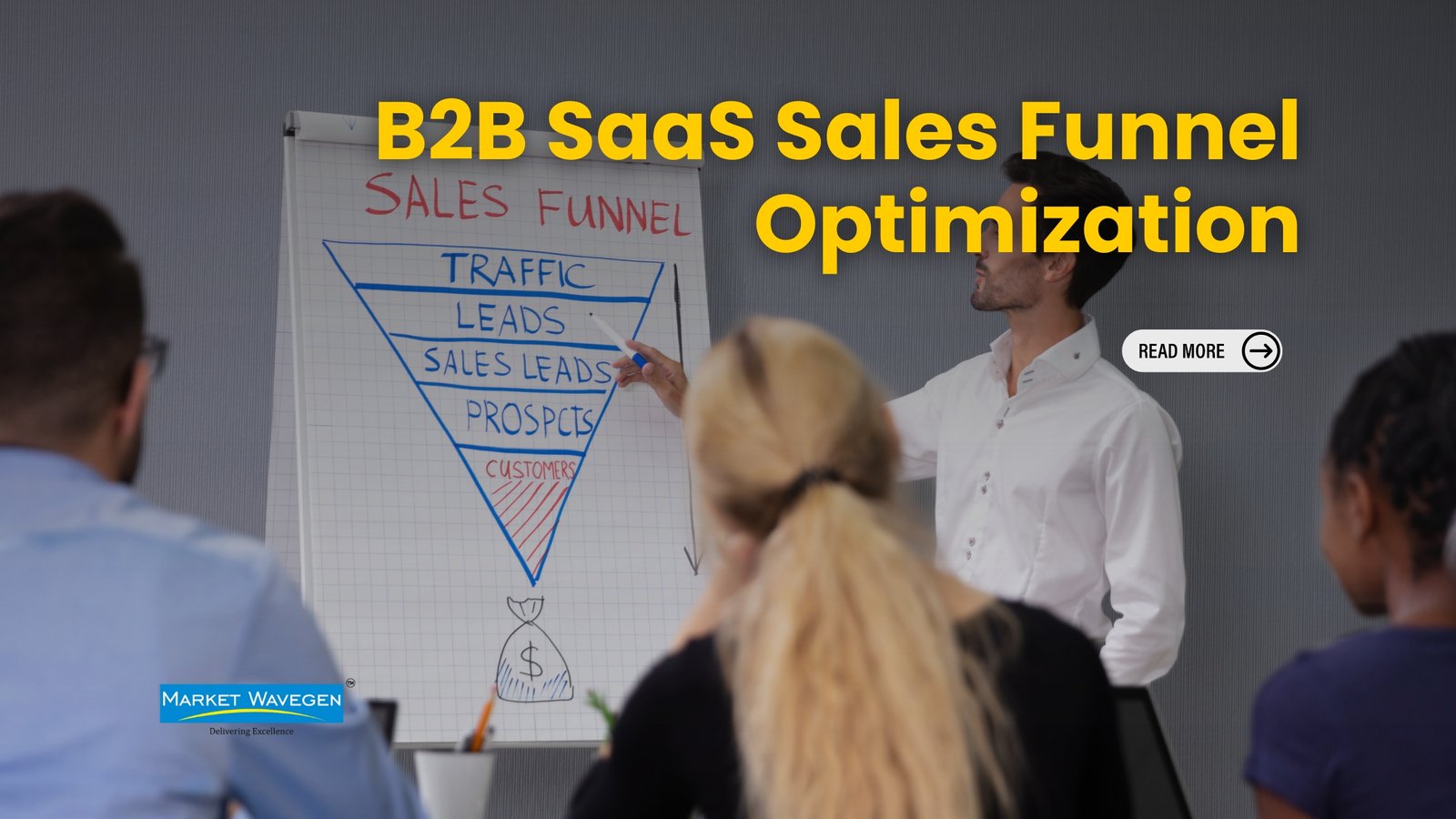
  • B2B SaaS Sales Funnel Optimization. Streamlining Conversions and Retention.

    B2B SaaS Sales Funnel Optimization. Streamlining Conversions and Retention.

    The B2B SaaS (Software as a Service) industry is characterized by its competitive nature and the need for innovative strategies to attract, convert, and retain customers. Optimizing the sales funnel is crucial for maximizing conversions and ensuring long-term customer retention. Market Wavegen, with its expertise in Strategic Information Retrieval Systems (SIRS) and Intelligent Database Account-Based Marketing (ABM), offers cutting-edge solutions to help B2B SaaS companies streamline their sales funnels effectively. This blog explores how Market Wavegen’s services and data can enhance each stage of the B2B SaaS sales funnel.

    Understanding the B2B SaaS Sales Funnel

    A typical B2B SaaS sales funnel can be divided into four main stages:

    1. Awareness: Potential customers become aware of your product or service.
    2. Consideration: Prospects evaluate your offering against competitors.
    3. Decision: Prospects decide to purchase your product.
    4. Retention: Customers continue using and renewing your product, potentially becoming advocates.

    Stage 1: Enhancing Awareness with Market Wavegen

    The top of the funnel is all about capturing the attention of potential customers. Market Wavegen’s services can significantly enhance awareness through targeted market research and strategic information retrieval.

    1. Comprehensive Market Research: Market Wavegen utilizes SIRS to gather extensive data from various sources, including online databases, industry reports, social media, and customer feedback. This comprehensive approach ensures that your business has access to a wealth of information, enabling more accurate and informed decision-making.
    2. SEO Optimization: Market Wavegen’s expertise in data-driven SEO strategies helps improve your website’s search engine rankings. By analyzing and implementing relevant keywords, meta descriptions, and alt text, your business can attract more organic traffic.
    3. Social Media Insights: Leveraging data from social media platforms, Market Wavegen can help your business understand audience behavior and preferences. This insight allows for more effective social media engagement and content sharing.
    4. Paid Advertising Strategies: Market Wavegen’s data-driven approach to PPC (Pay-Per-Click) campaigns ensures that your ads reach the right audience. Targeted ads can drive immediate traffic to your site, increasing brand visibility and awareness.

    Stage 2: Driving Consideration with Market Wavegen

    Once potential customers are aware of your product, the next step is to nurture them through the consideration phase. Market Wavegen’s Intelligent Database ABM strategies are key to building trust and demonstrating value.

    1. Personalized Email Campaigns: Using data from Intelligent Databases, Market Wavegen helps create highly personalized email marketing campaigns. By segmenting lists based on specific criteria, your business can send targeted content that addresses the unique needs of each prospect.
    2. Case Studies and Testimonials: Market Wavegen can help gather and showcase success stories from existing customers. By leveraging these case studies and testimonials, your business can provide social proof and demonstrate real-world benefits.
    3. Product Demos and Free Trials: Market Wavegen’s data-driven insights can identify the best prospects for product demos and free trials. This targeted approach increases the likelihood of converting leads into customers.
    4. Educational Webinars: With Market Wavegen’s expertise, your business can host webinars that delve deeper into industry topics and showcase how your product solves specific problems. This positions your company as an expert and helps prospects make informed decisions.

    Stage 3: Facilitating Decision-Making with Market Wavegen

    At the decision stage, prospects are evaluating whether to purchase your product. Market Wavegen’s services streamline this phase, making it easier for prospects to make a decision.

    1. Clear Value Proposition: Market Wavegen helps refine your value proposition to ensure it is clear and compelling. Prospects should immediately understand the benefits and ROI (Return on Investment) of choosing your product.
    2. Transparent Pricing: Market Wavegen’s data insights can guide you in developing transparent and competitive pricing strategies. Clear pricing structures reduce friction and build trust with potential customers.
    3. Sales Support: Market Wavegen equips your sales team with the necessary tools and information to close deals. Personalized follow-ups, detailed product information, and addressing any objections promptly can seal the deal.
    4. Streamlined Onboarding: Market Wavegen’s expertise in customer experience ensures that your onboarding process is smooth and efficient. A positive onboarding experience sets the tone for the customer’s journey and reduces the likelihood of churn.

    Stage 4: Boosting Retention with Market Wavegen

    Retaining customers is just as important as acquiring them. Market Wavegen’s focus on customer success can lead to long-term loyalty and advocacy.

    1. Continuous Engagement: Market Wavegen helps maintain regular communication with your customers through newsletters, updates, and personalized check-ins. Keeping them informed and engaged ensures they feel valued.
    2. Exceptional Customer Support: Market Wavegen’s data-driven approach to customer support ensures quick response times and knowledgeable assistance. Multiple support channels (chat, email, phone) are essential for resolving issues promptly.
    3. Product Improvements: Market Wavegen continuously collects and analyzes customer feedback to inform product improvements. Regular updates and new features show customers that you are committed to delivering the best possible experience.
    4. Loyalty Programs: Market Wavegen can help design loyalty programs that reward long-term customers. Discounts, exclusive features, and early access to new releases can incentivize renewals and advocacy.

    Leveraging Market Wavegen’s Technology for Funnel Optimization

    To effectively manage and optimize your sales funnel, leveraging Market Wavegen’s technology is crucial:

    1. CRM Systems: Market Wavegen’s CRM solutions track interactions, manage leads, and streamline communication. A robust CRM system provides valuable insights into your sales pipeline.
    2. Marketing Automation: Market Wavegen’s marketing automation tools nurture leads through personalized email campaigns, track engagement, and score leads based on their behavior.
    3. Analytics Platforms: Market Wavegen’s analytics platforms measure the performance of your sales funnel. Key metrics like conversion rates, churn rates, and customer lifetime value provide actionable insights for continuous improvement.
    4. A/B Testing: Market Wavegen conducts A/B testing on various elements of your sales process, such as email subject lines, landing pages, and call-to-action buttons. This helps identify what works best and refine your strategies accordingly.

    Conclusion

    Optimizing your B2B SaaS sales funnel with Market Wavegen’s services and data is an ongoing process that requires a deep understanding of your target audience and a commitment to continuous improvement. By enhancing each stage of the funnel—from awareness to retention—you can attract high-quality leads, convert them into loyal customers, and foster long-term business growth. Market Wavegen’s advanced technologies and strategic insights ensure your sales funnel remains efficient and effective in an ever-evolving market.

  • How Generative AI Boosts SMART ABM Performance.

    How Generative AI Boosts SMART ABM Performance.

    Account-Based Marketing (ABM) has always been about precision and personalization. But with the advent of Generative AI, it’s entering a new era of hyper-targeted, intelligent outreach. Let’s explore how Gen AI can supercharge your SMART ABM strategy and deliver a staggering 3x improvement in results.

    Understanding the SMART ABM-Gen AI Synergy

    SMART ABM is a data-driven approach that focuses on identifying and engaging ideal customer profiles. Gen AI, with its ability to process vast amounts of data, can significantly enhance this process. Here’s how:

    • Hyper-Personalized Account Insights: Gen AI can analyze a wealth of data points, including firmographic, technographic, and behavioral information, to create highly detailed account profiles. These insights allow you to tailor your messaging and offers with unprecedented accuracy.
    • Intelligent Content Generation: Creating compelling content that resonates with each account is time-consuming. Gen AI can rapidly generate personalized content, such as emails, landing pages, and social media posts, aligned with specific account preferences and pain points.
    • Predictive Account Scoring: Gen AI can predict account behavior and propensity to buy, enabling you to prioritize your efforts on accounts with the highest potential. This predictive capability helps you optimize resource allocation and maximize ROI.
    • Real-time Personalization: Gen AI can analyze customer interactions in real-time and adjust messaging accordingly. This ensures that every touchpoint is relevant and engaging, driving higher conversion rates.
    • Enhanced Lead Scoring and Qualification: By combining AI-powered lead scoring with ABM, you can identify high-quality leads within your target accounts more efficiently. This helps sales teams focus on opportunities with the greatest potential.

    3X Better Results with Gen AI-Powered SMART ABM

    When Gen AI is integrated into your SMART ABM strategy, you can expect a significant boost in performance:

    • Increased Conversion Rates: Hyper-personalized messaging and offers resonate more strongly with target accounts, resulting in higher conversion rates at every stage of the funnel.
    • Improved Sales Efficiency: By focusing on high-potential accounts and automating routine tasks, sales teams can dedicate more time to building relationships and closing deals.
    • Accelerated Time-to-Revenue: Faster identification of qualified leads and more efficient sales cycles contribute to a shorter sales cycle and accelerated revenue generation.
    • Deeper Customer Insights: The rich data generated by Gen AI provides valuable insights into customer behavior and preferences, enabling you to refine your targeting and messaging over time.
    • Stronger Customer Relationships: Highly personalized and relevant interactions build trust and loyalty, fostering long-term customer relationships.

    By harnessing the power of Gen AI, you can elevate your SMART ABM strategy to new heights, achieving remarkable results and gaining a competitive edge.

    Transform your marketing strategy today with Gen AI-powered SMART ABM. Contact Market Wavegen Business Development Solutions now to boost your conversion rates and drive significant growth.

    Schedule a consultation with our experts and start achieving extraordinary results.

  • B2B Demand Generation Tactics. How to Attract and Convert Buyers in 2024

    B2B Demand Generation Tactics. How to Attract and Convert Buyers in 2024

    In 2024, the B2B marketplace continues to evolve at a rapid pace, driven by technological advancements, changing buyer behaviors, and the increasing need for personalized marketing approaches. As businesses look to thrive in this competitive environment, mastering the art of demand generation becomes crucial. This blog post delves into the latest B2B demand generation tactics that can help you attract and convert buyers more effectively.

    Understanding Modern B2B Buyers

    The first step in any effective demand generation strategy is understanding who your buyers are and what they want. Today’s B2B buyers are more informed, connected, and selective than ever before. They perform extensive research online and prefer engaging content that addresses their specific needs and challenges. To capture their interest, businesses must provide value through every interaction, leveraging data-driven insights to deliver personalized experiences.

    Content Marketing: The Keystone of Demand Generation

    Content marketing remains a cornerstone of B2B demand generation. However, the focus has shifted from quantity to quality. High-quality, relevant content that solves problems or provides unique insights will attract more buyers. Blogs, whitepapers, eBooks, and case studies are excellent tools for demonstrating thought leadership and industry expertise. To enhance your content’s reach and effectiveness, optimize it for SEO by including targeted keywords, engaging titles, and meta descriptions.

    Interactive Content for Engagement

    Interactive content such as quizzes, polls, infographics, and interactive videos can significantly increase engagement rates. These formats encourage participation and can provide valuable insights into your audience’s preferences and pain points, allowing for more targeted marketing efforts.

    Leveraging Technology for Enhanced Targeting

    Advancements in marketing technology offer unprecedented opportunities to target potential buyers. Tools like Customer Relationship Management (CRM) systems and marketing automation platforms enable businesses to segment their audience more accurately and tailor their messaging accordingly. Artificial Intelligence (AI) and machine learning can also predict buyer behavior, helping marketers create content and campaigns that are more likely to convert.

    Predictive Analytics

    Utilizing predictive analytics can transform how businesses approach potential customers. By analyzing past behavior and industry trends, predictive models can identify who is most likely to buy, what products they will be interested in, and the best time to reach them. This targeted approach not only improves the efficiency of demand generation campaigns but also enhances the overall customer experience.

    Multi-Channel Marketing

    In 2024, multi-channel marketing is not just an option; it’s a necessity. Buyers expect a seamless experience across all platforms, whether it’s social media, email, or your company website. Integrating your marketing efforts across these channels ensures that your message reaches potential buyers no matter where they are. It’s also crucial to align your sales and marketing teams to ensure that potential leads are properly nurtured and converted.

    Social Media Influence

    Social media platforms are invaluable for B2B marketers looking to expand their reach and engage with potential buyers. Platforms like LinkedIn, Twitter, and industry-specific forums can be used to share content, participate in discussions, and build brand visibility. Paid advertising on these platforms can also drive more targeted traffic to your site, increasing the chances of conversion.

    Analytics and Measurement

    To continually improve your demand generation efforts, it’s essential to measure the effectiveness of your strategies. Key performance indicators (KPIs) such as lead generation rates, conversion rates, and ROI from various campaigns provide valuable feedback. These metrics help identify what’s working and what’s not, allowing for data-driven decision-making.

    Continuous Improvement

    The B2B marketplace is always changing, and so should your marketing strategies. Regularly reviewing and adjusting your tactics based on analytics and market trends will help you stay ahead of the competition. Always be testing new approaches and refining existing ones to optimize your demand generation process.

    Conclusion

    As we move further into 2024, the ability to adapt and innovate in your demand generation tactics will determine your success in the B2B sector. By understanding your audience, leveraging the right technology, and utilizing a multi-channel approach, you can attract and convert more buyers than ever before. Remember, the key to demand generation is not just generating leads but building relationships that lead to long-term business growth.

    By employing these tactics, your business can not only meet the expectations of modern B2B buyers but exceed them, setting the stage for sustained success in a competitive marketplace.

  • How to Enhance B2B Email Marketing Through Effective Email Authentication?

    How to Enhance B2B Email Marketing Through Effective Email Authentication?

    In the realm of B2B marketing, email continues to be a cornerstone of communication and outreach strategies. However, the effectiveness of these campaigns hinges significantly on the trust and security perceived in these interactions. Effective email authentication is not just a technical necessity; it’s a strategic asset that can significantly enhance the impact of your B2B email marketing efforts. This blog explores how businesses can leverage email authentication to improve deliverability, build trust, and ultimately drive greater engagement and conversions.

    Understanding Email Authentication

    Email authentication helps verify that an email claiming to come from a specific domain is authorized by the domain owner. This is crucial because it prevents spammers from using your domain to send unauthorized emails, commonly known as email spoofing. The three main standards used in email authentication are SPF (Sender Policy Framework), DKIM (DomainKeys Identified Mail), and DMARC (Domain-based Message Authentication, Reporting & Conformance).

    1. SPF (Sender Policy Framework): SPF allows senders to define which IP addresses are allowed to send mail for a particular domain. This is done by adding an SPF record to the DNS settings of your domain.
    2. DKIM (DomainKeys Identified Mail): DKIM provides a way to validate a domain identity that is associated with a message through cryptographic authentication. Implementing DKIM involves adding a digital signature to the headers of email messages. This signature can be verified by recipients against a public cryptographic key in the domain’s DNS records.
    3. DMARC (Domain-based Message Authentication, Reporting & Conformance): DMARC unifies SPF and DKIM authentication mechanisms with a consistent set of policies. It also adds a reporting function that allows senders and receivers to improve and monitor protection of the domain from fraudulent email.

    Benefits of Email Authentication in B2B Marketing

    Enhanced Deliverability

    One of the most direct benefits of robust email authentication is improved email deliverability. Email servers use SPF, DKIM, and DMARC to verify that the emails being sent are legitimate and not spam. This means that properly authenticated emails are less likely to be rejected or marked as spam by email servers, ensuring that your content reaches the inbox of your intended recipients.

    Building Trust and Reputation

    Email authentication not only protects your domain from being used for email spoofing but also builds your reputation as a trustworthy sender. When your emails are consistently authenticated, email service providers recognize your domain as legitimate and safe, which can improve your sender reputation. Higher reputation scores are directly correlated with higher inbox placement rates.

    Preventing Phishing and Protecting Your Brand

    Phishing attacks can damage your brand’s reputation and erode trust with your customers. By implementing email authentication, you can protect your customers from potential phishing attacks purported to be from your domain. This is crucial in maintaining the integrity of your communications and the safety of your customers’ information.

    Implementing Email Authentication: Steps for B2B Marketers

    Step 1: Set Up SPF Records

    Start by setting up an SPF record in your DNS. This tells email servers which IP addresses are authorized to send emails on behalf of your domain.

    Step 2: Configure DKIM

    Next, configure DKIM by generating a public/private key pair and adding the DKIM signature to your emails. Publish the public key in your DNS records.

    Step 3: Implement DMARC

    Finally, implement DMARC by publishing a DMARC policy in your DNS records. Start with a none policy to monitor how your emails are being handled and gradually move to more restrictive policies as needed.

    Step 4: Monitor and Adjust

    Regular monitoring of SPF, DKIM, and DMARC reports is essential. These reports will help you identify and rectify any issues with your email delivery. Adjust your policies and configurations based on these insights to optimize the security and effectiveness of your email marketing campaigns.

    Conclusion

    Effective email authentication is pivotal in enhancing B2B email marketing strategies. By implementing SPF, DKIM, and DMARC, marketers can improve email deliverability, build trust with their audience, protect their brand from phishing attacks, and ultimately drive better marketing results. Start integrating these practices into your email marketing strategy today to secure your digital communications and enhance your B2B marketing efforts.

  • The Impact of Virtual and Hybrid Events on ABM Shaping Strategies and Opportunities for Personalised Engagement.

    The Impact of Virtual and Hybrid Events on ABM Shaping Strategies and Opportunities for Personalised Engagement.

    In the ever-evolving landscape of B2B marketing, Account-Based Marketing (ABM) has emerged as a cornerstone strategy for targeting high-value accounts with precision and personalised engagement. With the advent of virtual and hybrid events, the dynamics of ABM have transformed significantly, offering new avenues for marketers to connect with their target accounts in more meaningful ways. This blog explores how virtual and hybrid events are shaping ABM strategies and the opportunities they present for personalised engagement.

    Understanding Virtual and Hybrid Events

    Virtual Events

    Virtual events are conducted entirely online, leveraging digital platforms to host webinars, conferences, trade shows, and meetings. These events have gained immense popularity, especially in the wake of the COVID-19 pandemic, providing a safe and convenient alternative to traditional in-person gatherings.

    Hybrid Events

    Hybrid events combine elements of both in-person and virtual events. They allow participants to choose between attending physically or joining remotely via online platforms. This dual approach offers the best of both worlds, catering to diverse preferences and expanding reach.

    The Synergy Between Virtual/Hybrid Events and ABM

    Enhanced Data Collection and Insights

    One of the most significant advantages of virtual and hybrid events is the wealth of data they generate. From registration forms to real-time engagement metrics, these events provide a treasure trove of information about attendees. ABM strategies thrive on data-driven insights, and virtual/hybrid events offer a robust mechanism for collecting and analyzing this data.

    Marketers can track attendee behavior, session participation, content downloads, and more. This granular data enables the creation of highly personalized follow-up strategies, ensuring that each interaction is tailored to the specific interests and needs of the target account.

    Personalized Content and Engagement

    Virtual and hybrid events offer unparalleled opportunities for personalised content delivery. Marketers can segment their audience based on various criteria such as industry, job role, and previous engagement history. This segmentation allows for the creation of customised agendas, personalised content tracks, and targeted messaging.

    For example, a technology company targeting CIOs in the healthcare sector can design a specific content track addressing the unique challenges and opportunities within that industry. Personalised engagement fosters a deeper connection with the target accounts, enhancing the overall effectiveness of ABM efforts.

    Expanding Reach and Accessibility

    Traditional in-person events often face limitations in terms of geography and attendance capacity. Virtual and hybrid events eliminate these barriers, enabling marketers to reach a global audience without the constraints of physical location. This expanded reach is particularly advantageous for ABM, as it allows for the inclusion of key decision-makers who may not have been able to attend an in-person event.

    Hybrid events, in particular, offer flexibility for attendees to choose their preferred mode of participation. This inclusivity ensures that more stakeholders from the target accounts can engage with the content, fostering a more comprehensive and impactful ABM strategy.

    Real-Time Interaction and Engagement

    Virtual and hybrid events facilitate real-time interaction through features such as live chats, Q&A sessions, polls, and breakout rooms. These interactive elements provide opportunities for marketers to engage directly with their target accounts, addressing their questions and concerns in real-time.

    Real-time engagement is a powerful tool in ABM, as it allows for immediate feedback and relationship building. Marketers can use these interactions to gain deeper insights into the needs and pain points of their target accounts, refining their ABM strategies accordingly.

    Cost-Effectiveness and ROI

    Hosting virtual and hybrid events can be more cost-effective compared to traditional in-person events. The savings on venue rentals, travel, and accommodation can be significant, allowing marketers to allocate their budgets more efficiently. These cost savings can be reinvested into enhancing the quality of the event experience, such as through advanced technology platforms, high-quality content production, and targeted promotional activities.

    Moreover, the ROI of virtual and hybrid events can be more easily tracked and measured. With detailed analytics and reporting capabilities, marketers can assess the effectiveness of their ABM efforts and make data-driven decisions to optimize future campaigns.

    Opportunities for Personalized Engagement

    Customizable Event Experiences

    Virtual and hybrid events offer the flexibility to design highly customizable experiences for attendees. Marketers can create personalized event journeys for their target accounts, ensuring that each participant receives content and interactions that are most relevant to them.

    For instance, personalized agendas can be crafted based on the attendee’s interests and preferences, ensuring that they engage with the sessions and content that matter most to them. This level of customization enhances the overall event experience and increases the likelihood of meaningful engagement.

    One-on-One Meetings and Networking

    Virtual and hybrid events provide opportunities for one-on-one meetings and networking sessions, which are crucial for ABM. Marketers can schedule personalized meetings with key decision-makers from target accounts, facilitating deeper conversations and relationship building.

    Advanced matchmaking algorithms can also be used to connect attendees with similar interests or complementary needs, fostering valuable networking opportunities. These personalized interactions can lead to more significant business opportunities and stronger relationships with target accounts.

    Targeted Content Delivery

    The ability to deliver targeted content is a hallmark of effective ABM. Virtual and hybrid events allow for precise content delivery based on the specific interests and needs of the target accounts. Marketers can leverage data collected from registration forms, engagement metrics, and past interactions to tailor content that resonates with their audience.

    For example, personalized content hubs can be created, providing access to on-demand sessions, whitepapers, case studies, and product demos that are most relevant to the target account. This targeted approach ensures that the content is highly relevant and valuable, increasing the likelihood of engagement and conversion.

    Interactive Workshops and Demos

    Interactive workshops and demos are a powerful way to engage target accounts and showcase the value of products and solutions. Virtual and hybrid events can facilitate these interactive sessions, allowing attendees to participate in hands-on activities, ask questions, and experience the product in action.

    These interactive sessions provide a deeper understanding of the product’s capabilities and benefits, making it easier for target accounts to see how it can address their specific needs. This level of engagement is critical for building trust and credibility with target accounts.

    Post-Event Follow-Up and Nurturing

    The engagement doesn’t end when the event concludes. Virtual and hybrid events offer opportunities for comprehensive post-event follow-up and nurturing. Marketers can leverage the data collected during the event to create personalized follow-up campaigns, ensuring that the target accounts continue to receive relevant and valuable content.

    Post-event surveys, thank-you emails, and personalized content recommendations can be used to maintain engagement and nurture relationships with target accounts. This ongoing communication helps to keep the brand top-of-mind and move the accounts further along the buyer’s journey.

    Conclusion

    Virtual and hybrid events have revolutionized the way marketers approach Account-Based Marketing. By leveraging the unique capabilities of these events, marketers can enhance data collection, deliver personalized content, expand reach, facilitate real-time interaction, and achieve cost-effectiveness.

    The opportunities for personalized engagement are vast, from customizable event experiences and one-on-one meetings to targeted content delivery and interactive workshops. As virtual and hybrid events continue to evolve, they will play an increasingly important role in shaping ABM strategies and driving meaningful engagement with high-value accounts.

    Marketers who embrace the potential of virtual and hybrid events will be well-positioned to create impactful ABM campaigns that resonate with their target accounts and deliver measurable results. The future of ABM is undoubtedly intertwined with the innovative possibilities offered by virtual and hybrid events, making them an essential component of modern B2B marketing strategies.

  • Enhancing Conversion Rates through Strategic Content Placement

    Enhancing Conversion Rates through Strategic Content Placement

    Understanding the importance of Enhancing Conversion Rates through Strategic Content Placement

    1. The Power of Right Placement: Content placement is not merely about dispersing information across digital platforms. It is a strategic approach that involves placing the right content in the right place at the right time to engage the right audience. This precision is what drives higher conversion rates, as it ensures that your content resonates with the audience’s current needs and interests.

    2. Content Placement and Customer Journey: Each stage of the customer journey – from awareness to consideration to decision – requires different types of content. For example, an informative blog post is more effective during the awareness stage, while a detailed case study is more suited for the decision stage. Understanding this journey allows for content to be placed strategically, guiding potential customers through the sales funnel.

    Market Wavegen’s Strategic Content Placement Framework : MANTECHMARK

    1. Using SIRS for Targeted Market Analysis: Strategic Information Retrieval Systems (SIRS) play a crucial role in Market Wavegen’s approach. By utilizing SIRS, we can gather and analyze data on market trends, customer behavior, and competitor strategies. This intelligence enables us to determine the most impactful locations and contexts for placing content.

    2. Leveraging Intelligent Databases for Precision: Intelligent databases are pivotal in refining content placement strategies. By segmenting audiences based on various criteria like demographics, online behavior, and purchase history, we can tailor content to match their specific interests and needs, thereby increasing the likelihood of conversion.

    3. Content Optimization for Different Platforms: Different platforms cater to different audiences and behaviors. A LinkedIn article might be ideal for B2B engagement, while an Instagram post could be more suitable for B2C interaction. Market Wavegen understands these nuances and optimizes content accordingly.

    Case Studies and Success Ratios

    1. Agency Focus: For a marketing agency, we implemented a content strategy that involved placing thought leadership articles on industry-specific forums. This led to a 40% increase in engagement and a 25% increase in leads.

    2. SaaS Company Approach: For a SaaS client, we strategically placed user testimonials and case studies on their website and social media platforms, resulting in a 30% uptick in trial sign-ups.

    Multilingual Content Placement for Global Reach

    1. Understanding Cultural Nuances: In today’s global marketplace, content must resonate across cultural boundaries. Market Wavegen emphasizes the importance of not just translating content but also tailoring it to reflect local cultural nuances and preferences.

    2. Multilingual SEO Strategies: We also focus on multilingual SEO, ensuring that content is discoverable and ranks well in different regions, thereby maximizing global reach and conversion opportunities.

    Data-Driven Strategies for Continuous Improvement

    1. Analytics for Refinement: By continuously analyzing data on content performance, we can refine our strategies for even better results. This involves looking at metrics like click-through rates, engagement levels, and conversion rates.

    2. A/B Testing for Optimization: Market Wavegen uses A/B testing to compare different content placements and formats, enabling us to understand what works best for specific audiences and adjust our strategies accordingly.

    Conclusion: The Future of Content Placement

    In conclusion, strategic content placement is not a static strategy but a dynamic, ever-evolving process. Market Wavegen Business Development Solutions is at the forefront of this evolution, continuously leveraging the latest technologies and data-driven insights to enhance conversion rates for our clients. In the age of information overload, it’s not just about what you say, but where and how you say it that counts.

    With a focus on SIRS, intelligent databases, and a deep understanding of the digital landscape, Market Wavegen is uniquely positioned to help agencies, publishers, technology, and SaaS companies achieve their marketing and sales goals through strategic content placement. By staying ahead of market trends and technological advancements, we ensure that our clients not only keep pace with their competitors but surpass them in reaching and converting their target audiences.

    FAQ’s

    1. What is Strategic Content Placement and How Does it Affect Conversion Rates?

    Strategic Content Placement refers to the deliberate positioning of marketing content in various digital channels and platforms to maximize its visibility and appeal to the target audience. This approach affects conversion rates by ensuring that the right audience sees the right content at the right time, thus increasing the likelihood of engaging potential customers and encouraging them to take desired actions, such as making a purchase or signing up for a service.

    2. How Does Market Wavegen Utilize SIRS and Intelligent Databases in Content Placement?

    Market Wavegen leverages Strategic Information Retrieval Systems (SIRS) to gather and analyze market trends, customer behaviors, and competitor activities. This data informs where and how to place content effectively. Additionally, using Intelligent Databases, we can segment audiences accurately and customize content to match their specific interests, leading to higher engagement and conversion rates.

    3. Can Strategic Content Placement Be Effective in Different Industry Verticals?

    Absolutely. While the specifics of content placement strategies may vary across industries, the core principle of placing the right content in front of the right audience is universally applicable. Market Wavegen tailors its approach for different industry verticals, including agencies, publishers, technology, and SaaS companies, ensuring that the content resonates with the unique audience of each sector.

    4. How Important is Multilingual and Culturally Relevant Content in Strategic Placement?

    Multilingual and culturally relevant content is crucial, especially for businesses targeting a global audience. Content that is not only translated but also culturally adapted engages a wider audience more effectively. This approach respects cultural nuances and preferences, leading to better engagement and conversion rates in different regions. Market Wavegen places significant emphasis on creating and placing content that resonates on a global scale, taking into account local languages, cultural references, and search behaviors.