Blog

  • What role does A/B testing play in optimizing ABM campaigns?

    What role does A/B testing play in optimizing ABM campaigns?

    A/B testing plays a crucial role in optimising Account-Based Marketing (ABM) campaigns by allowing marketers to experiment with different strategies, messages, and formats to identify what resonates best with targeted accounts. This data-driven approach not only enhances engagement but also improves conversion rates, ultimately leading to more successful campaigns. Here’s how A/B testing can be effectively integrated into your ABM strategy.

    Understanding A/B Testing in ABM

    A/B testing, also known as split testing, involves comparing two versions of a marketing asset—such as an email, landing page, or ad—to determine which one performs better. In the context of ABM, this means tailoring your marketing efforts to specific accounts and measuring the impact of various elements on engagement and conversion.

    Key Benefits of A/B Testing in ABM

    1. Personalization: A/B testing allows marketers to personalize content for different segments of their target accounts. By testing variations in messaging, subject lines, and calls to action (CTAs), marketers can identify which elements resonate most effectively with specific audiences[2].
    2. Data-Driven Decisions: With A/B testing, decisions are based on empirical data rather than assumptions. This approach helps in refining strategies to maximize the effectiveness of campaigns, ensuring that resources are allocated to the most impactful tactics.
    3. Improved Engagement: By continuously testing and optimizing content, marketers can enhance engagement rates among target accounts. Higher engagement often translates to better conversion rates, leading to increased revenue[1].
    4. Enhanced ROI: A/B testing helps identify the most effective strategies, which can lead to a higher return on investment. By focusing on what works, businesses can avoid wasting resources on ineffective tactics and instead invest in strategies that drive results[4].

    Implementing A/B Testing in Your ABM Campaigns

    1. Define Your Objectives

    Before conducting A/B tests, it’s essential to define clear objectives. What specific outcomes do you want to achieve? This could include increasing email open rates, improving landing page conversions, or enhancing engagement on social media. Having clear goals will guide your testing process.

    2. Identify Key Elements to Test

    In ABM campaigns, several elements can be tested:

    • Messaging: Experiment with different messaging styles, tones, and content types. For example, test a more formal approach against a conversational tone to see which garners better responses from decision-makers.
    • Subject Lines: For email campaigns, subject lines are critical. A/B test various subject lines to determine which ones lead to higher open rates. Consider using pain points or industry-specific language to see what resonates more with your audience[2].
    • CTAs: Calls to action are vital in guiding prospects toward the next steps. Test different CTAs to find out which prompts lead to higher conversion rates, such as “Request a Demo” versus “Take a Tour”[3].
    • Design Elements: For landing pages, test different layouts, images, and color schemes to identify which combinations lead to better user experiences and higher conversion rates[3].

    3. Segment Your Audience

    Effective A/B testing in ABM requires segmentation of your audience. Identify different segments within your target accounts based on factors such as industry, company size, or previous interactions with your brand. This allows for more tailored testing and helps in understanding which elements work best for specific groups[4].

    4. Conduct the Tests

    Once you have defined your objectives and identified the elements to test, it’s time to run the A/B tests. Ensure that you only change one variable at a time to accurately measure the impact of that specific change.

    • For email campaigns, send one version of the email to half of your targeted recipients and the other version to the remaining half.
    • For landing pages, direct traffic to different versions and monitor how users interact with each one.

    5. Analyze Results

    After running your tests, analyze the results to determine which version performed better. Look at key performance indicators (KPIs) such as open rates, click-through rates, and conversion rates to assess the effectiveness of each variation. Use this data to make informed decisions about your ABM strategy moving forward[2][4].

    6. Optimize and Iterate

    A/B testing is not a one-time process; it’s an ongoing cycle of optimization. Use the insights gained from your tests to refine your messaging, design, and overall strategy. Continuously test new ideas and variations to keep your campaigns fresh and relevant to your target accounts.

    Challenges and Considerations

    While A/B testing is a powerful tool, there are challenges to consider:

    • Sample Size: Ensure that your tests have a sufficient sample size to achieve statistically significant results. Small sample sizes can lead to misleading conclusions.
    • Timing: Conduct tests over a sufficient time frame to account for variations in user behavior. Testing too quickly may not yield reliable data.
    • Alignment with ABM Goals: Ensure that your A/B testing aligns with your overall ABM objectives. The insights gained should directly contribute to enhancing your targeting and personalization efforts[5].

    Conclusion

    A/B testing is an invaluable component of optimizing ABM campaigns. By allowing marketers to experiment with different strategies and measure their effectiveness, A/B testing enhances personalization, improves engagement, and ultimately drives better results. By implementing a structured A/B testing process, businesses can refine their ABM strategies, maximize ROI, and build stronger relationships with high-value accounts.

    In the competitive landscape of B2B marketing, leveraging A/B testing effectively can be the key to unlocking the full potential of your ABM initiatives.

    FAQ

    1. What is A/B testing in the context of ABM?
      A/B testing involves comparing two versions of a marketing asset, such as an email or landing page, to determine which one performs better when targeting specific accounts in an ABM strategy.
    2. Why is A/B testing important for optimizing ABM campaigns?
      A/B testing allows marketers to personalize content, make data-driven decisions, improve engagement, and enhance ROI by identifying the most effective strategies for each target account.
    3. How do you implement A/B testing in ABM campaigns?
      To implement A/B testing, define your objectives, identify key elements to test (messaging, subject lines, CTAs, design), segment your audience, conduct the tests, analyze results, and continuously optimize based on insights.
    4. What are some common challenges in A/B testing for ABM?
      Common challenges include ensuring sufficient sample size, timing the tests appropriately, and aligning A/B testing with overall ABM goals. Marketers must also consider data quality and maintaining alignment between sales and marketing teams.
    5. How does A/B testing contribute to the success of ABM campaigns?
      A/B testing enhances personalization, improves engagement, and drives better results by allowing marketers to experiment with different strategies and measure their effectiveness. This data-driven approach is crucial for refining ABM initiatives and building stronger relationships with high-value accounts.
  • The Ultimate Guide to Defining Your Ideal Customer Profile (ICP) for B2B Marketing.

    The Ultimate Guide to Defining Your Ideal Customer Profile (ICP) for B2B Marketing.

    In the competitive landscape of B2B marketing, understanding your target audience is crucial. One of the most effective ways to do this is by creating an Ideal Customer Profile (ICP). Unlike buyer personas, which focus on individual decision-makers, ICPs are detailed descriptions of the types of companies that would benefit most from your product or service. This guide will walk you through the steps to define your ICP and explain why it’s an essential component of a successful B2B marketing strategy.

    What is an Ideal Customer Profile (ICP)?

    An Ideal Customer Profile is a comprehensive outline of the ideal company that perfectly aligns with your product or service. This goes beyond just demographic information; it includes a mix of firmographic details (like industry, company size, and location) and behavioural attributes (such as purchasing patterns and common challenges). The purpose of an ICP is to focus your marketing and sales efforts on the companies most likely to generate high-value engagements and long-term relationships.

    The Importance of an ICP in B2B Marketing

    Creating a clear ICP is vital for several reasons:

    1. Focused Efforts: By knowing exactly who your ideal customers are, you can concentrate your marketing and sales efforts more effectively, ensuring that you’re reaching out to companies that are more likely to convert.
    2. Resource Optimization: Targeting the right companies helps in allocating your resources more efficiently. This means better ROI on marketing campaigns and more efficient use of sales resources.
    3. Personalized Messaging: An ICP allows you to craft messages that resonate deeply with your ideal customers, addressing their specific pain points and needs.
    4. Product Development: Understanding the needs and challenges of your ideal customers can guide your product development efforts, ensuring that your offerings are perfectly aligned with market demand.

    Steps to Define Your B2B Ideal Customer Profile

    Step 1: Identify Your Best Customers

    Start by analyzing your existing customer base. Look for customers who have the highest lifetime value, the lowest churn rates, and provide the most positive feedback. These are typically the customers who find the most value in your product or service.

    Step 2: Analyze Customer Data

    Once you’ve identified your best customers, dive into the data. Key data points include industry, company size, annual revenue, and geographic location. Additionally, look at behavioural data such as purchasing patterns and customer journey insights. Utilizing CRM tools and data analytics platforms can streamline this process, allowing you to gather and analyze this data efficiently.

    Step 3: Conduct Interviews and Surveys

    While data analysis provides quantitative insights, qualitative data is equally important. Conduct interviews and surveys with your best customers to gain deeper insights into their pain points, decision-making processes, and what they value most about your product or service. This step helps in understanding the ‘why’ behind the data, giving you a fuller picture of your ideal customer.

    Step 4: Create Your ICP Template

    Now that you have a wealth of data, it’s time to compile it into a comprehensive ICP template. This template should include:

    • Industry: Identify the specific industries where your solution is most effective.
    • Company Size: Define the ideal range of employee count and annual revenue.
    • Geographic Location: Specify the regions where your product is most successful.
    • Pain Points: List the common challenges your solution addresses.
    • Behavioural Traits: Describe typical purchasing behaviours and decision-making processes.

    Step 5: Refine and Validate Your ICP

    An ICP is not static; it should evolve as your business and market landscape change. Regularly update and refine your ICP based on new data and feedback. Test your ICP by targeting a segment of your audience and measuring the results. This iterative process ensures that your ICP remains accurate and relevant.

    Examples of Ideal Customer Profiles for B2B

    Example 1:

    • Industry: SaaS companies
    • Company Size: 50-200 employees
    • Location: North America
    • Pain Points: Difficulty in scaling customer support
    • Behavioural Traits: Rapid adoption of new technologies

    Example 2:

    • Industry: Manufacturing
    • Company Size: 200-500 employees
    • Location: Europe
    • Pain Points: Inefficiencies in supply chain management
    • Behavioural Traits: Preference for long-term partnerships

    Leveraging ICP in Your Marketing Strategy

    Once your ICP is defined, it becomes a powerful tool that can enhance all aspects of your marketing strategy:

    1. Content Marketing: Develop content that speaks directly to the pain points and needs of your ICP. This ensures that your content is not only engaging but also highly relevant to your target audience.
    2. Email Campaigns: Craft personalized email campaigns that address the specific challenges and goals of your ideal customers. Personalization can significantly increase engagement and conversion rates.
    3. Advertising: Use targeted ads to reach companies that fit your ICP. By focusing your ad spend on the right audience, you can optimize your ROI and increase the effectiveness of your advertising efforts.
    4. Sales Strategy: Equip your sales team with detailed insights from your ICP. This knowledge allows them to tailor their approach and communication, making them more effective in converting leads into customers.

    How Can Market Wavegen Help You?

    Defining and leveraging an ICP can be complex, but partnering with a specialized agency can make the process smoother and more effective. Market Wavegen, a leading SaaS B2B marketing agency in India, offers AI-driven and practical marketing strategies designed to help your business thrive. From increasing brand awareness and driving conversions to maximizing customer retention, Market Wavegen provides comprehensive solutions tailored to your unique needs.

    Their expertise in data-driven marketing and AI technologies can help you refine your ICP, optimize your marketing strategies, and ultimately, boost your business growth. By focusing on high-quality B2B leads and using intelligent database marketing, they ensure that your marketing efforts are not just wide-reaching but also precisely targeted.

    Conclusion

    An Ideal Customer Profile is a cornerstone of effective B2B marketing. It helps you focus your efforts, optimize resources, and create personalized marketing messages that resonate with your ideal customers. By regularly refining and validating your ICP, you can stay ahead of the competition and continuously improve your marketing strategies. Whether you’re just starting out or looking to refine your approach, understanding and leveraging your ICP is crucial for long-term success. Partnering with an expert agency like Market Wavegen can further streamline this process, providing you with the tools and strategies you need to achieve your business goals.

  • B2B SaaS Sales Funnel Optimization. Streamlining Conversions and Retention.

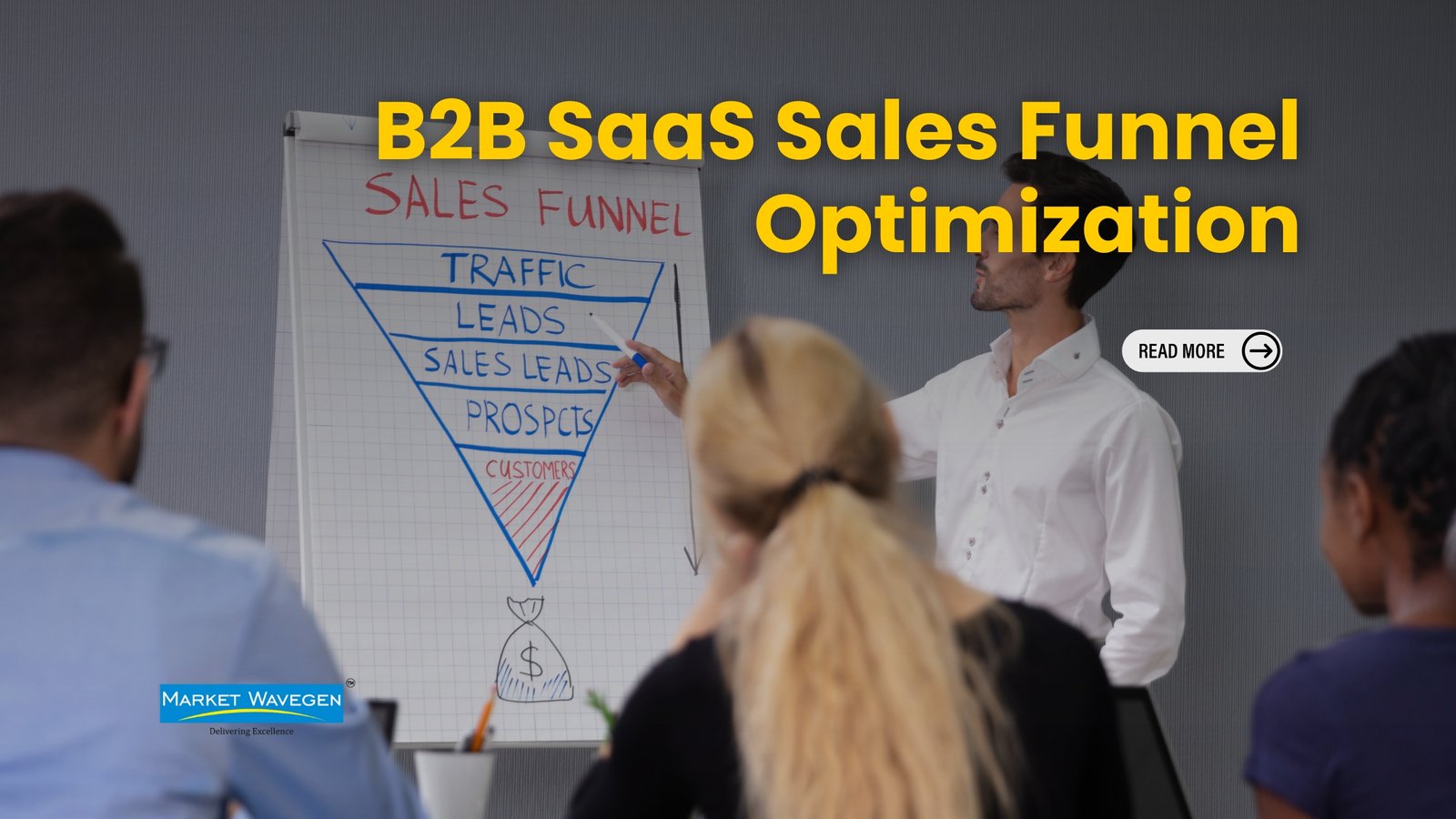
    B2B SaaS Sales Funnel Optimization. Streamlining Conversions and Retention.

    The B2B SaaS (Software as a Service) industry is characterized by its competitive nature and the need for innovative strategies to attract, convert, and retain customers. Optimizing the sales funnel is crucial for maximizing conversions and ensuring long-term customer retention. Market Wavegen, with its expertise in Strategic Information Retrieval Systems (SIRS) and Intelligent Database Account-Based Marketing (ABM), offers cutting-edge solutions to help B2B SaaS companies streamline their sales funnels effectively. This blog explores how Market Wavegen’s services and data can enhance each stage of the B2B SaaS sales funnel.

    Understanding the B2B SaaS Sales Funnel

    A typical B2B SaaS sales funnel can be divided into four main stages:

    1. Awareness: Potential customers become aware of your product or service.
    2. Consideration: Prospects evaluate your offering against competitors.
    3. Decision: Prospects decide to purchase your product.
    4. Retention: Customers continue using and renewing your product, potentially becoming advocates.

    Stage 1: Enhancing Awareness with Market Wavegen

    The top of the funnel is all about capturing the attention of potential customers. Market Wavegen’s services can significantly enhance awareness through targeted market research and strategic information retrieval.

    1. Comprehensive Market Research: Market Wavegen utilizes SIRS to gather extensive data from various sources, including online databases, industry reports, social media, and customer feedback. This comprehensive approach ensures that your business has access to a wealth of information, enabling more accurate and informed decision-making.
    2. SEO Optimization: Market Wavegen’s expertise in data-driven SEO strategies helps improve your website’s search engine rankings. By analyzing and implementing relevant keywords, meta descriptions, and alt text, your business can attract more organic traffic.
    3. Social Media Insights: Leveraging data from social media platforms, Market Wavegen can help your business understand audience behavior and preferences. This insight allows for more effective social media engagement and content sharing.
    4. Paid Advertising Strategies: Market Wavegen’s data-driven approach to PPC (Pay-Per-Click) campaigns ensures that your ads reach the right audience. Targeted ads can drive immediate traffic to your site, increasing brand visibility and awareness.

    Stage 2: Driving Consideration with Market Wavegen

    Once potential customers are aware of your product, the next step is to nurture them through the consideration phase. Market Wavegen’s Intelligent Database ABM strategies are key to building trust and demonstrating value.

    1. Personalized Email Campaigns: Using data from Intelligent Databases, Market Wavegen helps create highly personalized email marketing campaigns. By segmenting lists based on specific criteria, your business can send targeted content that addresses the unique needs of each prospect.
    2. Case Studies and Testimonials: Market Wavegen can help gather and showcase success stories from existing customers. By leveraging these case studies and testimonials, your business can provide social proof and demonstrate real-world benefits.
    3. Product Demos and Free Trials: Market Wavegen’s data-driven insights can identify the best prospects for product demos and free trials. This targeted approach increases the likelihood of converting leads into customers.
    4. Educational Webinars: With Market Wavegen’s expertise, your business can host webinars that delve deeper into industry topics and showcase how your product solves specific problems. This positions your company as an expert and helps prospects make informed decisions.

    Stage 3: Facilitating Decision-Making with Market Wavegen

    At the decision stage, prospects are evaluating whether to purchase your product. Market Wavegen’s services streamline this phase, making it easier for prospects to make a decision.

    1. Clear Value Proposition: Market Wavegen helps refine your value proposition to ensure it is clear and compelling. Prospects should immediately understand the benefits and ROI (Return on Investment) of choosing your product.
    2. Transparent Pricing: Market Wavegen’s data insights can guide you in developing transparent and competitive pricing strategies. Clear pricing structures reduce friction and build trust with potential customers.
    3. Sales Support: Market Wavegen equips your sales team with the necessary tools and information to close deals. Personalized follow-ups, detailed product information, and addressing any objections promptly can seal the deal.
    4. Streamlined Onboarding: Market Wavegen’s expertise in customer experience ensures that your onboarding process is smooth and efficient. A positive onboarding experience sets the tone for the customer’s journey and reduces the likelihood of churn.

    Stage 4: Boosting Retention with Market Wavegen

    Retaining customers is just as important as acquiring them. Market Wavegen’s focus on customer success can lead to long-term loyalty and advocacy.

    1. Continuous Engagement: Market Wavegen helps maintain regular communication with your customers through newsletters, updates, and personalized check-ins. Keeping them informed and engaged ensures they feel valued.
    2. Exceptional Customer Support: Market Wavegen’s data-driven approach to customer support ensures quick response times and knowledgeable assistance. Multiple support channels (chat, email, phone) are essential for resolving issues promptly.
    3. Product Improvements: Market Wavegen continuously collects and analyzes customer feedback to inform product improvements. Regular updates and new features show customers that you are committed to delivering the best possible experience.
    4. Loyalty Programs: Market Wavegen can help design loyalty programs that reward long-term customers. Discounts, exclusive features, and early access to new releases can incentivize renewals and advocacy.

    Leveraging Market Wavegen’s Technology for Funnel Optimization

    To effectively manage and optimize your sales funnel, leveraging Market Wavegen’s technology is crucial:

    1. CRM Systems: Market Wavegen’s CRM solutions track interactions, manage leads, and streamline communication. A robust CRM system provides valuable insights into your sales pipeline.
    2. Marketing Automation: Market Wavegen’s marketing automation tools nurture leads through personalized email campaigns, track engagement, and score leads based on their behavior.
    3. Analytics Platforms: Market Wavegen’s analytics platforms measure the performance of your sales funnel. Key metrics like conversion rates, churn rates, and customer lifetime value provide actionable insights for continuous improvement.
    4. A/B Testing: Market Wavegen conducts A/B testing on various elements of your sales process, such as email subject lines, landing pages, and call-to-action buttons. This helps identify what works best and refine your strategies accordingly.

    Conclusion

    Optimizing your B2B SaaS sales funnel with Market Wavegen’s services and data is an ongoing process that requires a deep understanding of your target audience and a commitment to continuous improvement. By enhancing each stage of the funnel—from awareness to retention—you can attract high-quality leads, convert them into loyal customers, and foster long-term business growth. Market Wavegen’s advanced technologies and strategic insights ensure your sales funnel remains efficient and effective in an ever-evolving market.

  • How Generative AI Boosts SMART ABM Performance.

    How Generative AI Boosts SMART ABM Performance.

    Account-Based Marketing (ABM) has always been about precision and personalization. But with the advent of Generative AI, it’s entering a new era of hyper-targeted, intelligent outreach. Let’s explore how Gen AI can supercharge your SMART ABM strategy and deliver a staggering 3x improvement in results.

    Understanding the SMART ABM-Gen AI Synergy

    SMART ABM is a data-driven approach that focuses on identifying and engaging ideal customer profiles. Gen AI, with its ability to process vast amounts of data, can significantly enhance this process. Here’s how:

    • Hyper-Personalized Account Insights: Gen AI can analyze a wealth of data points, including firmographic, technographic, and behavioral information, to create highly detailed account profiles. These insights allow you to tailor your messaging and offers with unprecedented accuracy.
    • Intelligent Content Generation: Creating compelling content that resonates with each account is time-consuming. Gen AI can rapidly generate personalized content, such as emails, landing pages, and social media posts, aligned with specific account preferences and pain points.
    • Predictive Account Scoring: Gen AI can predict account behavior and propensity to buy, enabling you to prioritize your efforts on accounts with the highest potential. This predictive capability helps you optimize resource allocation and maximize ROI.
    • Real-time Personalization: Gen AI can analyze customer interactions in real-time and adjust messaging accordingly. This ensures that every touchpoint is relevant and engaging, driving higher conversion rates.
    • Enhanced Lead Scoring and Qualification: By combining AI-powered lead scoring with ABM, you can identify high-quality leads within your target accounts more efficiently. This helps sales teams focus on opportunities with the greatest potential.

    3X Better Results with Gen AI-Powered SMART ABM

    When Gen AI is integrated into your SMART ABM strategy, you can expect a significant boost in performance:

    • Increased Conversion Rates: Hyper-personalized messaging and offers resonate more strongly with target accounts, resulting in higher conversion rates at every stage of the funnel.
    • Improved Sales Efficiency: By focusing on high-potential accounts and automating routine tasks, sales teams can dedicate more time to building relationships and closing deals.
    • Accelerated Time-to-Revenue: Faster identification of qualified leads and more efficient sales cycles contribute to a shorter sales cycle and accelerated revenue generation.
    • Deeper Customer Insights: The rich data generated by Gen AI provides valuable insights into customer behavior and preferences, enabling you to refine your targeting and messaging over time.
    • Stronger Customer Relationships: Highly personalized and relevant interactions build trust and loyalty, fostering long-term customer relationships.

    By harnessing the power of Gen AI, you can elevate your SMART ABM strategy to new heights, achieving remarkable results and gaining a competitive edge.

    Transform your marketing strategy today with Gen AI-powered SMART ABM. Contact Market Wavegen Business Development Solutions now to boost your conversion rates and drive significant growth.

    Schedule a consultation with our experts and start achieving extraordinary results.

  • Grow Your SaaS Business with Market Wavegen’s Data-Driven Marketing Strategies.

    Grow Your SaaS Business with Market Wavegen’s Data-Driven Marketing Strategies.

    Where data is more accessible than ever, one might assume that making informed decisions should be straightforward. Yet, many SaaS companies find themselves grappling with overwhelming amounts of data without a clear path to actionable insights. This is where data-driven marketing becomes not just useful, but essential. It’s a method that leverages verified data to optimize marketing strategies and improve decision-making processes. Let’s explore how leveraging Market Wavegen’s expertise can empower your SaaS business to grow by harnessing the full potential of data-driven marketing.

    Understanding the Data-Driven Landscape

    Data-driven marketing is the backbone of innovation in today’s marketing strategies, particularly in the SaaS sector. By analyzing customer data, companies can tailor their marketing efforts to meet the specific needs and behaviors of their audience. This approach not only enhances the effectiveness of marketing campaigns but also maximizes ROI.

    Market Wavegen specializes in transforming complex data into actionable insights, enabling SaaS companies to make strategic decisions based on real-time information. This expertise is crucial in navigating the competitive landscape of SaaS, where understanding and anticipating customer needs can make or break a business.

    The Benefits of Data-Driven Marketing for SaaS

    1. Enhanced Customer Insights

    One of the most significant advantages of data-driven marketing is the depth of customer insights it provides. By analyzing data from various touchpoints, Market Wavegen helps SaaS companies gain a comprehensive understanding of their customers’ preferences, behaviors, and pain points. This information is invaluable for crafting personalized marketing messages that resonate with your target audience.

    2. Improved Campaign Performance

    Data-driven marketing allows for continuous monitoring and optimization of marketing campaigns. Market Wavegen’s tools enable real-time tracking of key performance metrics, helping you identify what’s working and what’s not. This means you can make adjustments on the fly, ensuring your campaigns are always performing at their best.

    3. Increased ROI

    With precise targeting and optimized campaigns, data-driven marketing significantly improves ROI. By focusing on high-value customer segments and tailoring your marketing efforts to their specific needs, you can reduce wasteful spending and allocate resources more effectively. Market Wavegen’s expertise ensures that every dollar you spend on marketing is maximized for the best possible return.

    How Market Wavegen Supports Data-Driven Marketing

    Market Wavegen provides a suite of tools and services designed to help SaaS companies leverage data-driven marketing effectively. Here’s how:

    1. Strategic Information Retrieval System (SIRS)

    Market Wavegen’s SIRS is a powerful tool that collects and analyzes data from various sources, providing deep insights into market trends, customer behavior, and competitive landscapes. This information is critical for making informed strategic decisions and staying ahead of the competition.

    2. Intelligent Databases for Customer Segmentation

    Effective customer segmentation is at the heart of successful marketing campaigns. Market Wavegen’s intelligent databases allow you to segment your audience based on various criteria, such as demographics, behavior, and purchase history. This enables you to deliver highly personalized marketing messages that resonate with each segment.

    3. Advanced Predictive Analytics

    Predictive analytics is a game-changer for SaaS marketing. By analyzing historical data, Market Wavegen’s predictive analytics tools can forecast future trends and customer behaviors. This allows you to anticipate customer needs and tailor your marketing strategies accordingly, ensuring you’re always one step ahead.

    4. Marketing Automation

    Automation is key to scaling your marketing efforts efficiently. Market Wavegen’s marketing automation tools streamline repetitive tasks, such as email campaigns and social media posting, freeing up your team to focus on strategy and creativity. Automation also ensures consistency in your marketing efforts, improving overall effectiveness.

    5. Real-Time Data Tracking and Reporting

    Real-time data tracking is essential for making quick, informed decisions. Market Wavegen provides tools that allow you to monitor your marketing performance in real time, giving you the flexibility to adjust your strategies as needed. Customizable reports provide a clear overview of your key metrics, helping you stay on top of your marketing goals.

    Real-World Success Stories

    To illustrate the impact of data-driven marketing, let’s look at a real-world example. A mid-sized SaaS provider was struggling with high customer acquisition costs and low conversion rates. After implementing Market Wavegen’s data-driven marketing strategies, they experienced:

    • 30% Increase in Conversion Rates: By leveraging predictive analytics and customer segmentation, they targeted the right customers with the right message.
    • 25% Reduction in Customer Acquisition Costs: Automation and real-time tracking allowed them to optimize their marketing spend.
    • 40% Improvement in Campaign Efficiency: Streamlined processes and actionable insights led to more effective campaigns.

    Conclusion

    In the competitive SaaS landscape, relying on intuition and guesswork is no longer sufficient. Data-driven marketing is the key to unlocking your company’s full potential. With Market Wavegen, you have the tools and expertise needed to transform your marketing efforts and achieve outstanding results.

    Don’t let your data sit idle. Turn it into gold with Market Wavegen’s marketing mastery. Ready to see the difference?

    Contact us today to learn more and start your journey towards smarter, more effective marketing.

    Book a Meeting: https://outlook.office365.com/book/Clickbelowtolearnmoreaboutourdatadrivensolutions@finalstaging.marketwavegen.com/

    Follow us on linkedIn: https://www.linkedin.com/company/market-wavegen/?viewAsMember=true

  • Podcast vs. Webinar. Choosing the Right B2B Engagement Channel.

    Podcast vs. Webinar. Choosing the Right B2B Engagement Channel.

    Podcast vs. Webinar

    Struggling to ignite engagement with your B2B audience? Capturing their attention and nurturing leads can feel like navigating a marketing maze. But fear not! Two powerful tools can illuminate your path: podcasts and webinars. While both offer distinct advantages, the optimal choice hinges on your specific goals and target audience. Let’s dive into the strengths and weaknesses of each format to help you make an informed decision and turn B2B engagement from a challenge into a triumph.

    Podcast Powerhouse: Widespread Reach and Thought Leadership

    Podcasts offer a unique advantage: accessibility. Listeners can tune in on their own time, while commuting, exercising, or even doing chores. This flexibility translates to a potentially wider reach compared to webinars with fixed timeslots.

    Podcasts excel at establishing thought leadership. In-depth conversations with industry experts or key opinion leaders (KOLs) can position your brand as a trusted authority in your field. The ongoing nature of podcasts fosters a sense of community and allows you to build long-term relationships with your audience.

    Drawbacks of Podcasts: Limited Interaction and Lower Conversion Rates

    The inherent one-way communication style of podcasts presents a challenge. Listeners cannot directly engage with speakers or ask questions in real-time. Additionally, converting podcast listeners into paying customers can be trickier compared to webinars with a more focused call to action (CTA).

    Webinar Prowess: Real-Time Engagement and High Conversion Potential

    Webinars shine in their ability to foster real-time interaction. Live Q&A sessions allow you to address audience concerns directly and gauge their understanding of the topic. This interactivity can significantly boost engagement and build stronger connections with potential customers.

    Webinars are conversion champions. With a captive audience and a clear CTA at the end, webinars often lead to higher conversion rates compared to podcasts. Product demonstrations, live consultations, and exclusive offers can incentivize webinar attendees to take the next step in their buying journey.

    The Not-So-Secret Weapon: Leveraging Both Formats

    The beauty of B2B marketing lies in its strategic diversity. Consider using both podcasts and webinars to maximize your reach and engagement. Podcasts can nurture leads and establish thought leadership, while targeted webinars can convert those leads into paying customers.

    Here’s a quick cheat sheet to guide your decision:

    • Choose podcasts for: Brand awareness, thought leadership, long-term relationship building.
    • Choose webinars for: Lead generation, product demonstrations, high conversion rates.

    Ultimately, the best B2B engagement channel is the one that aligns with your specific goals and target audience. Analyze your marketing strategy, consider your resources, and experiment to discover the optimal mix of podcasts and webinars to propel your B2B engagement to new heights.

    Share your thoughts! What are your experiences with podcasts and webinars in B2B marketing? Let’s discuss in the comments below!

  • Enhancing Account-Based Marketing Outcomes with Targeted Email Strategies.

    Enhancing Account-Based Marketing Outcomes with Targeted Email Strategies.

    In the dynamic world of digital marketing, Account-Based Marketing (ABM) has emerged as a strategic approach that aligns marketing and sales efforts to deepen engagements with high-value accounts. ABM is not just about reaching more people; it’s about reaching the right people with precision and personalization. In this context, email marketing plays a pivotal role in driving the success of ABM campaigns. This blog delves into how targeted email strategies can enhance ABM outcomes, offering actionable insights and methodologies to marketers aiming to elevate their ABM efforts.

    Male hand holding letter iconemail icons Contact us by newsletter email and protect your personal information from spam mail Customer service call center contact usEmail marketing and newsletter

    The Synergy Between ABM and Email Marketing

    ABM focuses on identifying and targeting key accounts that offer the most significant potential for business growth. By leveraging email marketing within your ABM strategy, you can deliver personalized messages tailored to the specific needs and behaviors of decision-makers within these accounts. This synergy helps in nurturing leads more effectively, shortening the sales cycles, and increasing the overall marketing ROI.

    Building the Foundation: Account Identification and Segmentation

    Step 1: Identify Key Accounts The first step in any effective ABM campaign is to identify and select the accounts that are most likely to convert. These are typically accounts that have a high potential lifetime value or are strategic to the business in other ways.

    Step 2: Deep Segmentation Once the key accounts are identified, it’s crucial to segment them based on various criteria such as industry, company size, position in the buying cycle, and specific needs or interests. This deep segmentation is vital for crafting personalized email content.

    Personalization: The Heart of ABM Email Strategies

    Crafting Personalized Messages For ABM to be successful, each email must resonate personally with its recipient. This means going beyond inserting the recipient’s name in the email. It involves tailoring the content to address their specific business needs, challenges, and opportunities.

    Content Relevance Develop content that speaks directly to the pain points of each segment. Use data insights to create messages that provide solutions, advice, and value, making each communication meaningful and relevant.

    Effective Email Campaign Tactics for ABM

    Educational Content and Thought Leadership Sharing high-quality, informative content through emails can position your company as a thought leader. This includes whitepapers, case studies, industry reports, and webinars that relate to the recipient’s industry and needs.

    Personalized Product Demonstrations Invite key decision-makers to exclusive, personalized demonstrations of your product or service. Tailor these demos to show how your solutions meet their unique requirements.

    Event Invitations Use email to invite leads to webinars or events that are tailored to their interests. These events should be relevant to the segment and designed to address their specific challenges.

    Leveraging Technology: Automation and Analytics

    Marketing Automation Tools Utilize marketing automation tools to streamline your ABM email campaigns. These tools can help manage complex campaign workflows, schedule emails, and ensure timely follow-ups.

    Analytics for Continuous Improvement Measure the effectiveness of your email campaigns through detailed analytics. Track metrics like open rates, click-through rates, and conversion rates. Use this data to refine your approach, focusing on what works best for your target accounts.

    Integrating Multi-Channel Strategies

    While email is a powerful tool in your ABM arsenal, integrating other channels can amplify your results. Combine your email campaigns with social media, direct mail, or personalized ads to create a cohesive and compelling buyer journey.

    Social Media Use social media insights to understand the interests and behaviors of your target accounts. Integrate these insights into your email campaigns to create a consistent message across platforms.

    Direct Mail and Personalized Ads Combine emails with direct mail for a tactile touch or use personalized ads to retarget email recipients. This multi-touch approach helps in reinforcing your message and increasing engagement.

    Case Studies: Success Stories of Targeted Email Strategies in ABM

    Illustrate the effectiveness of your strategies with real-life examples. Highlight case studies where targeted email strategies have significantly improved ABM outcomes. Discuss the tactics used, the challenges faced, and the results achieved, providing readers with a clear understanding of practical applications and successes.

    Conclusion: The Future of ABM and Email Marketing

    As businesses continue to look for more ROI-driven marketing strategies, the integration of targeted email strategies within ABM campaigns will only grow stronger. By focusing on personalization, leveraging the right technology, and integrating multiple channels, marketers can create more engaging, effective campaigns that drive meaningful results.

    To thrive in the evolving landscape of B2B marketing, stay at the forefront of emerging trends and continuously adapt your strategies. Remember, the key to successful ABD is a deep understanding of your target accounts combined with a commitment to delivering personalized, relevant content that drives engagement and conversions.

  • B2B Demand Generation Tactics. How to Attract and Convert Buyers in 2024

    B2B Demand Generation Tactics. How to Attract and Convert Buyers in 2024

    In 2024, the B2B marketplace continues to evolve at a rapid pace, driven by technological advancements, changing buyer behaviors, and the increasing need for personalized marketing approaches. As businesses look to thrive in this competitive environment, mastering the art of demand generation becomes crucial. This blog post delves into the latest B2B demand generation tactics that can help you attract and convert buyers more effectively.

    Understanding Modern B2B Buyers

    The first step in any effective demand generation strategy is understanding who your buyers are and what they want. Today’s B2B buyers are more informed, connected, and selective than ever before. They perform extensive research online and prefer engaging content that addresses their specific needs and challenges. To capture their interest, businesses must provide value through every interaction, leveraging data-driven insights to deliver personalized experiences.

    Content Marketing: The Keystone of Demand Generation

    Content marketing remains a cornerstone of B2B demand generation. However, the focus has shifted from quantity to quality. High-quality, relevant content that solves problems or provides unique insights will attract more buyers. Blogs, whitepapers, eBooks, and case studies are excellent tools for demonstrating thought leadership and industry expertise. To enhance your content’s reach and effectiveness, optimize it for SEO by including targeted keywords, engaging titles, and meta descriptions.

    Interactive Content for Engagement

    Interactive content such as quizzes, polls, infographics, and interactive videos can significantly increase engagement rates. These formats encourage participation and can provide valuable insights into your audience’s preferences and pain points, allowing for more targeted marketing efforts.

    Leveraging Technology for Enhanced Targeting

    Advancements in marketing technology offer unprecedented opportunities to target potential buyers. Tools like Customer Relationship Management (CRM) systems and marketing automation platforms enable businesses to segment their audience more accurately and tailor their messaging accordingly. Artificial Intelligence (AI) and machine learning can also predict buyer behavior, helping marketers create content and campaigns that are more likely to convert.

    Predictive Analytics

    Utilizing predictive analytics can transform how businesses approach potential customers. By analyzing past behavior and industry trends, predictive models can identify who is most likely to buy, what products they will be interested in, and the best time to reach them. This targeted approach not only improves the efficiency of demand generation campaigns but also enhances the overall customer experience.

    Multi-Channel Marketing

    In 2024, multi-channel marketing is not just an option; it’s a necessity. Buyers expect a seamless experience across all platforms, whether it’s social media, email, or your company website. Integrating your marketing efforts across these channels ensures that your message reaches potential buyers no matter where they are. It’s also crucial to align your sales and marketing teams to ensure that potential leads are properly nurtured and converted.

    Social Media Influence

    Social media platforms are invaluable for B2B marketers looking to expand their reach and engage with potential buyers. Platforms like LinkedIn, Twitter, and industry-specific forums can be used to share content, participate in discussions, and build brand visibility. Paid advertising on these platforms can also drive more targeted traffic to your site, increasing the chances of conversion.

    Analytics and Measurement

    To continually improve your demand generation efforts, it’s essential to measure the effectiveness of your strategies. Key performance indicators (KPIs) such as lead generation rates, conversion rates, and ROI from various campaigns provide valuable feedback. These metrics help identify what’s working and what’s not, allowing for data-driven decision-making.

    Continuous Improvement

    The B2B marketplace is always changing, and so should your marketing strategies. Regularly reviewing and adjusting your tactics based on analytics and market trends will help you stay ahead of the competition. Always be testing new approaches and refining existing ones to optimize your demand generation process.

    Conclusion

    As we move further into 2024, the ability to adapt and innovate in your demand generation tactics will determine your success in the B2B sector. By understanding your audience, leveraging the right technology, and utilizing a multi-channel approach, you can attract and convert more buyers than ever before. Remember, the key to demand generation is not just generating leads but building relationships that lead to long-term business growth.

    By employing these tactics, your business can not only meet the expectations of modern B2B buyers but exceed them, setting the stage for sustained success in a competitive marketplace.

  • Conquering the Dragon. Tailoring ABM for the APAC Market.

    Conquering the Dragon. Tailoring ABM for the APAC Market.

    Account-Based Marketing (ABM) has taken the B2B world by storm. By focusing on high-value accounts with personalized campaigns, companies are experiencing significant improvements in sales pipeline, ROI, and marketing-sales alignment. But the road to ABM success isn’t a one-size-fits-all journey. The Asia-Pacific (APAC) region, with its diverse cultures, business landscapes, and technological adoption rates, presents unique challenges for implementing ABM. However, these challenges are also opportunities to refine your approach and achieve even greater results.

    Challenges of ABM in APAC

    1. Cultural Nuances: APAC is a mosaic of cultures, each with its own communication styles, decision-making processes, and relationship preferences. Direct, aggressive tactics that might work in Western markets can be perceived as disrespectful in some APAC cultures. Building trust and fostering long-term relationships are paramount.
    2. Fragmented Landscape: APAC is a geographically vast region with significant economic disparities. Developed economies like Singapore and Australia coexist with emerging markets like India and Vietnam. A one-size-fits-all content strategy won’t resonate across such a diverse landscape. Market research and audience segmentation are crucial for effective targeting.
    3. Language Barriers: APAC boasts a multitude of languages. While English is widely used in business circles, relying solely on it can alienate potential customers. Consider localizing your messaging and campaigns to resonate with the target audience’s language and cultural preferences.
    4. Data Availability and Quality: Data privacy regulations and cultural sensitivities can make it difficult to acquire high-quality, comprehensive data on target accounts. This can hinder effective identification, segmentation, and personalization of ABM campaigns.
    5. Technology Adoption: While APAC is experiencing rapid technological advancements, the pace of adoption varies across the region. Some companies may have limited digital footprints or prefer traditional communication channels. Tailoring your outreach strategy to the target account’s digital maturity is essential.

    Overcoming the Challenges: Building Your APAC ABM Strategy

    1. Deep Market Research: Invest in thorough research to understand the specific cultural nuances, business practices, and communication preferences in your target markets. Leverage local teams or partners to gain valuable insights.
    2. Account Selection: Be highly selective when choosing target accounts in APAC. Focus on quality over quantity and prioritize companies with the right cultural fit and decision-making structures.
    3. Segmentation is Key: Don’t treat APAC as a single entity. Segment your target accounts based on factors like location, industry, company size, and digital maturity. This allows for tailored messaging and outreach strategies.
    4. Embrace Account-Based Storytelling: Facts and figures are important, but stories resonate. Develop compelling narratives that showcase how your solution addresses specific challenges faced by businesses in your target markets. Leverage case studies and testimonials from local customers to build trust and credibility.
    5. Omnichannel Approach: Integrate traditional and digital marketing channels to reach your target audience effectively. Utilize a mix of emails, social media, events, and even offline channels like direct mail depending on the target account’s preferences.
    6. Building Relationships: Focus on nurturing long-term relationships with key decision-makers. Participate in industry events, host webinars or workshops, and provide valuable content that addresses their specific needs.
    7. Data-Driven Personalization: While data availability might be a challenge, leverage the data you do have to personalize your outreach. Use firmographic and technographic data to tailor messaging and identify decision-makers within the target account.
    8. Invest in Local Teams or Partners: Having a strong understanding of local cultures and business practices is crucial. Consider building an in-house APAC team or partnering with local agencies that can provide valuable expertise and navigate cultural nuances.
    9. Measure and Refine: Track the performance of your ABM campaigns in APAC. Analyze key metrics like engagement rates, conversion rates, and pipeline velocity. Use these insights to continuously refine your strategy and messaging for better results.
    10. Embrace Flexibility: The APAC market is dynamic and constantly evolving. Be prepared to adapt your ABM strategy based on market trends, competitor activity, and customer feedback.

    Conclusion

    ABM presents a powerful opportunity to achieve significant growth in the APAC market. By acknowledging the unique challenges of the region and tailoring your strategy accordingly, you can build lasting relationships with high-value accounts and unlock the full potential of ABM in APAC. Remember, success lies in understanding the cultural landscape, segmenting effectively, personalising your approach, and fostering trust-based relationships.

    Ready to unlock the power of ABM in the APAC region? Schedule a free consultation with our experts today to discuss your specific goals and develop a customised ABM strategy for your target markets in APAC.

    Click here to book your meeting!

  • How to Enhance B2B Email Marketing Through Effective Email Authentication?

    How to Enhance B2B Email Marketing Through Effective Email Authentication?

    In the realm of B2B marketing, email continues to be a cornerstone of communication and outreach strategies. However, the effectiveness of these campaigns hinges significantly on the trust and security perceived in these interactions. Effective email authentication is not just a technical necessity; it’s a strategic asset that can significantly enhance the impact of your B2B email marketing efforts. This blog explores how businesses can leverage email authentication to improve deliverability, build trust, and ultimately drive greater engagement and conversions.

    Understanding Email Authentication

    Email authentication helps verify that an email claiming to come from a specific domain is authorized by the domain owner. This is crucial because it prevents spammers from using your domain to send unauthorized emails, commonly known as email spoofing. The three main standards used in email authentication are SPF (Sender Policy Framework), DKIM (DomainKeys Identified Mail), and DMARC (Domain-based Message Authentication, Reporting & Conformance).

    1. SPF (Sender Policy Framework): SPF allows senders to define which IP addresses are allowed to send mail for a particular domain. This is done by adding an SPF record to the DNS settings of your domain.
    2. DKIM (DomainKeys Identified Mail): DKIM provides a way to validate a domain identity that is associated with a message through cryptographic authentication. Implementing DKIM involves adding a digital signature to the headers of email messages. This signature can be verified by recipients against a public cryptographic key in the domain’s DNS records.
    3. DMARC (Domain-based Message Authentication, Reporting & Conformance): DMARC unifies SPF and DKIM authentication mechanisms with a consistent set of policies. It also adds a reporting function that allows senders and receivers to improve and monitor protection of the domain from fraudulent email.

    Benefits of Email Authentication in B2B Marketing

    Enhanced Deliverability

    One of the most direct benefits of robust email authentication is improved email deliverability. Email servers use SPF, DKIM, and DMARC to verify that the emails being sent are legitimate and not spam. This means that properly authenticated emails are less likely to be rejected or marked as spam by email servers, ensuring that your content reaches the inbox of your intended recipients.

    Building Trust and Reputation

    Email authentication not only protects your domain from being used for email spoofing but also builds your reputation as a trustworthy sender. When your emails are consistently authenticated, email service providers recognize your domain as legitimate and safe, which can improve your sender reputation. Higher reputation scores are directly correlated with higher inbox placement rates.

    Preventing Phishing and Protecting Your Brand

    Phishing attacks can damage your brand’s reputation and erode trust with your customers. By implementing email authentication, you can protect your customers from potential phishing attacks purported to be from your domain. This is crucial in maintaining the integrity of your communications and the safety of your customers’ information.

    Implementing Email Authentication: Steps for B2B Marketers

    Step 1: Set Up SPF Records

    Start by setting up an SPF record in your DNS. This tells email servers which IP addresses are authorized to send emails on behalf of your domain.

    Step 2: Configure DKIM

    Next, configure DKIM by generating a public/private key pair and adding the DKIM signature to your emails. Publish the public key in your DNS records.

    Step 3: Implement DMARC

    Finally, implement DMARC by publishing a DMARC policy in your DNS records. Start with a none policy to monitor how your emails are being handled and gradually move to more restrictive policies as needed.

    Step 4: Monitor and Adjust

    Regular monitoring of SPF, DKIM, and DMARC reports is essential. These reports will help you identify and rectify any issues with your email delivery. Adjust your policies and configurations based on these insights to optimize the security and effectiveness of your email marketing campaigns.

    Conclusion

    Effective email authentication is pivotal in enhancing B2B email marketing strategies. By implementing SPF, DKIM, and DMARC, marketers can improve email deliverability, build trust with their audience, protect their brand from phishing attacks, and ultimately drive better marketing results. Start integrating these practices into your email marketing strategy today to secure your digital communications and enhance your B2B marketing efforts.