Category: Sales

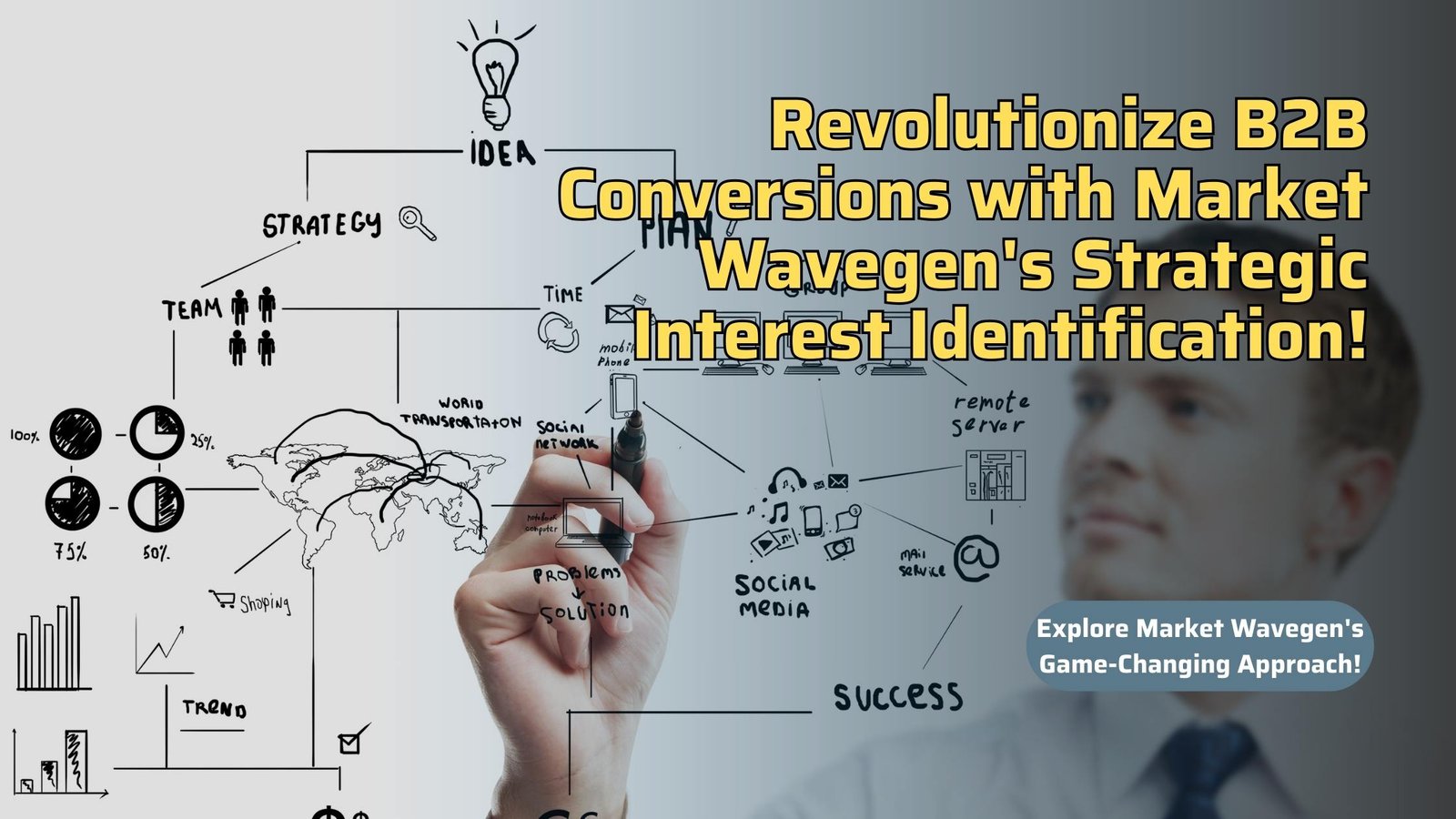
  • Revolutionize B2B Conversions the Power of Strategic Interest Identification

    Revolutionize B2B Conversions the Power of Strategic Interest Identification

    In the ever-evolving realm of B2B marketing, the journey from Marketing Qualified Leads (MQLs) to Sales Qualified Leads (SQLs) can be a treacherous path. Marketers grapple with challenges and uncertainties at every turn. However, fear not, for there’s a beacon of hope on the horizon – Market Wavegen. Market Wavegen stands as a game-changing force in the world of B2B marketing, armed with cutting-edge strategies driven by Intelligent Database Account-Based Marketing (ABM) and Strategic Interest Reversal Sales (SIRS) powered by ManTechMark. Join us on this exhilarating expedition as we unveil the secrets behind Market Wavegen’s groundbreaking approach.

    The Conversion Puzzle MQL to SQL

    Before we delve into the revolutionary power of Market Wavegen, let’s take a moment to understand the complexities of converting MQLs to SQLs.

    What are MQLs and SQLs?

    MQLs, or Marketing Qualified Leads, are prospects who have shown interest in your products or services but have not yet been deemed ready for a direct sales pitch. On the other hand, SQLs, or Sales Qualified Leads, are the prospects who have passed the threshold and are now considered ready for a more personalized approach.

    The Challenges of Conversion

    Converting MQLs into SQLs is no walk in the park. Marketers often face the uphill battle of identifying genuine interest and separating the wheat from the chaff. This process can be a resource-intensive, time-consuming struggle, with no guarantee of success.

    The Need for Market Wavegen

    Market Wavegen steps onto the scene as a solution to this perennial problem. With its Intelligent Database ABM and Strategic Interest Reversal Sales powered by ManTechMark, it breathes new life into the process, offering a calculated, efficient approach to lead conversion.

    Market Wavegen Unveiled

    Now that we’ve scratched the surface of this remarkable solution, let’s dive deeper into what makes Market Wavegen the hero B2B marketing needs.

    Revolutionary Tool ManTechMark

    Market Wavegen isn’t just another marketing tool; it’s a game-changer. This revolutionary platform leverages ManTechMark to bring order to the chaos of lead conversion.

    Strategic Interest Identification

    At the heart of Market Wavegen’s prowess lies its ability to identify and harness strategic interests. It takes a thoughtful, customer-centric approach to sales, moving away from traditional methods.

    Unique Features and Benefits

    Market Wavegen’s arsenal is packed with unique features and benefits that simplify the conversion process, from identifying the right leads to ensuring your efforts align perfectly with customer interests.

    How Market Wavegen Reverses Sales

    Market Wavegen doesn’t just talk the talk; it walks the walk. Let’s explore how this transformative tool redefines the art of selling.

    A Helping Hand for Sales Teams

    Sales teams often find themselves navigating choppy waters when it comes to lead conversion. Market Wavegen provides them with a sturdy lifeboat, helping them reach prospects with precisely what they need.

    Real-World Success Stories

    The proof, as they say, is in the pudding. Market Wavegen has delivered remarkable results for businesses across various industries. Real-world examples illuminate the path to success.

    Impact on the Bottom Line

    At the end of the day, what really matters is the impact on your bottom line. Market Wavegen’s approach not only improves lead conversion but also ensures a healthier, more sustainable business.

    Strategic Interest Identification in Action

    Now that we’ve seen the big picture, let’s zoom in and take a closer look at how to put Market Wavegen into action.

    Walking Through the Steps

    Market Wavegen’s process is systematic and easy to follow. We’ll walk you through each step, ensuring you’re ready to dive in with confidence.

    Tips and Best Practices

    Like any tool, Market Wavegen benefits from a touch of finesse. We’ll share some insider tips and best practices to help you get the most out of it.

    Results It Delivers

    The rubber meets the road when we talk about results. Market Wavegen isn’t just a fancy concept; it’s a tangible solution that delivers real, measurable outcomes.

    Transforming Marketing with Data-Driven Insights: A Success Story

    In a world where businesses are constantly striving to stand out in the competitive market and reach their target audience, traditional marketing strategies often fall short, leaving them in search of innovative solutions. Our success story, working with someone responsible for lead/demand generation at A10, a leading player in application delivery controllers, showcases the transformative power of data-driven marketing. Are you ready to supercharge your marketing efforts and drive revenue growth?

    Problem Statement and User Journey Map

    Problem Statement 1: Many businesses struggle with a lack of accurate insights into their target audience, resulting in ineffective marketing campaigns and disappointing conversion rates.

    Problem Statement 2: Sales and marketing teams face challenges in tracking individual engagement and monitoring the effectiveness of their outreach efforts.

    User Journey Map:

    1. Our journey began when our partner at A10, someone responsible for lead/demand generation, received a sample of five accounts with F5 renewal dates from Market Wavegen, demonstrating the power of data-driven marketing.

    2. Recognizing the potential, our partner requested a sample of enterprises in the SF Bay area renewing in February or March.

    3. We immediately acknowledged the request and provided precise data, including enterprises in the SF Bay area with renewal dates in February or March.

    4. Equipped with this specific information, our partner incorporated the data into A10’s marketing strategy, resulting in targeted outreach to the identified accounts.

    5. The targeted campaigns based on renewal dates led to increased lead generation and higher conversion rates for A10.

    6. Our partner witnessed the positive impact of Market Wavegen’s data-driven marketing solution on revenue growth and recognized its potential for future marketing initiatives.

    Impact and Lessons Learned

    Market Wavegen’s data-driven marketing solution left a profound impact on our partner responsible for lead/demand generation at A10. By providing sample accounts and insights, we gained their trust and confidence.

    The impact goes beyond one user request, demonstrating the value of providing timely and specific data for targeted marketing campaigns. By addressing the user’s needs, Market Wavegen helps businesses optimize their marketing efforts, increase lead generation, and improve conversion rates.

    Through this positive user experience, Market Wavegen solidifies its position as a trusted provider of data-driven marketing solutions. The impact extends to other potential customers who witness the effectiveness of our approach and may consider leveraging our services to drive their own revenue growth.

    The impact of Market Wavegen’s data-driven marketing solution is evident in:

    • Remarkable success achieved by adopting a data-driven marketing approach.
    • Increased lead generation and improved conversion rates through accurate insights and personalized campaigns.
    • Revenue growth is driven by targeting in-market accounts with highly relevant messages.
    • Businesses of all sizes and industries benefit from tailored data-driven marketing solutions.

    Lessons Learned:

    • User feedback and specific requests are crucial in tailoring the solution to meet unique requirements.
    • Providing accurate and targeted data enhances the value and effectiveness of the solution.
    • Timely response and delivery of requested information build trust and credibility with users.
    • Understanding the user’s industry-specific needs helps tailor the solution for optimal results.
    • User testimonials and real-world examples serve as powerful demonstrations of the solution’s capabilities and effectiveness.

    SEO Keywords Integration

    We’re not just about words; we’re about optimizing your online presence. Our content naturally integrates essential SEO keywords, ensuring that your journey to discover Market Wavegen is as seamless as the tool itself.

    In a world where B2B marketing can feel like navigating uncharted waters, Market Wavegen is your North Star. As we wrap up this journey, let’s recap what we’ve learned.

    Key Takeaways

    • Market Wavegen is a game-changer in B2B marketing.
    • Converting MQLs to SQLs is a complex process, and Market Wavegen simplifies it.
    • Strategic Interest Reversal Sales powered by ManTechMark is at the core of Market Wavegen’s success.

    Explore Market Wavegen

    We encourage you to take the next step and explore Market Wavegen for yourself. Don’t miss out on the opportunity to revolutionize your B2B marketing efforts.

    Email Newsletter and Social Media

    Stay connected with us by subscribing to our email newsletter and following us on social media. Be the first to know about the latest trends and insights in the B2B marketing world.

    FAQs

    Q1: Is Market Wavegen suitable for businesses of all sizes?

    A1: Yes, Market Wavegen is a versatile solution that can be tailored to fit the needs of businesses, whether they’re small startups or large enterprises. Its flexibility is one of its standout features.

    Q2: How long does it typically take to see results with Market Wavegen?

    A2: The time it takes to see results can vary depending on factors like your industry, the quality of your data, and the depth of your engagement. However, many businesses report seeing significant improvements in lead conversion within a few months of implementing Market Wavegen.

    Q3: What sets Market Wavegen apart from other B2B marketing solutions?

    A3: Market Wavegen’s unique selling point is its focus on Strategic Interest Reversal Sales powered by ManTechMark. While traditional methods prioritize products and services, Market Wavegen starts with understanding the customer’s interests, resulting in a more customer-centric approach to B2B marketing. This sets it apart from the competition.

    Now, you’re ready to embark on your journey with Market Wavegen, armed with the knowledge of how it can revolutionize B2B Conversions

  • Empower Your Sales Team with ManTechMark Real-Time Data for Faster Conversions

    Empower Your Sales Team with ManTechMark Real-Time Data for Faster Conversions

    In the fiercely competitive landscape of modern business, staying ahead of the game is paramount to the success of your sales team. Introducing ManTechMark—the ultimate weapon in your arsenal, empowering your sales warriors with real-time data analytics for faster conversions and unparalleled success. Let’s delve into the remarkable features that make ManTechMark a true game-changer for your sales team.

    The Power of Real-Time Data

    In the fast-paced world of sales, time is of the essence. Waiting for outdated reports is no longer an option. ManTechMark arms your sales team with real-time data, ensuring they are always equipped with the latest insights and market trends. With this invaluable advantage, your team can make informed decisions, respond promptly to changing dynamics, and seize opportunities before the competition even catches wind of them.

    Streamlined Efficiency

    Gone are the days of wading through a sea of information. ManTechMark streamlines your sales process, eliminating unnecessary roadblocks that hinder your team’s productivity. From prospecting to deal closure, every step is optimized for efficiency. Armed with real-time data at their fingertips, your team can focus their efforts on building relationships and converting leads, rather than getting bogged down by data analysis.

    Data-Driven Decision Making

    Embrace the data-driven revolution with ManTechMark. Gone are the days of relying on gut feelings and instinct. With comprehensive analytics and insights, your sales team can confidently make strategic choices based on concrete evidence. Say goodbye to guesswork and hello to precision selling. By understanding the unique needs of each prospect, your team can tailor their approach and craft compelling solutions that resonate with customers on a profound level.

    Targeted Strategies for Higher Conversions

    In a sea of potential customers, standing out is crucial. ManTechMark unlocks the key to targeted strategies. By analysing detailed customer profiles and behavioral data, your team gains a deep understanding of individual preferences and pain points. Armed with this knowledge, they can create personalized offers that are irresistibly tailored to each prospect. The result? Higher conversion rates and a client base that feels truly understood.

    Seize the Moment with Real-Time Engagement

    Timing is everything in sales, and ManTechMark ensures your team never misses a beat. With real-time data, your sales representatives can engage with prospects at precisely the right moment. Whether it’s sending a timely follow-up email or offering immediate support through live chat, being there when customers need you most fosters a connection that is hard to rival.

    Soaring Above the Competition

    In the race for market supremacy, ManTechMark becomes your most potent ally. By analysing your competitors’ activities, pricing strategies, and market positioning, your team can devise strategies to outmanoeuvre the competition. Stay one step ahead, anticipate their moves, and establish your brand as an industry leader.

    Unveiling the Future with Accurate Sales Forecasting

    Say goodbye to uncertain business planning. ManTechMark’s data analytics grants your team the power to accurately forecast sales trends and revenue projections. Armed with this foresight, your company can make strategic decisions, allocate resources more effectively, and set a course for sustainable growth.

    A Personalized Experience Like No Other

    Customers crave personalized experiences, and ManTechMark precisely delivers that. By uncovering deep insights into customer preferences and behaviours, your team can tailor interactions to make each client feel valued and understood. Forge lasting connections, earn customer loyalty, and solidify your brand as a go-to solution.

    The Symphony of Team Collaboration

    ManTechMark fosters a culture of collaboration within your sales team. With real-time data accessible to all team members, communication flows seamlessly. Sales managers can lead their troops with clarity, providing targeted coaching and support. Together, your team becomes a force to be reckoned with—cohesive, agile, and driven by success.

    Paving the Path of Continuous Improvement

    In the pursuit of excellence, ManTechMark paves the way for continuous improvement. By analysing sales strategies and performance, your team can fine-tune their approach over time. Embrace the journey of growth and never stop evolving towards greatness.

    Conclusion Unleash the Power of ManTechMark

    In a world where success hinges on agility and data-driven decision-making, ManTechMark stands as the catalyst for sales empowerment. Arm your sales team with real-time data analytics, precision strategies, and unwavering confidence. Unleash the full potential of your sales force, soar above the competition, and redefine success with ManTechMark. The future of sales is now—embrace it with conviction and ascend to heights beyond your wildest imagination.

  • Unveiling Purchase Intent Identifying Buyers in the Decision-Making Process

    Unveiling Purchase Intent Identifying Buyers in the Decision-Making Process

    Introduction

    In today’s fiercely competitive business landscape, it is crucial for companies to uncover potential buyers who are actively researching and considering their products or services. By delving into purchase intent and effectively utilizing intent data, businesses can gain valuable insights into consumer behaviour, enabling targeted lead nurturing and increased conversion rates. In this blog post, we will explore how businesses can leverage intent data to identify potential buyers and drive highly effective marketing strategies.

    Understanding Purchase Intent and Its Significance

    When it comes to making purchasing decisions, consumers go through a decision-making process comprising various stages. Each stage indicates different levels of purchase intent. Understanding these stages and identifying the underlying intent is vital for businesses to tailor their marketing efforts and effectively engage with potential buyers.

    • The Awareness Stage: During the awareness stage, buyers become aware of a need or problem that requires a solution. However, their intent to make a purchase may not be fully formed at this point. They actively seek information, conduct research, and explore various options. By monitoring intent data, businesses can identify these potential buyers and create targeted content to educate and engage them, positioning their products or services as ideal solutions.
    • The Consideration Stage: In the consideration stage, buyers have defined their problem and are actively evaluating different solutions. Their purchase intent is higher, and they compare options, read reviews, and seek recommendations. By leveraging intent data, businesses can identify buyers in this stage and provide personalized content that highlights the unique value proposition of their offerings. This helps potential buyers make informed decisions in their favour.
    • The Decision Stage: At the decision stage, buyers have a clear intent to make a purchase and are evaluating specific vendors or products. They compare pricing, analyse product features, and seek final confirmation before planning. By utilizing intent data, businesses can pinpoint potential buyers in this stage and deliver targeted messages that emphasize competitive advantages and address any remaining concerns, ultimately influencing the buyer’s decision in their favour.

    Leveraging Intent Data for Buyer Identification

    To effectively identify potential buyers, businesses can harness the power of intent data, which provides valuable insights into customer behaviour and interests. Here are three key takeaways businesses can leverage intent data for buyer identification:

    • Website Tracking: By tracking visitors’ behaviour on their website, businesses can gain insights into their browsing patterns, content engagement, and specific pages viewed. This data reveals a visitor’s intent and level of interest in the products or services offered. By analysing website tracking data, businesses can identify potential buyers, tailor their messaging, and retarget visitors with relevant content to nurture their interest further.
    • Search Intent Analysis: Analysing search queries provides significant insights into potential buyers’ intent. By monitoring keywords and search terms related to their industry or offerings, businesses can identify users actively searching for information and solutions. This allows companies to develop content and marketing campaigns that align with these search intents, attracting potential buyers and positioning their brand as an authoritative source in the industry.
    • Social Listening: Social media platforms have become valuable sources of intent data. By monitoring conversations, mentions, and hashtags related to their industry or products, businesses can identify potential buyers expressing their needs, preferences, and purchase intent. This enables companies to engage with these potential buyers, offer relevant information, and build relationships that can lead to conversions.

    Conclusion

    Identifying potential buyers in the decision-making process is crucial for businesses to maximize their marketing efforts and drive conversions. By understanding purchase intent and leveraging intent data, companies can identify buyers at different stages of the decision-making process and deliver targeted messages to nurture their interest effectively. Continuously studying and implementing strategies related to purchase intent will enable businesses to stay ahead in the competitive market and build long-term customer relationships based on informed decision-making.

  • Adapting to Market Trends Riding the Wave of Success with Market Wavegen’s Solution, ManTechMark

    Adapting to Market Trends Riding the Wave of Success with Market Wavegen’s Solution, ManTechMark

    Introduction

    In the fast-paced and highly competitive business landscape, establishing effective connections with potential customers presents a significant challenge for companies. Particularly in the current market climate, comprehending your ideal customer has become more vital than ever before. This article aims to emphasize the importance of understanding your ideal customer before engaging with them through your Sales Development Representatives (SDRs). Furthermore, we will explore how Market Wavegen’s innovative marketing solution, ManTechMark, addresses this challenge, equipping businesses with a powerful tool to optimize their customer outreach strategies.

    The Dynamic Market Landscape

    The market landscape is in a constant state of flux, influenced by numerous factors such as technological advancements, economic conditions, and societal shifts. In these uncertain times, staying ahead of the curve is imperative for businesses. By gaining a deep understanding of their ideal customer, companies can tailor their marketing strategies to adapt to the evolving market landscape.

    A comprehensive understanding of the target audience empowers businesses to identify emerging trends, predict customer behaviour, and anticipate market demands. Armed with this knowledge, organizations can position themselves strategically, align their products or services with customer needs, and gain a competitive edge.

    The Significance of Ideal Customer Profiles

    The creation of comprehensive Ideal Customer Profiles (ICPs) plays a pivotal role in understanding the target audience. An ICP represents a detailed description of the ideal customer for a specific product or service, encompassing key demographic information, psychographic characteristics, pain points, and motivations.

    Developing well-defined ICPs enables businesses to gain profound insights into their customers’ needs, preferences, and challenges. This knowledge facilitates precise targeting, allowing companies to craft personalized marketing messages that resonate with their ideal customers. Additionally, ICPs streamline the sales process, ensuring that SDRs engage with prospects who have a higher likelihood of converting into valuable customers.

    The Importance of Pre-SDR Research

    Thorough research before SDR outreach is essential for success. This research involves gathering relevant information about the prospects, including industry, company size, job titles, pain points, and existing solutions they may be utilizing.

    Understanding these crucial details enables SDRs to tailor their communication, showcasing a profound understanding of the prospects’ challenges and offering relevant solutions. Personalizing the outreach significantly enhances the chances of capturing the prospects’ attention and establishing meaningful connections.

    Introducing Market Wavegen’s ManTechMark

    Market Wavegen recognizes the significance of understanding the ideal customer before SDR outreach. To address this challenge, we have developed an innovative marketing solution known as ManTechMark. This cutting-edge tool integrates advanced data analytics, artificial intelligence, and machine learning algorithms to provide businesses with invaluable insights into their target audience.

    ManTechMark harnesses the power of data-driven insights to generate comprehensive Ideal Customer Profiles. Leveraging a vast array of data points, including demographic information, online behaviour, social media interactions, and past purchase history, ManTechMark creates highly accurate and granular customer profiles. These profiles serve as a solid foundation for businesses to refine their marketing strategies and optimize their customer outreach endeavours.

    Optimizing Customer Outreach with ManTechMark

    Leveraging the capabilities of ManTechMark, businesses can elevate their customer outreach to unprecedented heights. The advanced analytics and machine learning capabilities inherent in ManTechMark empower companies to uncover hidden patterns and insights within their customer data. This allows them to identify new market segments, refine their ICPs, and enhance their targeting strategies.

    With ManTechMark, SDRs are armed with a wealth of information about their prospects even before initiating contact. This knowledge enables them to personalize their communication, demonstrate industry expertise, and position their products or services as the ideal solution to the prospects’ pain points. By harnessing the capabilities of ManTechMark, businesses can increase their conversion rates, shorten the sales cycle, and maximize their overall marketing return on investment.

    Conclusion

    Understanding your ideal customer before initiating SDR reach-out is a critical aspect of achieving success in today’s market environment. Market Wavegen’s innovative marketing solution, ManTechMark, offers businesses a comprehensive tool to uncover invaluable insights about their target audience. By leveraging the advanced analytics and machine learning capabilities of ManTechMark, companies can optimize their customer outreach strategies, personalize their communication, and gain a significant competitive advantage in the market.

    Don’t miss out on this opportunity to revolutionize your customer engagement! Sign up for a free trial of ManTechMark today and take your business to new heights. https://app.mantechmark.com/register

  • Uncovering Customer Journey Insights with Attribution Modelling: Maximizing Marketing Effectiveness with Market Wavegen’s Data-Driven Solutions

    Uncovering Customer Journey Insights with Attribution Modelling: Maximizing Marketing Effectiveness with Market Wavegen’s Data-Driven Solutions

    Introduction

    In today’s digital landscape, understanding the customer journey has become essential for businesses aiming to succeed in their marketing efforts. Uncovering valuable insights into how customers interact with your brand throughout their buying journey can provide crucial information for optimizing your marketing strategies. One powerful tool that helps achieve this is attribution modelling. By leveraging attribution modelling, you can gain deep insights into the impact of each touchpoint along the customer journey, allowing you to make data-driven decisions and maximize the effectiveness of your marketing campaigns. In this article, we will delve into the world of customer journey insights and explore how Market Wavegen’s data-driven marketing solutions can empower your business to unlock its full marketing potential.

    Understanding the Customer Journey

    Before we dive into attribution modelling, let’s first understand what the customer journey entails. The customer journey refers to the entire process that a potential customer goes through, from the initial awareness of your brand to the final conversion or purchase. It encompasses all the touchpoints and interactions a customer has with your brand across various channels and devices.

    The Importance of Attribution Modelling

    In today’s complex marketing landscape, where customers engage with multiple touchpoints before making a purchase, it’s crucial to understand the role each touchpoint plays in driving conversions. Attribution modelling is the methodology used to assign credit or value to these touchpoints based on their contribution to the customer journey. By accurately attributing the impact of each touchpoint, you can optimize your marketing efforts and allocate resources effectively.

    What is Attribution Modelling?

    Attribution modelling is a framework that helps businesses determine how to assign credit or value to different marketing touchpoints along the customer journey. It provides a systematic approach to understanding the customer’s decision-making process and the touchpoints that influenced their purchase decision. By using various attribution models, businesses can gain insights into which marketing channels, campaigns, or interactions had the most significant impact on conversions.

    Types of Attribution Models

    There are several types of attribution models available, and each offers a different perspective on the customer journey. Let’s explore some of the commonly used attribution models:

    First-Touch Attribution

    First-touch attribution assigns full credit to the first touchpoint a customer encounters on their journey. This model assumes that the initial touchpoint is the most influential in driving conversions. It is useful for understanding the top-of-funnel marketing efforts that drive brand awareness and customer acquisition.

    Last-Touch Attribution

    Last-touch attribution attributes full credit to the last touchpoint a customer interacts with before making a purchase. This model assumes that the final touchpoint is the most critical in the decision Continue writing please to convert. It is often used to evaluate the effectiveness of bottom-of-funnel marketing activities aimed at closing the sale.

    Linear Attribution

    Linear attribution gives equal credit to all touchpoints throughout the customer journey. This model assumes that every interaction contributes equally to the conversion. Linear attribution provides a balanced view of the customer journey and allows businesses to understand the overall impact of their marketing efforts at each stage.

    Time Decay Attribution

    Time decay attribution assigns more credit to touchpoints that occur closer to the conversion. It recognizes that the touchpoints closer in time to the purchase decision generally have a more significant impact. This model is suitable for businesses that want to emphasize the influence of touchpoints that drive immediate conversions.

    Position-Based Attribution

    Position-based attribution, also known as U-shaped attribution, assigns 40% of the credit to the first and last touchpoints and distributes the remaining 20% among the touchpoints in between. This model acknowledges both the initial touchpoint that creates awareness and the final touchpoint that leads to conversion, as well as the supporting touchpoints in between.

    Algorithmic Attribution

    Algorithmic attribution models utilize advanced algorithms to assign credit to different touchpoints based on their impact on conversions. These models consider various factors and data points to determine the value of each touchpoint. Algorithmic attribution provides a more sophisticated and data-driven approach to understanding the customer journey.

    Uncovering Insights with Attribution Modelling

    Attribution modelling allows businesses to uncover valuable insights into the customer journey. By analysing the impact of each touchpoint, businesses can identify which channels and campaigns are most effective at driving conversions. This information enables them to optimize their marketing strategies and allocate resources to the most impactful touchpoints.

    Understanding the customer journey through attribution modelling helps businesses answer important questions such as:

    Which marketing channels or campaigns are generating the highest number of conversions?

    Which touchpoints are driving initial brand awareness?

    How do different touchpoints interact with each other to guide customers towards conversion?

    Are there any touchpoints that are being overlooked or undervalued?

    How can marketing efforts be optimized to increase conversion rates?

    Market Wavegen’s Data-Driven Marketing Solutions

    Market Wavegen offers powerful data-driven marketing solutions that can revolutionize how businesses analyse and understand the customer journey. Their advanced attribution modelling capabilities provide actionable insights to drive marketing effectiveness. With Market Wavegen’s solutions ManTechMark, you can:

    Track and analyse the performance of each touchpoint across the customer journey.

    Gain a comprehensive understanding of the interactions that lead to conversions.

    Identify the most influential touchpoints and allocate resources accordingly.

    Optimize marketing campaigns based on data-driven insights.

    Make informed decisions to maximize your marketing ROI.

    Analysing the Impact of Touchpoints

    Market Wavegen’s data-driven marketing solutions enable businesses to analyse the impact of touchpoints in great detail. By utilizing advanced analytics and attribution models, you can uncover the true value of each touchpoint, whether it’s a social media ad, an email campaign, a website visit, or a phone call.

    Through comprehensive data analysis, you can gain insights into:

    The sequence of touchpoints that lead to conversions.

    The role of different marketing channels in the customer journey.

    The effectiveness of specific campaigns or content pieces.

    The influence of offline and online touchpoints.

    The attribution of conversions to multiple touchpoints.

    This granular understanding of touchpoint impact empowers businesses to make data-driven decisions and optimize their marketing efforts for maximum effectiveness.

    Optimizing Marketing Efforts with Attribution Modelling

    One of the key advantages of attribution modelling is the ability to optimize marketing efforts based on insights gained from analysing the customer journey. Armed with knowledge about the impact of each touchpoint, businesses can take strategic actions to optimize their marketing efforts. Here are some ways attribution modelling can help in marketing optimization:

    Budget Allocation: By understanding which touchpoints have the most significant impact on conversions, businesses can allocate their marketing budget more effectively. They can invest more resources in channels or campaigns that drive higher conversions and adjust or reallocate budget from underperforming touchpoints.

    Content Optimization: Attribution modelling can reveal insights into the effectiveness of different content pieces throughout the customer journey. Businesses can identify which types of content resonate best with their target audience at each stage and optimize their content strategy accordingly. This may involve creating more engaging content, improving the messaging, or leveraging the right media formats.

    Channel Optimization: Attribution modelling provides insights into the performance of different marketing channels. Businesses can evaluate which channels contribute most to conversions and prioritize their efforts accordingly. For example, if social media ads consistently drive high conversion rates, businesses may choose to invest more in social media advertising or refine their targeting strategies within those channels.

    Campaign Optimization: Attribution modelling helps evaluate the effectiveness of specific marketing campaigns. Businesses can identify campaigns that have a significant impact on driving conversions and replicate their success in future campaigns. They can also identify campaigns that underperform and make data-driven adjustments to improve their outcomes.

    Personalization: Understanding the customer journey through attribution modeling allows businesses to deliver more personalized experiences. By identifying the touchpoints that resonate most with individual customers, businesses can tailor their messaging, offers, and recommendations to match their preferences and needs. This personalized approach can enhance customer engagement, satisfaction, and ultimately drive higher conversions.

    Cross-Channel Optimization: Attribution modelling provides insights into how different touchpoints interact with each other. Businesses can identify synergies and dependencies between channels and optimize their cross-channel marketing strategies. For example, they may discover that a combination of email marketing and social media advertising has a higher impact on conversions than using either channel independently.

    Market Wavegen’s data-driven marketing solutions are designed to support businesses in their optimization efforts. With advanced attribution modelling capabilities and comprehensive analytics, businesses can unlock the full potential of their marketing strategies and achieve maximum effectiveness.

    Frequently Asked Questions (FAQs)

    What is the customer journey?

    The customer journey refers to the process that a potential customer goes through, from their initial awareness of a brand or product to the final conversion or purchase. It encompasses all the touchpoints and interactions a customer has with a brand across various channels and devices.

    How does attribution modelling help understand the customer journey?

    Attribution modelling helps understand the customer journey by assigning credit or value to different touchpoints based on their contribution to conversions. It provides insights into the role each touchpoint plays in influencing the customer’s decision-making process, allowing businesses to optimize their marketing efforts and allocate resources effectively.

    What are the different types of attribution models?

    There are several types of attribution models, including first-touch attribution, last-touch attribution, linear attribution, time decay attribution, position-based attribution, and algorithmic attribution. Each model offers a different perspective on the customer journey and helps businesses understand the impact of touchpoints in their marketing strategies.

    How can Market Wavegen’s solutions enhance data-driven marketing?

    Market Wavegen’s data-driven marketing solutions offer advanced attribution modelling capabilities and comprehensive analytics. These tools empower businesses to track and analyse the impact of touchpoints, gain a deep understanding of customer interactions, and optimize their marketing efforts based on data-driven insights. By leveraging Market Wavegen’s solutions, businesses can enhance their data-driven marketing strategies and achieve better results.

    Can attribution modelling optimize marketing efforts effectively?

    Yes, attribution modelling can effectively optimize marketing efforts User by providing valuable insights into the customer journey. By understanding the impact of each touchpoint, businesses can make informed decisions about budget allocation, content optimization, channel optimization, campaign optimization, personalization, and cross-channel optimization. These optimization strategies allow businesses to maximize the effectiveness of their marketing efforts, improve customer engagement, and drive higher conversions.

    Attribution modelling enables businesses to identify the touchpoints that have the most significant impact on conversions and allocate their resources accordingly. By investing more in channels and campaigns that generate higher conversions, businesses can achieve better ROI and improve their overall marketing performance.

    Furthermore, attribution modelling helps businesses optimize their content strategy by identifying the types of content that resonate best with their target audience at each stage of the customer journey. This allows businesses to create more engaging and relevant content, resulting in higher customer engagement and conversion rates.

    Additionally, attribution modelling provides insights into the performance of different marketing channels. By evaluating the contribution of each channel to conversions, businesses can prioritize their efforts and invest in the channels that deliver the best results. This optimization strategy ensures that businesses are reaching their target audience effectively and maximizing their marketing impact.

    Campaign optimization is another key benefit of attribution modelling. By evaluating the effectiveness of specific marketing campaigns, businesses can identify successful tactics and replicate them in future campaigns. They can also identify underperforming campaigns and make data-driven adjustments to improve their outcomes. This iterative approach to campaign optimization leads to continuous improvement and better results over time.

    Personalization is a powerful tool in marketing, and attribution modelling helps businesses deliver personalized experiences to their customers. By understanding the touchpoints that resonate most with individual customers, businesses can tailor their messaging, offers, and recommendations to match their preferences and needs. This personalized approach enhances customer satisfaction and increases the likelihood of conversions.

    Lastly, attribution modelling enables businesses to optimize their cross-channel marketing strategies. By understanding how different touchpoints interact with each other, businesses can identify synergies and dependencies between channels. This allows them to create cohesive and integrated marketing campaigns that leverage the strengths of each channel, resulting in a more impactful customer journey and higher conversion rates.

    In conclusion, attribution modelling plays a crucial role in uncovering valuable insights into the customer journey and optimizing marketing efforts. By utilizing advanced analytics and attribution models, businesses can make data-driven decisions, allocate resources effectively, personalize experiences, and enhance cross-channel strategies. Market Wavegen’s data-driven marketing solutions provide businesses with the solution and capabilities to leverage attribution modelling effectively, enabling them to unlock their full marketing potential and achieve maximum effectiveness in their campaigns.

  • Understanding Your ICP and Their Needs A Key Step Before Approaching Them

    Understanding Your ICP and Their Needs A Key Step Before Approaching Them

    When it comes to sales and marketing, taking a shotgun approach rarely yields the best results. Instead, it’s important to understand your Ideal Customer Profile (ICP) and their needs before you even think about approaching them.

    This understanding will not only save you time and effort but also increase the likelihood of success. Imagine trying to sell snow gear to someone who lives in a tropical climate. No matter how amazing your product is, it’s simply not relevant to their current situation. By understanding your ICP’s needs, you can ensure that your solution or service aligns with what they require right now.

    Ready to dive deeper into the topic? Click here to read more and expand your knowledge!

  • How to Use Content to Boost Your SEO Strategy

    How to Use Content to Boost Your SEO Strategy

    As the digital landscape continues to evolve, search engine optimization (SEO) has become an integral part of any online marketing strategy. While there are numerous tactics that can help boost your search engine rankings, content creation remains a key driver of SEO success. In this article, we’ll explore some practical tips on how to use content to boost your SEO strategy.

    1. Research Your Keywords

    Keyword research is a crucial first step in any content creation process. Identify the keywords and phrases that your target audience is using to search for information related to your industry or niche. Use tools like Google Keyword Planner, SEMrush, or Ahrefs to conduct keyword research and identify the search volume and competition for your targeted keywords. This will help you optimize your content for the right keywords and improve your chances of ranking higher in search engine results pages (SERPs).

    1. Create Quality Content

    Creating high-quality, informative content is essential for both your users and search engines. Your content should be well-written, engaging, and relevant to your target audience. Avoid keyword stuffing, and instead, aim to provide value to your readers. Ensure that your content is easy to read and understand, and use headings and subheadings to organize your content and make it more scannable.

    1. Optimize Your Content

    Optimizing your content for SEO involves several key elements, including:

    • Title tags: Use descriptive, keyword-rich title tags that accurately reflect the content of your page.
    • Meta descriptions: Write compelling meta descriptions that provide a summary of your content and encourage users to click through to your website.
    • Headers: Use H1 and H2 tags to break up your content into sections and make it easier to read.
    • Internal links: Link to relevant pages on your website to help users find related content and improve your site’s overall structure.
    • Images: Use alt tags to describe your images and make them accessible to visually impaired users. Optimizing your images can also help improve your site’s loading speed, which is an important ranking factor.
    1. Publish Fresh Content Regularly

    Creating fresh, relevant content on a regular basis is an effective way to improve your search engine rankings. Search engines favor websites that regularly publish new content, so make sure to update your website frequently. This could be in the form of blog posts, case studies, or product reviews. Aim to publish at least one new piece of content per week, and use social media and email marketing to promote your new content to your followers.

    1. Monitor Your Analytics

    Monitoring your website’s analytics is essential for measuring the success of your content marketing efforts. Use tools like Google Analytics to track your website’s traffic, bounce rate, and engagement metrics. This will help you identify which types of content are performing well and which ones need improvement. Use this data to refine your content strategy and optimize your website for better SEO performance.

    In conclusion, content creation is a powerful tool for boosting your SEO strategy. By conducting thorough keyword research, creating quality content, optimizing your content for SEO, publishing fresh content regularly, and monitoring your analytics, you can improve your search engine rankings and attract more traffic to your website.

  • Content Marketing for ClimateTech: How to Effectively Communicate Your Message

    Content Marketing for ClimateTech: How to Effectively Communicate Your Message

    Climate change is one of the biggest challenges that the world is facing today, and ClimateTech startups are playing a critical role in mitigating its impact. These companies are developing innovative solutions to reduce carbon emissions, improve energy efficiency, and promote sustainable practices. However, many of these startups struggle to communicate their message effectively, which hinders their growth and impact. This is where content marketing can be a game-changer.

    Content marketing is the practice of creating and distributing valuable, relevant, and consistent content to attract and retain a clearly defined audience. It is a powerful tool for ClimateTech startups to connect with their audience, build brand awareness, and establish thought leadership. Here are some tips on how to effectively use content marketing for your ClimateTech startup:

    1. Know Your Audience

    The first step in any content marketing strategy is to know your audience. Who are they? What are their pain points? What motivates them? What kind of content do they consume? Answering these questions will help you create content that resonates with your audience and drives engagement. For example, if your target audience is millennials who are passionate about the environment, you may want to create short, visually appealing videos that highlight the impact of your product on the planet.

    1. Define Your Message

    Once you know your audience, it’s time to define your message. What is your startup’s mission? What are your values? What sets you apart from your competitors? Your message should be clear, concise, and consistent across all your content. It should also be aligned with your audience’s values and interests. For example, if your startup is focused on reducing plastic waste, your message could be “Join the Plastic-Free Movement and Help Save Our Oceans.”

    1. Create Valuable Content

    The key to successful content marketing is creating valuable content. Your content should be informative, educational, and relevant to your audience. It should also showcase your startup’s expertise and thought leadership. Some examples of valuable content for ClimateTech startups include:

    • Blog posts that explain the science behind your product or service
    • Infographics that illustrate the impact of climate change
    • Case studies that showcase the success of your solution
    • Whitepapers that explore the future of sustainable technology
    • Social media posts that engage and inspire your audience
    1. Use Multiple Channels

    To reach a wider audience, it’s important to use multiple channels to distribute your content. This includes your website, social media, email marketing, and even offline events. Each channel has its own strengths and limitations, so it’s important to tailor your content to each one. For example, LinkedIn is a great platform for B2B content, while Instagram is ideal for visual content that appeals to younger audiences.

    1. Measure Your Results

    Finally, it’s important to measure the results of your content marketing efforts. This will help you understand what’s working and what’s not, so you can refine your strategy and improve your ROI. Some key metrics to track include website traffic, social media engagement, email open rates, and lead generation. Use analytics tools to track these metrics and adjust your content accordingly.

    In conclusion, content marketing is a powerful tool for ClimateTech startups to connect with their audience and drive growth. By knowing your audience, defining your message, creating valuable content, using multiple channels, and measuring your results, you can effectively communicate your message and make a positive impact on the planet.

  • The “Why” Factor: A Blueprint for Customer Retention

    The “Why” Factor: A Blueprint for Customer Retention

    In today’s hypercompetitive business landscape, customer retention has become the holy grail of sustainable growth. According to research, acquiring a new customer can cost up to five times more than retaining an existing one. Additionally, loyal customers are more likely to buy more, recommend your business to others, and withstand pricing fluctuations. Hence, customer retention is not just a cost-saving measure but a crucial driver of business growth.

    But how can businesses ensure customer retention? The answer lies in knowing the “Why” behind customers’ behaviours, needs, and preferences. When businesses understand their customers’ motivations, they can personalize their experiences, proactively address their concerns, reward their loyalty, and stay relevant to their evolving needs. In this blog, we will explore the “Why” factor and its blueprint for customer retention.

    The Importance of Customer Retention

    Customer retention refers to the ability of a business to retain its existing customers by providing them with satisfactory products, services, and experiences. Retaining customers is essential for several reasons, including:

    Cost savings: Acquiring new customers can be expensive, given the marketing, sales, and operational costs involved. In contrast, retaining existing customers is more cost-effective as they require less marketing and sales efforts.

    Repeat business: Loyal customers are more likely to buy more frequently, buy more products, and spend more money than new customers. They also tend to have higher customer lifetime value (CLV) and provide a stable revenue stream.

    Word-of-mouth marketing: Satisfied customers are more likely to recommend your business to their friends, family, and colleagues, leading to free word-of-mouth marketing and increased brand awareness.

    Competitive advantage: By retaining customers, businesses can differentiate themselves from their competitors, build a loyal customer base, and create a sustainable competitive advantage.

    Knowing the “Why” Enhances Customer Loyalty

    The “Why” refers to the underlying motivations, emotions, and values that drive customers’ behaviours, needs, and preferences. By understanding the “Why” behind their customers, businesses can tailor their products, services, and experiences to meet their needs and build stronger relationships. For example:

    Personalizing customer experiences: By understanding the “Why” behind their customers, businesses can personalize their experiences and create emotional connections. For instance, a skincare brand can offer personalized product recommendations based on a customer’s skin type and concerns, leading to a more relevant and satisfying experience.

    Proactively addressing customer needs and concerns: By anticipating their customers’ needs and concerns, businesses can proactively address them and prevent churn. For example, a software company can offer proactive technical support to its customers to prevent frustration and dissatisfaction.

    Rewarding customer loyalty with incentives and perks: By rewarding their loyal customers with incentives and perks, businesses can reinforce their loyalty and increase their satisfaction. For example, a coffee chain can offer free drinks, discounts, and exclusive promotions to its loyal customers, leading to increased retention and advocacy.

    Encouraging customer feedback and implementing improvements: By soliciting their customers’ feedback and implementing improvements based on their suggestions, businesses can show that they care about their customers’ opinions and needs. For example, an e-commerce company can offer a seamless and intuitive checkout process based on their customers’ feedback, leading to increased satisfaction and loyalty.

    Staying Relevant by Anticipating and Adapting to Market Changes

    The business landscape is constantly evolving, and customers’ needs and preferences are no exception. By staying relevant to their customers’ evolving needs, businesses can retain their loyalty and avoid churn. For example:

    Anticipating market changes: By monitoring their industry trends, customer feedback, and competitors’ actions, businesses can anticipate market changes and adapt accordingly. For example, a food delivery service can anticipate the increasing demand for plant-based options and offer a wider selection of vegetarian and vegan meals.

    Adapting to market changes: By adapting to market changes, businesses can remain relevant and competitive. For example, a fashion brand can shift its focus to sustainable and ethical fashion in response to customers’ increasing concerns about environmental and social issues.

    How Customer Retention Leads to Business Growth

    Customer retention is not just about retaining customers; it also leads to business growth in several ways, such as:

    Increased revenue: Loyal customers are more likely to buy more frequently, spend more money, and have higher CLV than new customers, leading to increased revenue and profitability.

    Cost savings: Retaining existing customers is more cost-effective than acquiring new ones, leading to cost savings and increased profitability.

    Word-of-mouth marketing: Satisfied customers are more likely to recommend your business to others, leading to free word-of-mouth marketing and increased brand awareness.

    Competitive advantage: By retaining customers, businesses can differentiate themselves from their competitors, build a loyal customer base, and create a sustainable competitive advantage.

    Tracking Key Customer Retention Metrics

    To measure and improve customer retention, businesses need to track key metrics such as:

    Customer retention rate: The percentage of customers who remain with your business over a certain period.

    Churn rate: The percentage of customers who leave your business over a certain period.

    Customer lifetime value (CLV): The estimated revenue that a customer will generate over their lifetime with your business.

    Net promoter score (NPS): A measure of customer loyalty and advocacy based on how likely they are to recommend your business to others.

    Summary and Steps to Leverage the “Why” for Customer Retention

    Customer retention is essential for business growth and profitability. By understanding the “Why” behind their customers, businesses can personalize their experiences, proactively address their concerns, reward their loyalty, and stay relevant to their evolving needs. To leverage the “Why” for customer retention, businesses can follow these steps:

    Identify the “Why” behind their customers’ behaviours, needs, and preferences through research, surveys, and data analysis.

    Personalize their experiences based on their “Why” through product recommendations, personalized communication, and tailored promotions.

    Proactively address their needs and concerns by offering proactive support, addressing feedback, and preventing churn.

    Reward their loyalty with incentives, perks, and exclusive promotions to reinforce their loyalty and increase their satisfaction.

    Encourage their feedback and implement improvements based on their suggestions to show that you care about their opinions and needs.

    Anticipate and adapt to market changes to stay relevant and competitive.

    Track key customer retention metrics to measure and improve customer retention over time.

    In conclusion, the “Why” factor is a powerful tool for customer retention and business growth. By understanding their customers’ motivations, emotions, and values, businesses can create more personalized, relevant, and satisfying experiences, proactively address their needs and concerns, and build stronger relationships. By leveraging the “Why” for customer retention, businesses can create a sustainable competitive advantage and thrive in today’s hypercompetitive business landscape.

  • Knowing Your Customer’s “Why” – A Pathway to Upselling & Cross-Selling

    Knowing Your Customer’s “Why” – A Pathway to Upselling & Cross-Selling

    Upselling and cross-selling are two powerful sales techniques that can boost revenue and customer loyalty for businesses of all sizes. However, to effectively upsell and cross-sell, it is crucial to understand your customer’s “why” – the underlying motivation behind their purchase decision. In this blog, we’ll explore how knowing your customer’s “why” can help you succeed in upselling and cross-selling and provide actionable steps for implementing these strategies.

    Introduction to Upselling and Cross-Selling

    Before we dive into the importance of understanding your customer’s “why,” let’s define the terms “upselling” and “cross-selling.” Upselling is the practice of offering customers a more expensive or upgraded version of the product or service they are considering, while cross-selling involves recommending complementary products or services that enhance the customer’s experience or solve related problems.

    The Role of Understanding the “Why” in Successful Upselling

    Effective upselling begins with understanding the customer’s motivation for making a purchase. By uncovering their “why,” you can identify opportunities to offer them products or services that better meet their needs or solve their problems. For example, if a customer is buying a laptop for work, understanding that they need it for graphic design work may provide an opportunity to upsell them to a model with a more powerful graphics card.

    Identifying Complementary Products or Services Based on the “Why”

    Similarly, cross-selling involves identifying products or services that complement the customer’s original purchase based on their “why.” By offering relevant add-ons, you can enhance the customer’s experience and provide additional value. For example, if a customer purchases a camera, offering them a tripod or lens that complements the camera’s capabilities can improve their photography results.

    The Art of Presenting Upsell Opportunities Without Being Pushy

    While upselling and cross-selling can be effective strategies, it is important to present them in a way that does not come across as pushy or aggressive. This means understanding the customer’s needs and presenting options that genuinely provide value. For example, if a customer is purchasing a gym membership, presenting a personal training package as an add-on can provide value by helping them achieve their fitness goals.

    How Knowing the “Why” Facilitates Cross-Selling

    Understanding the customers “why” can also facilitate cross-selling by identifying related products or services that solve additional problems or enhance the customer’s experience. For example, if a customer purchases a printer, offering them a discounted ink subscription can save them money in the long run and simplify the process of restocking their printer.

    Showcasing the Value of Additional Products or Services

    When presenting upsell or cross-sell opportunities, it is important to showcase the value of the additional products or services. This can be done by highlighting the benefits and features that are relevant to the customer’s needs and goals. For example, if a customer is considering a mid-range smartphone, highlighting the benefits of a higher-end model such as improved camera quality and storage space can help them make an informed decision.

    Enhancing Customer Experience Through Personalized Recommendations

    Upselling and cross-selling also offer an opportunity to enhance the customer experience by providing personalized recommendations based on their needs and goals. By demonstrating that you understand their “why” and can offer solutions that meet their unique needs, you can build trust and loyalty with your customers.

    Monitoring Customer Satisfaction and Feedback

    To ensure that your upselling and cross-selling strategies are successful, it is important to monitor customer satisfaction and feedback. This can be done through surveys, customer feedback forms, and other tools that allow you to gather feedback and make improvements where necessary. By continually refining your approach, you can ensure that you are providing value to your customers and building long-term relationships.

    How Upselling and Cross-Selling Contribute to Business Growth

    Upselling and cross-selling can have a significant impact on business growth by increasing revenue and customer loyalty. By providing customers with personalized recommendations and relevant add-ons, you can increase the average transaction value and improve the overall customer experience. Additionally, by building trust and loyalty with your customers, you can increase the likelihood of repeat business and positive word-of-mouth referrals.

    Summary and Steps to Implement Upselling and Cross-Selling Using the “Why”

    Understanding your customer’s “why” is key to successful upselling and cross-selling. By identifying their underlying motivations, you can present relevant add-ons and complementary products that enhance their experience and solve their problems. To implement these strategies, follow these steps:

    Listen to your customers and ask questions to uncover their needs and goals.

    Identify complementary products or services that enhance the customer’s experience or solve related problems.

    Presents upsell and cross-sell opportunities in a way that highlights the value and relevance to the customer’s needs and goals.

    Monitor customer satisfaction and feedback to continually refine your approach and improve the overall customer experience. By following these steps and leveraging the power of upselling and cross-selling, you can increase revenue, build customer loyalty, and drive business growth.