Category: Business

  • Why Is Top Of The Funnel Marketing Important?

    Why Is Top Of The Funnel Marketing Important?

    Introduction

    If you’re looking to attract more customers, then you need to know about Top of the Funnel (ToFu) marketing. This is a great way to generate new leads and build your brand. You need to entice your leads and educate them. It improves your brand awareness! A greater percentage of your lead generation budget should be allocated to the top of the funnel.

    ToFu marketing is a great way to generate new leads and build your brand.

    ToFu marketing is a powerful way to generate leads, build brand awareness and credibility, and increase your sales funnel.

    The ToFu method focuses on generating new leads at the top of the sales funnel—specifically for marketing purposes (as opposed to product or service-based companies). Content that you create for this purpose should be highly focused on educating visitors about your company’s offerings while also demonstrating your expertise in a given field. This can include case studies, ebooks, webinars, and white papers.

    When done right, ToFu content has the ability to help you grow your list of email subscribers by inspiring them to join up with you so that they can get access to more great resources like these!

    You need to entice your leads and educate them.

    You need to entice your leads and educate them.
    ToFu marketing is a great way to generate new leads and build your brand. It improves your brand awareness!

    It improves your brand awareness!

    Brand awareness is the first step in any customer journey. It’s a long-term investment that can pay off in the short term, but more importantly, it’s critical to your sales funnel.
    While you can measure brand awareness with a simple Google Analytics report, this is only half the battle—the other half is understanding how and why your audiences choose your products and services over others. This understanding will help you build an effective sales funnel—one that ultimately brings in real dollars for your business.

    A greater percentage of your lead generation budget should be allocated to the top of the funnel.

    According to HubSpot, a marketing automation platform and software company, approximately 50% of your budget should be allocated to the top of the funnel. Once you have identified who your target audience is and where they are most likely to hang out online, it’s time to start building their interest with content that piques their curiosity.
    The goal here is simple: you want to generate new leads and then educate them about what makes you different from other companies in your industry.
    The top of the funnel (TOFU) is called this because this part of the process focuses on generating new leads for your business by using a variety of strategies including SEO optimization, content creation, paid advertising on social media platforms like Facebook or Instagram, etc., all with one goal in mind: getting people into contact with your business so they can learn more about what sets you apart from others.

    Conclusion

    I hope that you now understand the importance of top-of-the-funnel marketing. It is a great way to generate new leads, build your brand and improve your brand awareness. The key takeaway here is that a greater percentage of your lead generation budget should be allocated toward ToFu marketing efforts.

    Written By: Adi S | Market Wavegen

  • Focus on both nurturing and attracting leads

    Focus on both nurturing and attracting leads

    Introduction

    The most successful companies focus on both nurturing and attracting new leads. Some of the best companies have mastered this strategy by focusing on lead conversion rates and number of sales opportunities. By doing so, they’ve established a strong foundation for their business growth. However, this isn’t always easy to do—it takes a lot of time and effort from everyone involved! Here are some tips that will help you master this strategy:

    Nurturing Leads

    You should be nurturing all your leads, not just the ones who are ready to buy. With so many decisions and options available to buyers, it’s critical that you stay top-of-mind with them and demonstrate a commitment to providing value before trying to close any deals.

    Before we get into how you can nurture leads, let’s first talk about why this is important.

    • It helps you build trust: When someone buys from a company for the first time, they’re often hesitant about whether they made the right decision. Nurturing allows you to earn their trust by showing them that purchasing from you won’t be a one-time thing—you’ll continue supporting them throughout their journey with your product or service. This builds loyalty by demonstrating that buying from your brand means investing in an ongoing relationship.
    • It creates familiarity: While most people know what they want when it comes time for purchase decisions (i.e., looking at online reviews), others might still have questions about what makes sense for their situation and need reassurance that buying from you is going to provide value for them over time (i.e., asking questions). By answering these questions early in the sales process, prospects are able to form more solid opinions about whether or not purchasing from your company will be worth it down the line—which also increases conversion rates!

    Attracting Leads

    As you know, it’s important to attract leads from multiple sources. To do this effectively, you need to use a variety of lead generation techniques. For example, we’ve found that targeting leads based on their needs and interests can be more effective than general advertising.

    You should also consider using a lead scoring system to determine the best leads for your business. This will help you sort through all of your potential customers and prioritize those who are most likely to make purchases or become loyal clients.

    Now that we’ve covered how attracting new customers works, let’s move on to nurturing them into repeat buyers!

    Increase conversion rates.

    The conversion rate is the number of people who take an action divided by the total number of people who view your site. For example, if 100,000 people visit your site and 10% buy something from you, the conversion rate would be 10%.

    Increasing sales is about getting more visitors to convert into customers. If you want to improve your conversion rates, you need to identify what’s holding back your visitors from taking action and then fix it.

    You need to nurture and attract new leads in order to grow your business.

    You need to nurture leads, attract leads and increase your conversion rates.

    This is not to say that you should focus only on one or the other. You can’t just attract a bunch of people into your funnel and hope they’ll convert. And you can’t just sit back and wait for them to contact you after seeing one of your ads somewhere online. For a business to be successful in any market, it needs both nurturing and attracting new customers from day one through the life cycle of their relationship with your brand until they become paying customers – if this sounds like something you want (and why wouldn’t it?), then read on!

    Conclusion

    The most successful sales teams don’t just sell, they nurture and attract leads. Sales is a complex process, and if you want to be successful, you need both nurturing and attracting leads in your playbook.

  • The Huge Advantage Of Aligning Your Marketing Strategies With Your Sales Goals

    The Huge Advantage Of Aligning Your Marketing Strategies With Your Sales Goals

    When deciding on a marketing strategy, it is important to consider both the what and the how. What do you want the audience to learn or know about? How will you show them? In this article dedicated to effective marketing strategies, see how we can work with your sales goals to improve your conversion rates by identifying themes and points of action that align with your bottom line.
    The concept of Marketing Goals
    The term “marketing goals” refers to the specific objectives that a company hopes to achieve through its marketing activities. These objectives can be short-term, such as generating a certain amount of web traffic or increasing brand awareness, or they can be long-term, such as achieving a certain market share or becoming the industry leader.

    To be successful, a company’s marketing goals must be aligned with its overall business goals. This means that they should support and contribute to the attainment of the company’s larger objectives. For example, if a company’s goal is to increase profits by 20% over the next year, its marketing goals should be focused on activities that will drive revenue growth.

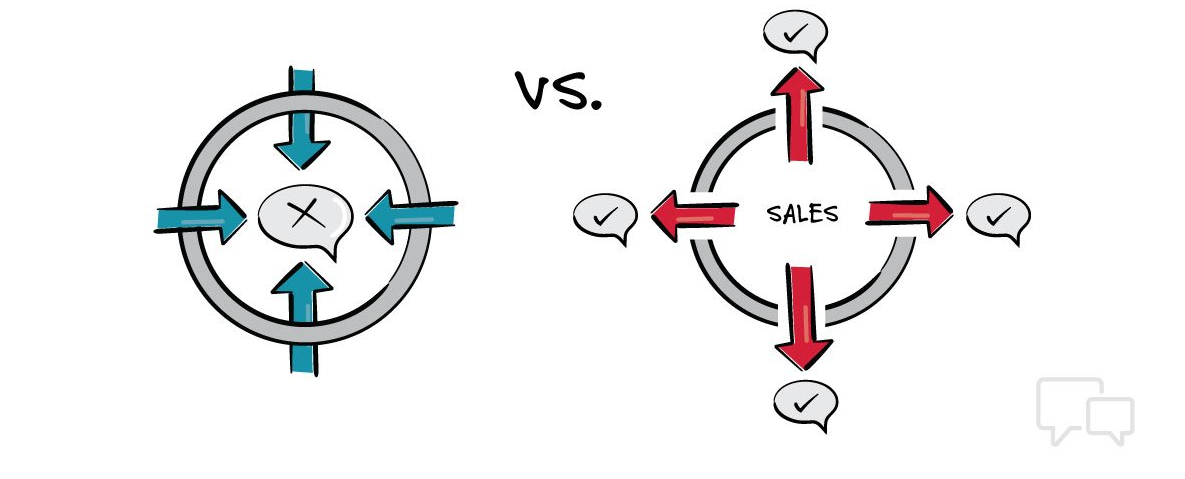
    There are numerous advantages to aligning your marketing strategies with your sales goals. Perhaps the most important is that it helps to ensure that your marketing efforts are focused and effective. If your marketing strategies are in line with your sales goals, you know that they are working towards the same end goal and can more easily measure progress and results.


    What does a marketing strategy look like?

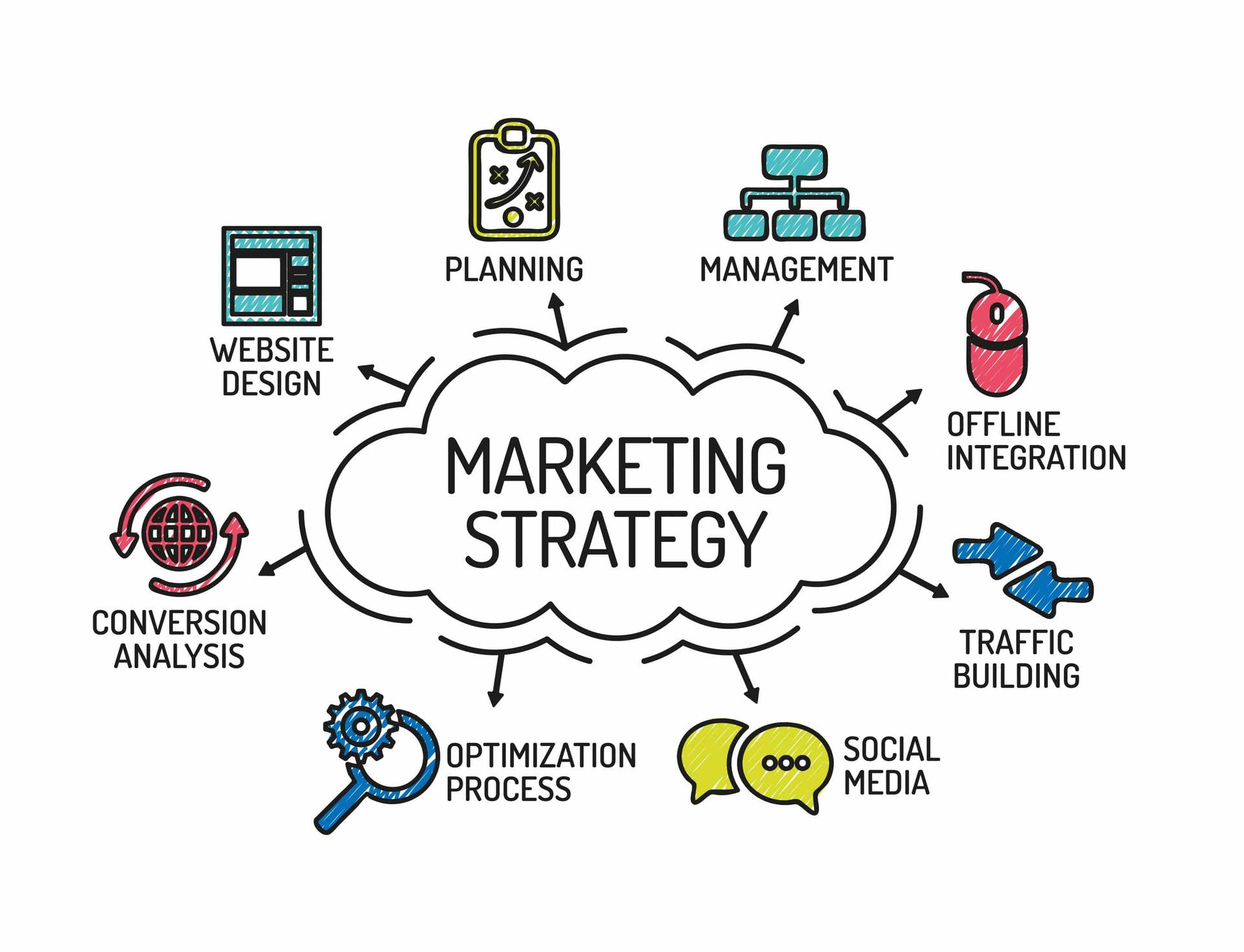
    There are a few key components that should be included in any solid marketing strategy. First, you need to establish your goals and objectives. What are you trying to achieve with your marketing efforts? Once you have a clear vision for what you want to accomplish, you can develop strategies and tactics that will help you get there.

    Your marketing strategy should also take into account your target audience. Who are you trying to reach with your message? What are their needs and wants? How can you best reach them? When you know who you’re talking to, it’s much easier to develop content and messaging that resonates.

    Finally, your marketing strategy should align with your overall business goals. What is your sales team working towards? How can marketing support those efforts? By aligning your strategies, you can make sure that everyone is working towards the same goal and that your marketing efforts are helping drive sales.

    KPI in your marketing strategy
    Your marketing strategy should be driven by your sales goals. By aligning your marketing efforts with your Sales KPIs, you can better measure and track progress toward your overall objectives. 
    There are several different ways to go about this, but one method is to create a Marketing KPI Dashboard.
    This document should list out all of the relevant KPIs for your business, as well as targets for each metric. 
    Some important marketing KPIs to consider include: 
    Website Traffic
    Lead generation rate
    Conversion rate
    Cost per lead
    Customer acquisition costs 
    By tracking these metrics on a regular basis, you can get a clear picture of how effective your marketing strategy is in driving sales growth. If you see that certain tactics are not performing as well as others, you can adjust improve results.

    The importance of alignment

    If your marketing and sales teams are working in silos, it’s time to realign them. When these two departments are out of sync, it can negatively impact your company in several ways. 

    For one, you risk overselling or underselling your products and services. This can lead to lost opportunities and frustrated customers. 

    Additionally, disconnected teams often have difficulty tracking progress toward common objectives. As a result, it’s harder to know what’s working and where to allocate resources for maximum ROI. 
     
    Finally, misaligned marketing and sales efforts can create tension and conflict within your organization. When team members are not working together toward shared goals, it can breed competition rather than collaboration.

  • How Demand Generation Can Help Companies In Times Of Recession

    How Demand Generation Can Help Companies In Times Of Recession

    Unless you’ve been living in a cave for the past few months, you’ll know a recession is underway. Despite all the doom and gloom stories in the news, there are still indications that things can get done. It’s how businesses can do things differently to remain successful during difficult economic times.

  • How To Use Social Media To Get Maximum ROI For Your Business

    How To Use Social Media To Get Maximum ROI For Your Business

    Social media marketing has become an important part of a brand’s activity. Think about all the people you know that have a Facebook, twitter, or Instagram account. This article will show you how to use these platforms to get maximum return on your business.

    Crafting the perfect social media strategy

    To craft the perfect social media strategy, businesses need to first understand what their goals are for using social media. Once objectives are established, then companies can determine which platforms will work best for reaching those goals. Additionally, it’s important to create content that is engaging and designed to spark conversation. Finally, businesses should measure their social media activity on a regular basis to ensure that they’re getting the desired results.

    Setting up a social media plan

    As a business owner or marketing manager, you are likely always looking for ways to get the most ROI out of your marketing budget. You may have dabbled in social media here and there, but perhaps haven’t taken the plunge into making it a consistent part of your marketing mix. Or maybe you’ve been using social media for a while but aren’t seeing the results you want. Either way, crafting a social media plan can help you use this powerful tool more effectively to achieve your business goals.

    There are a few key elements to creating an effective social media plan:

    1. Define Your Goals

    The first step is to clearly define what you want to accomplish with social media. Do you want to increase brand awareness? Drive traffic to your website? Generate leads? Make sales? Once you know what your goal is, you can more easily create content and strategies that will help you achieve it.

    2. Research Your Target Audience

    Who are your ideal customers or clients? What are their demographics (age, location, gender, interests)? What platforms do they use most often (Facebook, Twitter, LinkedIn, Instagram)? When are they active online? The better you understand your target audience, the better you can reach them with your message on the right platform at the right time.

    3. Create Compelling Content

    Once you know who you’re talking to and what you want to say, it’s time to start creating

    How to find and connect with customers on social media networks

    There are several ways that you can find and connect with customers on social media networks. One way is to use the search function on the site. This will allow you to find people who have used keywords that relate to your business. Another way is to look through the friends lists of people who have already connected with you on social media. This can help you to identify potential customers who may be interested in what you have to offer.

    Once you have found some potential customers, it is important to engage with them in a way that is respectful and professional. One way to do this is to add them as a friend or follow them on the social media site. This will give you the ability to see their updates and interact with them directly. It is also important to remember that social media is a two-way street, so be sure to share your own content and updates as well.

    Creating content and ads

    As a business, you want to make sure that you’re getting the most ROI (return on investment) from your social media campaigns. One way to do this is to create content and ads that are targeted at your specific audience.

    When creating content, keep in mind what kind of tone you want to set for your brand. Do you want to be seen as friendly and approachable, or more professional? Once you’ve decided on your tone, stick to it across all your platforms.

    Your content should also be engaging and informative. Give people something to read or watch that will teach them something new about your industry or entertain them. The key is to maintain a consistent voice across all of your platforms and produce quality content that will appeal to your target audience.

    As for advertising, again, consider who your target audience is. What age group are they in? What interests do they have? What kind of products or services are they looking for? By targeting your ads specifically at these demographics, you’ll be more likely to get click-throughs and conversions.

    Social media can be a great way to connect with potential customers and generate leads for your business – but only if you use it correctly. By creating targeted content and ads, you can maximize your ROI and reach the right people with your message.

    Social media case studies

    When it comes to social media, there are a lot of case studies out there. But how do you know which ones are worth reading? And how can you use them to get maximum ROI for your business?

    To help you out, we’ve compiled a list of 5 social media case studies that we think are essential reading for any business looking to maximise their social media ROI.

    1. The Power of social media: How One Tweet Can Make or Break Your Business – This case study looks at the power of social media, and how one tweet can either make or break your business. It’s a great example of how important it is to be active on social media, and to monitor what is being said about your brand.

    2. Social Media Marketing: How KLM Used Twitter to Save A Customer’s Wedding – This case study looks at how KLM used Twitter to save a customer’s wedding. It’s a great example of how businesses can use social media to provide excellent customer service.

    3. The downside of social media: Burger King and Wendy’s Twitter beef – This case study looks at the downside of social media, and how a Twitter beef between two fast food chains can turn into a PR disaster. It’s a great example of how businesses need to be careful when using social media, and how things can quickly spiral out of control.

    4. 10 Tips for Using Instagram Marketing To Grow Your Business – This case study provides

    Benefits of using social media for business

    Social media has become an essential part of doing business for companies of all sizes. It’s a great leveller, allowing small businesses to compete with larger ones on a more level playing field. It’s also a powerful way to connect with potential and current customers.

    Here are some of the benefits of using social media for business:

    1. Increased exposure and reach

    The first benefit is increased exposure and reach. With over 2 billion active users on social media, your business has the potential to reach a vast audience. By being active on social media, you can increase your brand awareness and get in front of more potential customers.

    2. Improved search engine ranking

    Another benefit of using social media for business is improved search engine ranking. Search engines like Google consider the number of social media shares when determining where to rank websites in their search results. So, if you want your website to rank higher in search results, make sure you’re active on social media!

    3. More leads and sales

    Social media can also help you generate more leads and sales for your business. By sharing valuable content, you can drive traffic back to your website where visitors can learn more about your products or services and eventually make a purchase. Additionally, many social media platforms now offer businesses the ability to run ads targeting specific audiences, which can further increase leads and sales.

    4. Better customer insights Social media also provides

  • 87% of marketers say their work provides greater value now than a year ago

    87% of marketers say their work provides greater value now than a year ago

    Salesforce has released the eighth edition of the State of Marketing report. Drawing from a survey of 6,000 marketers across 35 countries and an analysis of trillions of outbound marketing messages sent using the Salesforce platform, the report explores how marketers are:

    • working to meet customers’ digital-first expectations
    • doing more with less in the face of macroeconomic uncertainty
    • adapting to new privacy regulations while still delivering exceptional customer experiences 

    Key insights include:

    Marketers Stay Optimistic Amid Macroeconomic and Labor Headwinds
    Macroeconomic uncertainties may have teams re-examining budgets and fine-tuning tech stacks, but marketers remain bullish about their contributions’ importance. 87% of marketers say their work provides greater value now than it did a year ago – a 10 percentage point leap from last year. 

    That’s not to say the job itself has gotten easier. Quite the opposite: one in three marketers is feeling the squeeze of tightening budgets, all while consumer expectations continue to soar. Indeed, 71% of marketers say meeting customer expectations is more difficult than just a year ago. 

    Gaps in employee resourcing are partially to blame. Trends like the great resignation, quiet quitting, and layoffs are making waves across company talent pools with marketing teams feeling the impact. 

    In the face of heightened demands and limited resources, marketers are looking closely at which capabilities they need, and how they can extract value from their existing investments first and foremost. 

    Though they have a lot on their plates, marketers are confident in their ingenuity. To adapt to the current landscape, marketers are flexing their creative muscles, citing “experimenting with new strategies and tactics” as their #2 priority.

    The March Towards Digitally Led Engagement Treads New and Familiar Paths
    According to recent research, over half (56%) of customers now expect offers to always be personalized — no matter the channel. In turn, brands are investing in a combination of channels and technologies to tailor outreach and build lasting relationships wherever their audiences spend time.

    While email remains a dominant channel — accounting for over 80% of all outbound marketing messages — marketers are branching out to newer watering holes. Take TV and over-the-top (OTT) for example. As streaming services continue to dominate the media landscape and beef up targeted ad offerings, marketers are following suit. Channels like TV/OTT, digital content, and video experienced the biggest growth in marketing adoption. 

    Marketers Navigate A Complex Technology and Regulatory Landscape 
    Marketers’ data needs are growing as they expand their reach across more channels. With each new channel comes additional usage and performance data to be tracked, analyzed, and optimized. Undaunted, marketers predict they’ll use nearly twice as many data sources in 2023 than they used in 2021. 

    In addition to transaction data and known digital identities, 75% of marketers still use third-party data like device identifiers and cookies from aggregators or data brokers. While not all third-party data is cookie-related, marketers will need to reconcile this strategy with impending changes to privacy regulations. Despite this continued reliance on third-party information, most marketers have a plan in place. 68% have already created a fully defined strategy to shift towards first-party and zero-party data. Strategies such as providing information-sharing incentives for customers can help bridge the gap by enriching customer data profiles. 

    As the reality of new privacy regulations kicks in, marketers are setting more conservative goals: 51% say they go beyond regulations and industry standards to protect customer privacy, down from 61% last year. 

    Most Popular AI Use-Case Center Around Automation 
    Marketers faced with heightened expectations, limited human resources, and an influx of data, are increasingly turning to artificial intelligence to maximize their efforts. 68% say they have a fully-defined AI strategy – a steady climb from 60% in 2021 and 57% in 2020. 

    Teams already leveraging AI are using it to accelerate existing tasks. Three of the top four AI use cases center around task automation. 

    These teams view AI as more than a temporary band-aid: 70% of marketers who updated investments in their process/workflow automation view this as a long-term strategy shift.

    Web3 Introduces New Chapter in Marketing
    Experimentation is part of marketers’ DNA. This drive starts at the top: 91% of CMOs say they must continually innovate to remain competitive. Cue the latest test lab: Web3, a decentralized online ecosystem based on a blockchain. While still relatively new territory, already 51% of marketers have a strategy for Web3, with virtual products and VR and/or AR use cases being the most common elements. 

    For the 49% of marketers who have yet to draw up a Web3 strategy, unique digital assets like non-fungible tokens (NFTs) or the metaverse could present new opportunities for brands to collect first-party data as the end-of-the-cookie approaches or attract new audiences like gamers or Gen Z. 

    Leading with Values
    For many of today’s consumers, products and services are only part of what brands have to offer. Beliefs matter, too. In fact, 88% of customers expect companies to clearly state their values. And top marketing teams are rising to the occasion. 93% of high-performing marketers say their external messaging reflects their corporate values compared to 70% of their underperforming competition. As the amplifiers for key company messages, marketers are in a unique position to show how businesses can be a platform for change. 

    Methodology
    Data in the State of Marketing report is based on a third-party, double-blind survey conducted from June 30 to August 8, 2022, that generated 6,000 responses from marketing managers, directors, VPs, and CMOs across 35 countries.

  • Business meeting 2021 in San Francisco

    Business meeting 2021 in San Francisco

    You want to succeed, surround yourself with the right kind of people who will support and encourage you all the way. Be with people who have utmost conviction and patience. The battle is never lost until you’ve abandon your vision. But what if you’re really exhausted physically, mentally, and most of all emotionally? Here are some sources of motivation to prompt you in reaching the peak of accomplishment.

    “Success is the result of perfection, hard work, learning from failure, loyalty, and persistence”

    Philip Reyes

    Let me share with you one of my favorite quotes, as stated in that quote, there are three key factors to achieve massive success in your life:

    Urban life in the city

    Never ever think of giving up. Winners never quit and quitters never win. Take all negative words out of your mental dictionary and focus on the solutions with utmost conviction and patience. The battle is never lost until you’ve abandon your vision.

    Seeing trends before they start

    Success needs hard work. Don’t listen to these ‘get rich quick’ schemes. You need to build your character and work hard on yourself and your business to achieve greatness. Work hard and work smart. Do the right things and do them in the right way. Don’t procrastinate. Take bold actions. Work long hours and craft your legacy.

    Learning from failure

    Successful people do not see failures as failures. They see them as important learning lessons. Lessons that are capable of giving them insights to prevent such mistakes from happening again. By adopting this mindset of turningExplore the city and new places

    Explore the city and new places

    Success needs hard work. Don’t listen to these ‘get rich quick’ schemes. You need to build your character and work hard on yourself and your business to achieve greatness. Work hard and work smart. Do the right things and do them in the right way. Don’t procrastinate. Take bold actions. Work long hours and craft your legacy.

    Do something that keeps you live

    Successful people do not see failures as failures. They see them as important learning lessons. Lessons that are capable of giving them insights to prevent such mistakes from happening again. By adopting this mindset of turning