Author: Abhi

  • Why Paid Ads Are Getting More Expensive? (And How to Beat the System)

    Why Paid Ads Are Getting More Expensive? (And How to Beat the System)

    The Paid Ads Crisis: What Every B2B Marketer Needs to Know

    If you’ve noticed your cost per lead skyrocketing lately, you’re not imagining things. Whether you’re running campaigns on Google, LinkedIn, Meta, or programmatic platforms, digital advertising costs have surged up to 30–50% in some B2B verticals.

    But the question is—why is this happening… and more importantly, how can you beat the system without throwing more budget at the problem?

    At Market Wavegen, we’ve been watching this closely while deploying Strategic Interest Reversal Sales (SIRS) and Intelligent Databases to help agencies, publishers, tech, and SaaS companies outsmart—not outspend—the competition.

    Let’s break it down.

    Industry Trend Breakdown: Why Paid Ads Are Getting More Expensive

    1. More Competitors, Same Eyeballs

    As more companies enter the digital race post-pandemic, demand for ad placements has exploded—especially in high-value B2B sectors. But audience size hasn’t grown at the same pace. Result? Ad auction inflation.

    2. Algorithm Fatigue & Declining Ad Performance

    Major platforms constantly tweak their algorithms, prioritizing engagement over intent. That means you pay more for less-qualified traffic—and your ROAS (Return on Ad Spend) takes a hit.

    3. Privacy Laws & Data Loss

    Third-party cookie deprecation, GDPR, and iOS updates have made precise targeting harder. Marketers now need to pay more to reach broader audiences just to stay visible.

    How to Beat the System: 4 Cost-Saving Strategies That Work

    At Market Wavegen, we help clients flip the ad model by focusing on data-first intelligence, not guesswork. Here’s what actually works today:

    1. Leverage Intelligent Databases for Precision Targeting

    Generic personas won’t cut it anymore. Our Intelligent Database Account-Based Marketing (ABM) identifies and profiles high-fit accounts based on real-time behavioral signals—so your ads only target decision-makers who are actively in-market.

    Result: Lower cost per lead. Higher conversion rates.

    2. Use SIRS to Find Hidden Demand Pockets

    Our proprietary Strategic Information Retrieval System (SIRS) analyzes untapped intent data, industry shifts, and competitor activity to pinpoint emerging demand pockets before your competitors even notice.

    Result: First-mover advantage in micro-segments with lower ad competition.

    3. Segment Smarter, Not Broader

    Instead of spreading your budget across large, high-competition audiences, we segment prospects based on industry-specific buying triggers, funding events, tech stacks, and more.

    Result: Sharper targeting. Better ROI. Less wasted spend.

    4. Integrate Paid with High-Intent Organic Signals

    Paid ads should amplify—not substitute—your demand generation strategy. We guide B2B clients in blending organic ABM intelligence with paid media buys so every dollar accelerates conversion—not just clicks.

    Result: Stronger marketing ROI with long-term compounding returns.

    Spend Smarter, Perform Better

    Paid ads aren’t dying—they’re evolving. The winners won’t be the ones with the deepest pockets but the ones who know where and how to focus their spend.

    With Market Wavegen’s SIRS and Intelligent Database strategies, you don’t need to outbid. You need to outsmart.

  • The Secret Psychology of B2B Buying Decisions (It’s Not What You Think)

    The Secret Psychology of B2B Buying Decisions (It’s Not What You Think)

    “We’re a data-driven company. We only buy based on ROI.”
    That’s what most B2B decision-makers will tell you.
    But dig deeper, and you’ll find that the real story isn’t just logic—it’s human behavior.

    Despite the spreadsheets, procurement policies, and long sales cycles, B2B buyers are still… people. And people are emotional, social, and wired for psychological shortcuts.

    Here’s the surprising psychology driving B2B buying—and how you can use it to build trust, shorten sales cycles, and win more deals.

    1. Risk Aversion > ROI

    Psych Insight: Behavioral economics shows that people fear losses more than they desire gains (Loss Aversion – Kahneman & Tversky). In B2B, this is amplified by career risk.

    “No one ever got fired for buying IBM.”
    That quote isn’t about product superiority—it’s about safe choices.
    Buyers often choose the familiar, the proven, or the brand with perceived stability—not the cheapest or most innovative.

    ✅ Your Move: Build trust through social proof, case studies, and brand authority. Reduce perceived risk, not just price.

    2. Consensus Bias Rules the Room

    Psych Insight: The average B2B purchase involves 6 to 10 decision-makers (Gartner). That means you’re not just selling to one person—you’re navigating group dynamics.

    Enter: Consensus Bias—we conform to group opinions to avoid conflict or social rejection.

    When even one stakeholder hesitates, it can stall or kill the deal.

    ✅ Your Move: Create content that speaks to each stakeholder (finance, ops, IT, end user). Equip your champion with internal decks and ROI tools to sell on your behalf.

    3. Emotions Still Drive Action

    Psych Insight: Antonio Damasio’s research shows that people with damaged emotional processing struggle to make decisions—even with full rational data.

    B2B isn’t emotionless. It’s emotions wrapped in rational justifications.

    Fear of failure. Pride in innovation. Anxiety about change. Excitement about transformation. These are all at play during every pitch or proposal.

    ✅ Your Move: Use storytelling. Show before-after scenarios. Tap into emotional motivators—like ambition, credibility, or fear of missing out.

    4. Simplicity Sells in Complex Environments

    Psych Insight: The Cognitive Load Theory explains that the more mental effort something requires, the less likely we are to engage with it.

    In B2B, where complexity is default, simplicity is power.

    ✅ Your Move: Strip the jargon. Make decision paths clearer. Use simple frameworks, visuals, and analogies that make your solution feel easy—even if it’s technically advanced.

    5. The Power of Reciprocity

    Psych Insight: Humans are wired to return favors (Cialdini’s Principle of Reciprocity). Give value first, and trust follows.

    Free tools, ungated resources, expert calls—these aren’t just lead magnets. They’re behavioral triggers that create goodwill and signal generosity.

    ✅ Your Move: Invest in relationship equity before asking for the sale. Serve before you sell.

    Final TakeawayB2B buying isn’t just about business. It’s about behavior.

    Yes, logic and ROI matter—but behind every buying committee is a group of humans making decisions based on fear, trust, social proof, and emotion.

    If you want to win in today’s B2B landscape, learn to sell not just to the mind, but to the brain.

    Because once you understand the psychology of buying—you don’t just close more deals.
    You create buyers who believe.

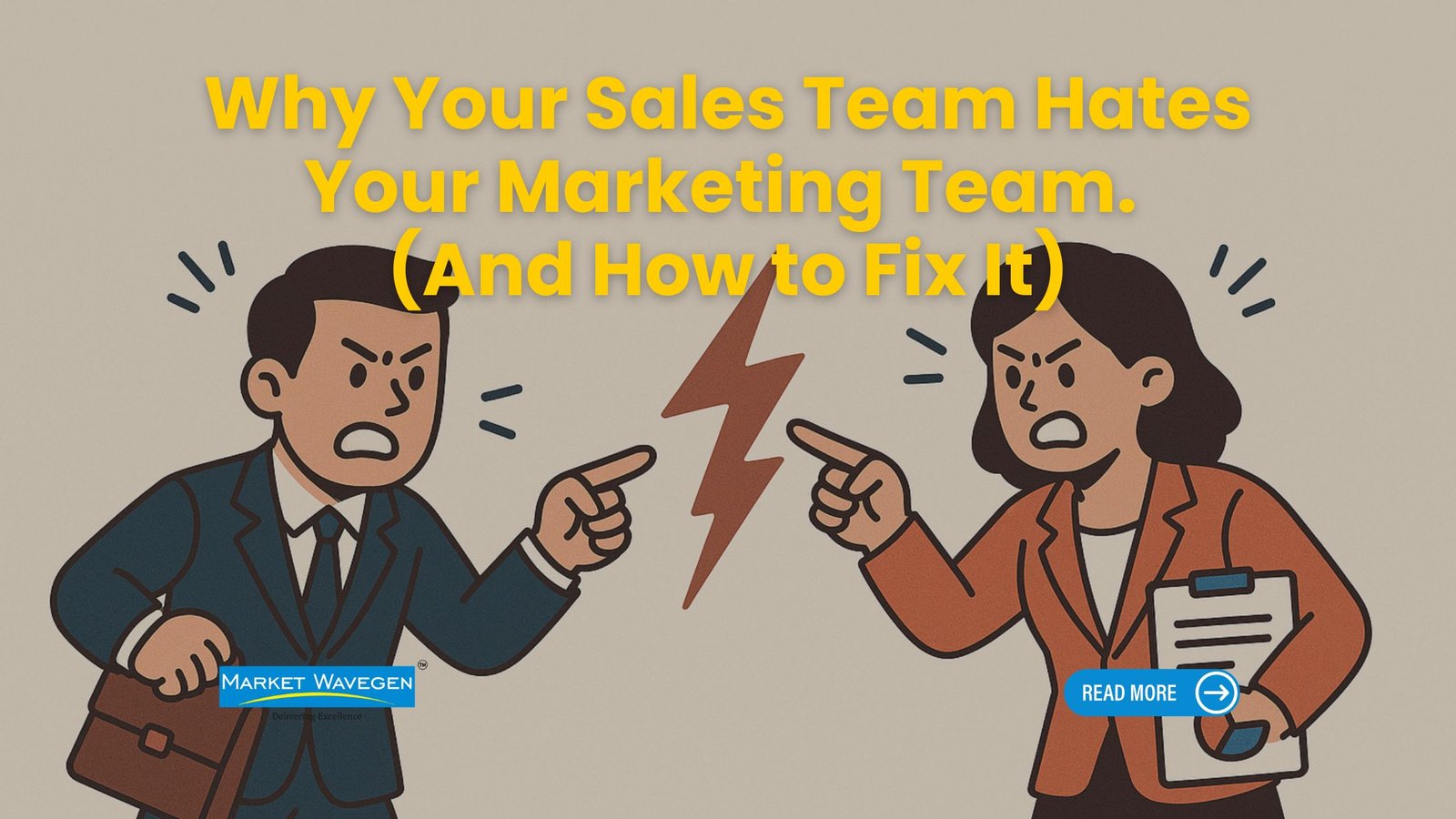
  • Why Your Sales Team Hates Your Marketing Team (And How to Fix It)

    Why Your Sales Team Hates Your Marketing Team (And How to Fix It)

    In many B2B organizations—particularly among agencies, publishers, tech platforms, and SaaS companies—tension between sales and marketing isn’t just common; it’s chronic. Sales reps claim marketing provides unqualified leads, while marketers argue sales doesn’t follow up properly. The result? A misaligned go-to-market strategy, wasted resources, and missed revenue targets.

    At Market Wavegen, we’ve helped bridge this gap using tools like Strategic Information Retrieval Systems (SIRS) and Intelligent Database Account-Based Marketing (ABM). But before we get into solutions, let’s unpack the core reasons behind this rift—and how to fix it.

    The Root Causes of the Sales-Marketing Divide

    1. Misaligned Goals

    Marketing is often tasked with lead volume, while sales is measured on closed revenue. If the KPIs aren’t aligned, the teams end up pulling in different directions.

    2. Different Definitions of a “Lead”

    To marketing, a lead may be someone who downloaded a whitepaper. To sales, a lead isn’t real unless they’re budget-ready and decision-capable. This disconnect can create endless friction.

    3. Poor Communication and Feedback Loops

    Without structured communication, marketing doesn’t learn from sales’ front-line experience, and sales doesn’t understand marketing’s campaign logic. Misunderstanding breeds resentment.

    4. Lack of Shared Data Insights

    Siloed CRMs and marketing platforms mean each team operates on partial data. The absence of a unified view prevents a cohesive strategy—and makes finger-pointing easier.

    How to Fix It: A Data-Driven, ABM-Centric Approach

    ✅ 1. Align Sales and Marketing Around Revenue, Not Activity

    Start by building a revenue operations (RevOps) framework that brings both teams under shared performance indicators: sales-qualified leads (SQLs), conversion rates, pipeline velocity, and customer lifetime value. Incentivize both departments on revenue impact—not vanity metrics.

    ✅ 2. Use Strategic Information Retrieval Systems (SIRS) to Unify Targeting

    At Market Wavegen, we deploy SIRS to extract strategic insights about target accounts: industry trends, buying signals, intent data, and organizational structures. This data allows both sales and marketing to work off the same intelligent targeting blueprint, aligning their outreach with actual market needs.

    Result: No more guessing who to target or how to pitch. Both teams work from verified intelligence.

    ✅ 3. Leverage Intelligent Databases for Account-Based Marketing

    Using Intelligent Database ABM, Market Wavegen helps marketing teams deliver hyper-targeted campaigns—crafted not for personas, but for specific companies and stakeholders. The system segments accounts based on behavioral data, tech stacks, firmographics, and decision-maker roles.

    Sales loves this because it delivers qualified, context-rich leads who are already warmed up.

    Success Snapshot: One SaaS client saw a 46% lift in SQL-to-deal conversion within 90 days of implementing intelligent ABM workflows aligned with their sales cycle.

    ✅ 4. Implement Closed-Loop Reporting

    Integrate your CRM, marketing automation platform, and intent-data tools to create feedback loops. When marketing sees which leads convert and why, they can refine targeting and messaging. Sales can then get consistent lead flows aligned with actual demand.

    Tools to support this:

    • HubSpot or Salesforce (for CRM & automation)
    • 6sense, Demandbase, or ZoomInfo (for ABM and intent data)
    • Market Wavegen’s custom SIRS dashboard (for strategic insight delivery)

    ✅ 5. Create a Joint Content & Outreach Strategy

    Marketing shouldn’t be creating content in a vacuum. Build sales enablement assets—battle cards, case studies, objection-handling scripts—with direct sales input. Simultaneously, involve sales in campaign brainstorming to ensure outreach aligns with what works in real conversations.

    Final Thoughts: Collaboration Is a Revenue Strategy

    In today’s competitive B2B landscape, especially across tech and publishing verticals, fragmented teams equal fragmented outcomes. Bridging the sales-marketing divide is no longer optional—it’s a growth imperative.

    With SIRS and Intelligent Database ABM, Market Wavegen empowers organizations to unify their go-to-market efforts under one data-rich, revenue-focused strategy. The results? Higher conversions, better alignment, and a sales team that finally loves marketing.

  • How to Ethically Win Over Your Competitor’s Customers Before Renewal

    How to Ethically Win Over Your Competitor’s Customers Before Renewal

    “You don’t need to lie, cheat, or bait-and-switch to win. You just need to listen better than your competitors.”

    In today’s fiercely competitive market, the most effective customer acquisition strategy isn’t shouting louder—it’s being smarter and more ethical. If your competitors’ customers are frustrated, underserved, or simply unaware of better options, your job isn’t to trick them—it’s to show up with something better before their contract renews.

    This blog unpacks how to ethically, strategically, and successfully win over your competitor’s customers—without burning bridges or bending the rules.

    1. Start with Deep Listening, Not Selling

    Most companies jump straight to offers. But the real opportunity? Understanding.

    Begin by studying your competitor’s customer base:

    • Read their reviews (Trustpilot, G2, Reddit, Twitter).
    • Attend their webinars or demos as a silent observer.
    • Monitor forums and community discussions.

    You’re not looking to steal secrets—you’re spotting gaps. Are users complaining about customer support delays? Feature limitations? Pricing confusion?

    👉 Insight: The moment you deeply understand their pain, you become more valuable than the competitor they’ve stuck with out of habit.

    2. Solve the Unsolved

    Once you’ve identified those pain points, position your product or service to clearly address them.

    Ask:

    • What are we doing better right now?
    • Where can we offer more flexibility, clarity, or results?
    • What are we willing to guarantee that they aren’t?

    Craft your marketing to mirror their frustrations—and offer a direct resolution. Instead of attacking a competitor, you’re holding up a mirror to what customers already feel, and guiding them toward a better experience.

    3. Time It Right: The Renewal Window

    Customers don’t switch mid-contract. But they start thinking about switching a few weeks—or even months—before renewal.

    Use ethical tactics to time your outreach:

    • Run targeted LinkedIn ads with messaging like: “Time for a better experience before you renew?”
    • Host comparison webinars: “How [Your Company] stacks up vs. [Category Leader] in 2025.”
    • Encourage your current customers to refer peers they know are unhappy with other tools.

    Be proactive, but respectful. Your job isn’t to pressure—it’s to plant a seed and offer clarity when they need it most.

    4. Offer a Clear, Low-Risk Path to Switch

    Even dissatisfied customers stay put if switching feels like a pain. So make it feel easy—and worth it.

    Some tactics that work:

    • One-click data migration
    • Free onboarding concierge
    • A 90-day money-back guarantee or “switching bonus”
    • “We’ll pay your cancellation fee” (where legal and sustainable)

    The goal: de-risk the decision. If switching to you feels easier than staying put, you’ve already won.

    5. Lead With Transparency, Not Tricks

    Ethical customer acquisition means:

    • No fake reviews
    • No misrepresenting features
    • No “gotcha” pricing
    • No cold calls pretending to be customer surveys

    Instead:

    • Create honest comparison content.
    • Be upfront about your limitations—but clear about your strengths.
    • Invite customers to try before they buy.

    When customers feel respected, they trust you more—and that trust travels faster than any ad.

    Final Thoughts

    “Stealing” customers doesn’t mean being unethical. It means out-listening, out-serving, and out-valuing your competition—before the customer even realizes it’s time to switch.

    If you can show up with the right message at the right time—and back it with substance—you’ll never need to play dirty to win.

    Ready to ethically outsmart your competitors?
    Start by giving your future customers what they’re already asking for—before someone else does.

  • The Truth About Lead Nurturing: 90% of Your Prospects Are Ignoring You (And Here’s Why)

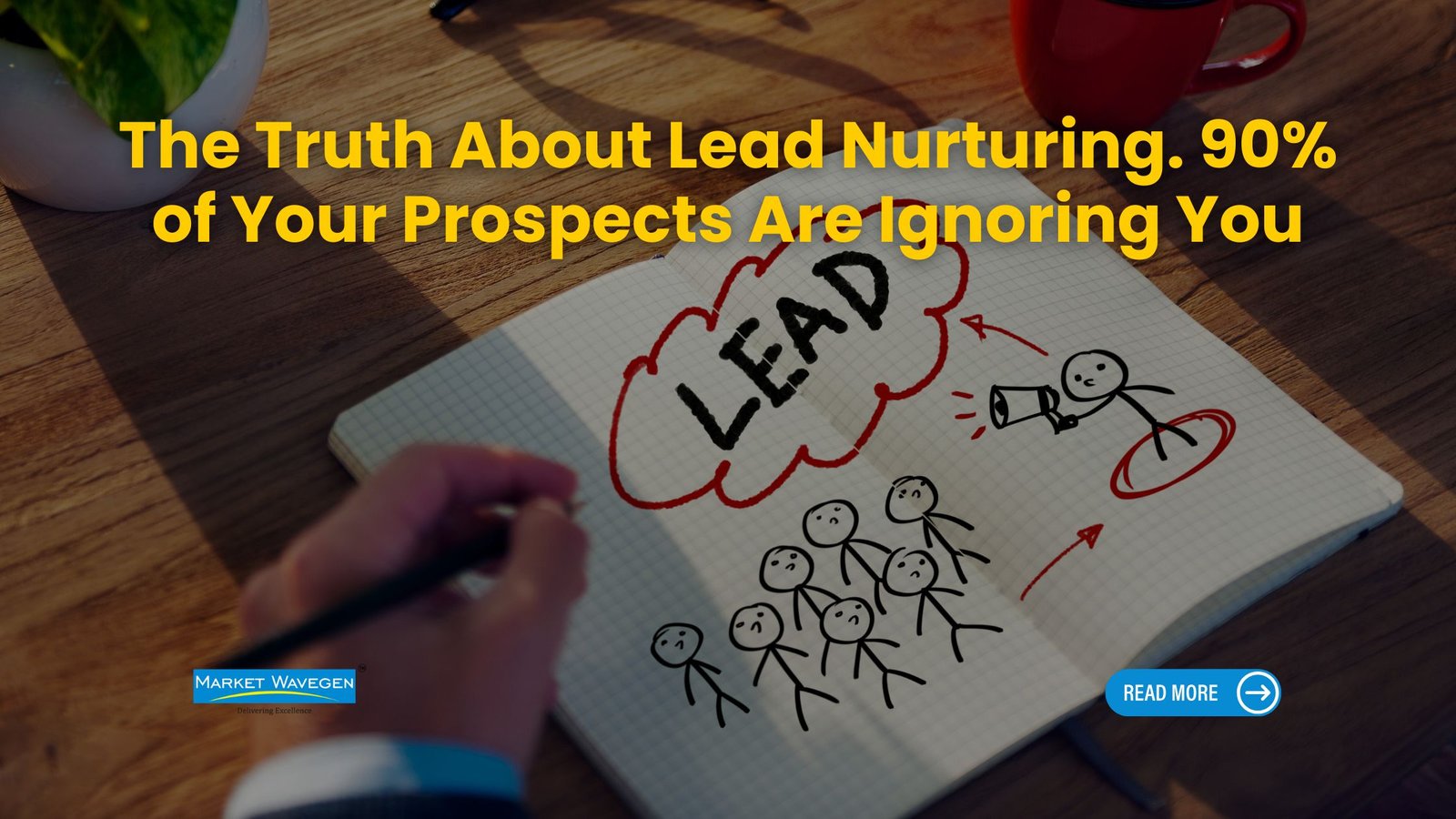
    The Truth About Lead Nurturing: 90% of Your Prospects Are Ignoring You (And Here’s Why)

    In today’s hyper-connected digital landscape, businesses invest significant resources into lead generation. However, generating leads is only the beginning of the buyer journey. What happens next — lead nurturing — is where many organizations fall short.

    Recent industry analyses show a staggering insight: up to 90% of leads are either unresponsive or disengaged during nurturing campaigns. This alarming statistic raises a critical question: why are prospects ignoring outreach efforts?

    Let’s explore the underlying causes — and what can be done to turn silent leads into engaged customers.

    Why Traditional Lead Nurturing Often Fails

    While many organizations follow best practices in theory, in practice, their lead nurturing strategies are outdated, impersonal, and overly sales-focused. The core issue? Most nurturing efforts are centered around business goals, not buyer needs.

    Here are four common reasons prospects disengage:

    1. Premature Selling

    Many campaigns assume that once a lead enters the funnel, they are ready to buy. This is rarely the case. Buyers today conduct their own research and move at their own pace. Pushing for a sale too early often results in lost trust and disengagement.

    Recommendation: Focus on delivering educational content that builds trust and supports informed decision-making, rather than rushing into promotional messaging.

    2. Lack of Personalization

    Generic emails and templated sequences fail to capture attention in an environment flooded with content. If your messaging doesn’t speak directly to the recipient’s context, it will likely be ignored.

    Recommendation: Move beyond basic personalization (e.g., using first names) and tailor messages based on lead behavior, interests, and stage in the buyer journey.

    3. Misalignment With Buyer Needs

    Often, lead nurturing content is based on assumptions rather than real customer data. Without a clear understanding of the lead’s specific challenges and goals, your messaging may miss the mark.

    Recommendation: Leverage data from CRM systems, surveys, and engagement analytics to identify true pain points and tailor your content accordingly.

    4. Inconsistent or Incomplete Follow-Up

    Many campaigns stop after the initial series of emails. Leads who don’t respond within a narrow window are often abandoned, despite still being potential customers.

    Recommendation: Build long-term nurturing programs that include ongoing touchpoints — such as retargeting, newsletters, and social engagement — to remain top of mind over time.


    Rethinking Lead Nurturing for Modern Buyers

    To re-engage the 90% of leads who are currently ignoring your outreach, your nurturing strategy must evolve. This means moving from a transactional mindset to a relationship-building approach. Effective nurturing requires patience, relevance, and consistent value delivery.

    Key Strategies for Improvement:

    • Segment Your Leads: Group prospects by interest, behavior, and buyer stage to deliver more relevant messaging.
    • Invest in Multi-Channel Engagement: Combine email with retargeting ads, social media interactions, webinars, and SMS to reinforce your presence.
    • Emphasize Value Over Volume: A few high-quality, insightful messages will always outperform frequent, generic emails.
    • Monitor and Optimize: Regularly analyze engagement metrics and adjust your strategy based on what’s working — and what’s not.

    Conclusion

    Lead nurturing is no longer a linear, one-size-fits-all process. In an era where buyers are more informed and more selective than ever, your approach must reflect their needs, not just your sales targets.

    By shifting your focus from pushing products to building relationships, you can turn ignored messages into meaningful conversations — and ultimately, into conversions.

    The challenge is clear. But so is the opportunity.

  • AI-Driven Personalization: The Only Way to Win in B2B Marketing

    AI-Driven Personalization: The Only Way to Win in B2B Marketing

    In a world where inboxes are flooded, decision-makers are time-starved, and attention spans are shrinking, one-size-fits-all marketing is dead—especially in B2B. If you’re still relying on static email sequences, generic ads, and broad targeting, you’re not just behind the curve—you’re invisible.

    Enter AI-Driven Personalization—the new currency of relevance, trust, and conversions in B2B marketing.


    Why Personalization Isn’t a “Nice-to-Have” Anymore

    B2B buyers today expect the same level of personalized experiences they get as consumers. When 74% of B2B customers say they choose the vendor that first adds value, not just sells—it’s clear: personalization is no longer optional. It’s survival.

    But here’s the challenge: B2B journeys are complex, multi-touch, and involve entire buying committees. You can’t scale true personalization with manual effort. That’s where AI changes the game.


    From Personalization to Hyper-Personalization: What AI Makes Possible

    AI in B2B marketing is enabling a shift from simple “first name” personalization to contextual, behavioral, and predictive personalization across every touchpoint.

    Here’s how:

    • 🔍 Predictive Analytics: AI analyzes historical data to forecast what content or offers will resonate with a specific account or buyer.
    • 🧠 Intent Data + AI: Know what your prospects are researching before they even hit your website. Then serve them personalized landing pages, ads, and sales content.
    • 🎯 Account-Based Marketing (ABM): AI helps prioritize high-intent accounts and personalize campaigns at scale based on firmographics, technographics, and behavioral signals.
    • 🤖 AI-Powered Chatbots & Email: Smart tools that adapt tone, timing, and message based on real-time interactions and past behaviors.

    Real-World Impact: What Winning B2B Teams Are Seeing

    Let’s talk results—not just theory.

    ✅ A SaaS firm used AI to segment accounts based on digital body language and personalized outreach. Result? 38% increase in SQLs and 22% higher win rates.

    ✅ A manufacturing company integrated AI into their martech stack to tailor website content dynamically. They saw a 3X increase in engagement and a 41% rise in demo requests.

    ✅ A B2B fintech startup used AI to score leads and align them with the right sales rep. Outcome? Faster deal cycles and shorter time-to-value.


    Future-Proofing Your Strategy: AI + Human Creativity

    Here’s the truth: AI doesn’t replace marketers. It amplifies them.

    The most successful B2B marketers today combine machine learning with human empathy—using AI for data-crunching, segmentation, and predictions, and humans for crafting brand voice, storytelling, and value propositions.

    This hybrid approach isn’t just efficient—it’s unbeatable.


    How to Get Started with AI-Driven Personalization

    1. Audit your data ecosystem – Are your CRM, marketing automation, and analytics tools integrated?
    2. Invest in AI-powered martech – Tools like 6sense, Mutiny, Drift, and Clearbit are game changers.
    3. Define your ICP and trigger signals – AI is only as good as the inputs. Be clear on what matters.
    4. Start with micro-personalization – Test headlines, subject lines, and CTAs tailored by segment or persona.
    5. Scale with confidence – Once you see results, expand personalization across channels: email, web, paid, social, sales enablement.

    Final Thoughts: It’s Personal or It’s Pointless

    In 2025 and beyond, the winners in B2B won’t be the loudest—they’ll be the most relevant. AI-driven personalization is your ticket to building relationships at scale, driving real revenue, and staying ahead of competitors still stuck in the spray-and-pray era.

    So the question isn’t whether to personalize—it’s how fast you can start using AI to do it better than anyone else

  • LinkedIn Content That Sells. The 3-Step Formula for Converting Views Into Revenue.

    LinkedIn Content That Sells. The 3-Step Formula for Converting Views Into Revenue.

    LinkedIn is no longer just a digital resume—it’s a powerful business tool. When done right, your LinkedIn content can attract leads, build authority, and generate revenue. But most people struggle with turning engagement into actual sales.

    Here’s a 3-step formula to make your LinkedIn content work for your business.

    Step 1: Capture Attention with High-Value Content

    The first step to making sales on LinkedIn is getting people to stop scrolling and engage with your content. To do this, you need to create content that is:

    • Eye-catching: Use a bold hook, a thought-provoking question, or a powerful statistic.
    • Value-driven: Offer insights, actionable tips, or solutions to pain points.
    • Storytelling-based: Share relatable stories or real-life case studies that build trust.
    • SEO-optimized: Use keywords like LinkedIn marketing, social selling, B2B lead generation, and personal branding to make your content discoverable.

    Example Post:

    ❌ “We help businesses grow on LinkedIn.” (Too generic)

    ✅ “80% of LinkedIn users never post. That’s a massive missed opportunity. Here’s how to dominate LinkedIn with just 5 minutes a day.”

    Step 2: Build Trust Through Engagement and Consistency

    People buy from those they trust. Building trust on LinkedIn means being consistent and engaging.

    • Post regularly: The sweet spot is 3-5 posts per week.
    • Engage in conversations: Respond to comments, DM interested leads, and participate in discussions.
    • Leverage different content formats: Use carousels, text posts, polls, and videos to diversify your content.
    • Showcase expertise over promotions: Instead of hard-selling, provide value that positions you as an authority.

    Engagement Hack:

    • Instead of waiting for people to engage, comment on others’ posts first. This increases your visibility and drives more traffic to your content.

    Step 3: Convert With Strategic CTAs (Call to Action)

    Your content should subtly guide your audience toward taking action. But the right CTA depends on where they are in their journey.

    • Soft CTAs: Build relationships without being pushy.
      • “What’s your biggest challenge with LinkedIn? Drop a comment.”
      • “Want a free checklist? DM me ‘LinkedIn’ and I’ll send it over.”
    • Hard CTAs: Encourage direct conversions.
      • “Spots are open for my LinkedIn growth program. DM me ‘Growth’ for details.”
      • “Book a free strategy call here .”

    Final Thoughts

    If you’re not getting leads from LinkedIn, it’s likely because your content isn’t structured for sales. By capturing attention, building trust, and using strategic CTAs, you can turn views into revenue.

    🚀 Ready to monetize LinkedIn? Start applying this formula today and watch your sales grow!

  • The Future of Demand Gen: No More Funnels, Only Ecosystems.

    The Future of Demand Gen: No More Funnels, Only Ecosystems.

    Industry Trend Breakdown & Real-World Examples

    The traditional marketing funnel—where leads enter at the top, go through qualification stages, and convert at the bottom—is quickly becoming outdated. In today’s digital landscape, B2B growth isn’t linear; it’s dynamic, decentralized, and influenced by multiple touchpoints outside a brand’s control. This shift has led to the rise of demand generation ecosystems, where engagement, trust, and community-building take center stage.

    The Fall of the Funnel Mentality

    Marketing funnels worked well in an era when information was controlled by companies, and customers relied on direct interactions with sales reps to make purchasing decisions. However, the modern buyer is more independent, consuming content, gathering insights from dark social (private communities, word-of-mouth, and peer recommendations), and making decisions long before they engage with a brand.

    Some key reasons why the funnel is breaking down:

    • Non-linear Buyer Journeys: Customers no longer follow a predictable path. They engage with content, peers, and platforms in a way that suits them.
    • Dark Social’s Rise: Private Slack groups, LinkedIn discussions, and WhatsApp communities shape purchase decisions more than traditional lead-gen forms.
    • Content Overload: Buyers are bombarded with information, making it harder for traditional inbound tactics to stand out.
    • Trust-Based Decision Making: Customers trust peers, influencers, and industry experts over branded content.

    To succeed, businesses must transition from a rigid funnel to a flexible demand generation ecosystem.

    The Ecosystem Approach to Demand Generation

    Instead of pushing prospects down a predefined funnel, modern demand gen focuses on creating an interconnected ecosystem where value exchange happens organically. This ecosystem consists of multiple elements working in tandem:

    1. Dark Social & Community-Led Growth

    Dark social platforms—like niche LinkedIn groups, private Slack channels, and invite-only Discord servers—drive real conversations and purchasing decisions. B2B brands need to actively participate in these spaces rather than just broadcasting content.

    Example: Pavilion, a professional community for revenue leaders, leverages member-generated content and peer interactions to drive engagement and trust without relying on traditional lead capture methods.

    2. Owned & Earned Media Strategy

    Companies need to build assets they own (blogs, newsletters, podcasts) and leverage earned media (guest appearances, partnerships) rather than over-relying on paid campaigns.

    Example: Gong, a revenue intelligence platform, built an ecosystem through organic LinkedIn content and thought leadership, creating demand without aggressive outbound tactics.

    3. Influencer & Employee Advocacy

    Rather than relying solely on brand channels, organizations should activate employees and industry influencers to amplify their message authentically.

    Example: Refine Labs, a B2B marketing agency, prioritizes personal branding for its employees, allowing them to drive awareness and credibility across social platforms.

    4. SEO & Content-Led Demand Capture

    While demand generation focuses on creating awareness, demand capture ensures prospects find your brand when they’re ready to buy. A mix of SEO-driven content and intent-based marketing is crucial.

    Example: HubSpot’s strategy revolves around high-value educational content optimized for search, ensuring they appear when prospects search for relevant solutions.

    5. Product-Led Growth & Free Value Offering

    B2B companies are increasingly adopting product-led growth (PLG), where users experience the value of a product before committing to a purchase.

    Example: Figma’s free plan allowed designers to adopt the tool organically, leading to enterprise-wide adoption without a heavy sales push.

    How to Transition from Funnels to Ecosystems

    1. Rethink Measurement

    • Shift from MQL/SQL tracking to engagement-based metrics.
    • Focus on share of voice, community engagement, and word-of-mouth impact.

    2. Build a Content-Led Strategy

    • Prioritize educational, problem-solving content rather than hard sales pitches.
    • Distribute content across social, communities, and influencer networks.

    3. Leverage Community-Led Growth

    • Create or engage in existing communities where your audience already interacts.
    • Encourage organic discussions and user-generated content.

    4. Implement Dark Funnel Tracking

    • Use qualitative insights from customer interviews and social listening tools.
    • Track engagement across dark social platforms where direct attribution isn’t possible.

    5. Align Sales & Marketing on Value Creation

    • Move beyond cold outreach to relationship-building tactics.
    • Ensure sales teams understand and contribute to content and community strategies.

    Final Thoughts

    The future of demand generation isn’t about forcing prospects through rigid funnels—it’s about creating an ecosystem where they engage, learn, and trust your brand before making a purchase. By leveraging dark social, community-driven growth, and content-led demand generation, businesses can drive sustainable B2B growth in a way that aligns with how modern buyers make decisions.

    Companies that fail to adapt will struggle to capture attention in an increasingly fragmented digital world. Those that embrace an ecosystem approach will not only generate demand but build long-term brand equity and customer loyalty.

  • The Death of Generic B2B Marketing: Personalization at Scale or Nothing.

    The Death of Generic B2B Marketing: Personalization at Scale or Nothing.

    Why Generic B2B Marketing is Dead

    The days of broad, one-size-fits-all B2B marketing are over. Buyers are fatigued by impersonal emails, templated cold outreach, and mass-market content that doesn’t address their unique needs. With decision-makers inundated by generic sales pitches, the only way to stand out is through hyper-personalization.

    The Data Speaks: Personalization Drives Revenue

    • 80% of B2B buyers expect the same level of personalization as B2C customers (Forrester).
    • Personalized emails have a 26% higher open rate and generate 6x higher transaction rates (Campaign Monitor).
    • 78% of B2B companies using AI-driven personalization report a direct increase in sales conversions (McKinsey).

    In other words, if you’re not leveraging AI-powered marketing and personalized outreach, your competitors are—and they’re winning.


    The New Age of B2B Marketing: Personalization at Scale

    1. Deep Audience Segmentation: Go Beyond Industry Tags

    Traditional segmentation based on company size or industry is no longer enough. Instead, successful B2B marketers use:

    • Behavioral data (what content they consume, engagement levels, site visits)
    • Firmographics (revenue, growth rate, funding rounds, hiring trends)
    • Psychographics (pain points, decision-making triggers, preferred communication styles)

    🔹 Example: Instead of targeting “SaaS CEOs,” segment them as:

    • VC-backed SaaS startups with aggressive hiring trends.
    • Bootstrapped SaaS founders focusing on profitability.
    • Mid-market SaaS scaling from $10M to $50M ARR.

    2. AI-Powered Sales Outreach: Beyond First Names

    Using AI-driven tools, you can hyper-personalize outreach at scale. But personalization goes beyond adding a prospect’s first name in an email. True hyper-personalization involves: ✅ Real-time insights – AI tools like MarketWaveGen analyze a prospect’s recent LinkedIn activity or company news before sending outreach. ✅ Dynamic content insertion – Tailor email copy based on a lead’s specific role, industry, and challenges. ✅ Predictive engagement scoring – AI determines the best time and channel to engage (email, LinkedIn, calls, video messages).

    🔹 Example: Instead of sending “Hey John, I see you’re in SaaS,” try:
    “Hey John, I saw your company just raised Series B funding. Scaling sales teams fast is tough—here’s how top SaaS companies like [competitor] use AI-powered sales playbooks to hit aggressive revenue goals.”

    3. Hyper-Personalized Content: Real Value, Not Fluff

    Content marketing must evolve beyond generic whitepapers and ebooks. High-impact content is:

    • Persona-specific – Different content for CFOs vs. Sales Directors.
    • Context-aware – Adjust messaging based on a company’s funding stage, industry trends, and pain points.
    • Dynamically delivered – AI-driven content hubs personalize recommendations based on user behavior.

    🔹 Example: Instead of publishing a general “B2B Marketing Trends 2024” report, create custom interactive dashboards that change insights based on a user’s industry and company size.


    Actionable Framework: How to Implement Hyper-Personalization in B2B

    Step 1: Build a Data-Rich ICP (Ideal Customer Profile)

    • Use AI tools like Clearbit, Apollo, or 6sense to enrich prospect data.
    • Track real-time intent signals (website visits, content downloads, LinkedIn interactions).

    Step 2: Automate Personalized Outreach with AI

    • Use tools like Outreach.io or Salesloft to create dynamic email sequences.
    • Leverage LinkedIn automation for warm, relationship-based engagement.
    • Incorporate personalized video messages using Vidyard or Loom.

    Step 3: Scale Personalized Content with AI-Generated Dynamic Assets

    • Build AI-driven content hubs that adapt based on user behavior.
    • Personalize blog recommendations using machine learning algorithms.
    • Automate custom reports for prospects using their own industry data.

    Final Thought: Adapt or Be Ignored

    Generic B2B marketing isn’t just ineffective—it’s actively damaging your brand. Decision-makers now expect tailored, relevant, and insightful engagements. AI-powered hyper-personalization isn’t the future of B2B marketing; it’s the present.

    🔹 Take Action Now: If your B2B marketing strategy isn’t leveraging AI for personalization at scale, you’re already behind. Start optimizing today, or risk being left in the dust.

  • Top AI Tools Revolutionizing B2B Marketing and How to Use Them?

    Top AI Tools Revolutionizing B2B Marketing and How to Use Them?

    Artificial Intelligence (AI) is reshaping B2B marketing, offering businesses innovative ways to automate processes, personalize interactions, and optimize strategies. From lead generation to customer engagement, AI-powered tools enhance efficiency and effectiveness. Below, we explore five top AI tools revolutionizing B2B marketing and how to integrate them into your workflow.

    1. HubSpot – AI-Powered CRM & Marketing Automation

    HubSpot is a leader in inbound marketing, and its AI-powered tools enhance customer relationship management (CRM) and marketing automation. It uses AI to predict customer behavior, personalize email marketing, and automate content creation.

    How to Use It:

    • Automate lead nurturing campaigns using AI-driven workflows.
    • Utilize predictive analytics to identify high-value leads.
    • Enhance email marketing with AI-based personalization and optimization.

    2. ChatGPT – AI for Content Creation & Customer Engagement

    OpenAI’s ChatGPT is a game-changer for B2B content marketing. It can generate high-quality blog posts, emails, ad copies, and chatbot responses, making content production more efficient.

    How to Use It:

    • Generate engaging blog posts and social media content.
    • Automate customer support with AI-driven chatbots.
    • Personalize outreach messages for lead generation.

    3. Drift – AI-Powered Conversational Marketing

    Drift specializes in AI-driven chatbots that improve website visitor engagement and accelerate lead conversion. It offers personalized conversations based on user behavior.

    How to Use It:

    • Deploy AI chatbots for real-time customer interactions.
    • Qualify leads automatically with AI-powered conversations.
    • Integrate with CRM to enhance sales follow-ups.

    4. Pathmatics – AI for Competitive Intelligence & Ad Insights

    Pathmatics provides AI-driven advertising intelligence, offering insights into competitor ad strategies, audience targeting, and digital ad performance.

    How to Use It:

    • Analyze competitor ad placements and budget allocations.
    • Optimize your ad strategy with data-driven insights.
    • Improve audience targeting using AI-generated analytics.

    5. Seventh Sense – AI for Email Marketing Optimization

    Seventh Sense uses AI to optimize email marketing campaigns by predicting the best times to send emails for maximum engagement.

    How to Use It:

    • Automate email delivery based on recipient engagement patterns.
    • Increase email open rates with AI-driven personalization.
    • Integrate with HubSpot and Marketo for seamless automation.

    Conclusion

    AI is transforming B2B marketing, providing businesses with powerful tools to automate tasks, enhance personalization, and drive efficiency. By integrating AI-driven solutions like HubSpot, ChatGPT, Drift, Pathmatics, and Seventh Sense, B2B marketers can stay ahead of the competition, improve customer engagement, and achieve better results. Embracing AI in marketing is no longer an option but a necessity for growth and success in the digital era.